Does WordPress VIP Work in China? ICP, Data Residency & an Offshore WebOps Host
WordPress VIP runs on its own private cloud outside mainland China — origin data centers in Amsterdam and three US cities, and a global edge network with no mainland location — so a China-facing site is served offshore with no ICP-filing path, and your CMS and visitor data lands outside the mainland under PIPL. A compliance-first look at the doors.
Does WordPress VIP work in China?
WordPress VIP will serve a page to mainland China, but it hosts your site on its own cloud entirely outside the mainland — so there is no in-country resource to attach an ICP filing to, and your users' data lands offshore. "We're on WordPress VIP" is not, by itself, a China compliance answer.
In its own FAQ, VIP says it is "a fully hosted solution running on its own private cloud infrastructure," with "origin data centers … in Amsterdam; Ashburn, VA; Los Angeles, CA; and Richardson, TX," and its content delivery network is "a global network of edge cache servers" — not one of them inside mainland China. A public site served to mainland visitors turns on an ICP filing bound to a mainland hosting resource, which an offshore platform cannot provide; and the CMS content, accounts and visitor data it stores for Chinese users become a cross-border transfer PIPL governs. The table below is VIP's own wording and the rule each line triggers.
This is a risk map, not a verdict — which duties bind you turns on your entity, your data and who your users are. Our China team can map your exposure with you →
What WordPress VIP's own documentation says about China
| Fact | Primary source |
|---|---|
| WordPress VIP runs on its own cloud, entirely outside mainland China. Asked whether it can be hosted on AWS, GCP or Azure, VIP answers: "No. WordPress VIP is a fully hosted solution running on its own private cloud infrastructure," one that "lives in the same data centers … that runs WordPress.com and Tumblr." Its "origin data centers are in Amsterdam; Ashburn, VA; Los Angeles, CA; and Richardson, TX" — not one inside the mainland. | WordPress VIP — Frequently Asked Questions (wpvip.com), retrieved 2026-10-07 |
| No mainland hosting resource means no footing for an ICP filing. A public-facing site served to mainland visitors turns on an ICP filing (ICP 备案) bound to a hosting resource physically inside China, under State Council Order No. 292 and MIIT Order No. 33. WordPress VIP's origin and edge footprint is entirely offshore, so there is nothing on the platform to file against. | WordPress VIP — FAQ (wpvip.com), retrieved 2026-10-07; State Council Order No. 292; MIIT Order No. 33 |
| Your CMS and visitor data sits offshore — a cross-border transfer under PIPL. WordPress VIP is a managed WordPress platform, so the personal data your site handles — CMS records, registered-user accounts, form submissions and logs — lives in its offshore data centers. For users in China that is a cross-border transfer of personal information (PIPL Articles 38–43), and a critical information infrastructure operator or large-volume handler must store personal information collected in China inside the mainland (PIPL Article 40; Cybersecurity Law Article 39 (formerly Article 37)) — which no offshore data center can do. | WordPress VIP — FAQ (wpvip.com), retrieved 2026-10-07; PIPL Articles 38–43 & 40; Cybersecurity Law Article 39 (formerly Article 37) |
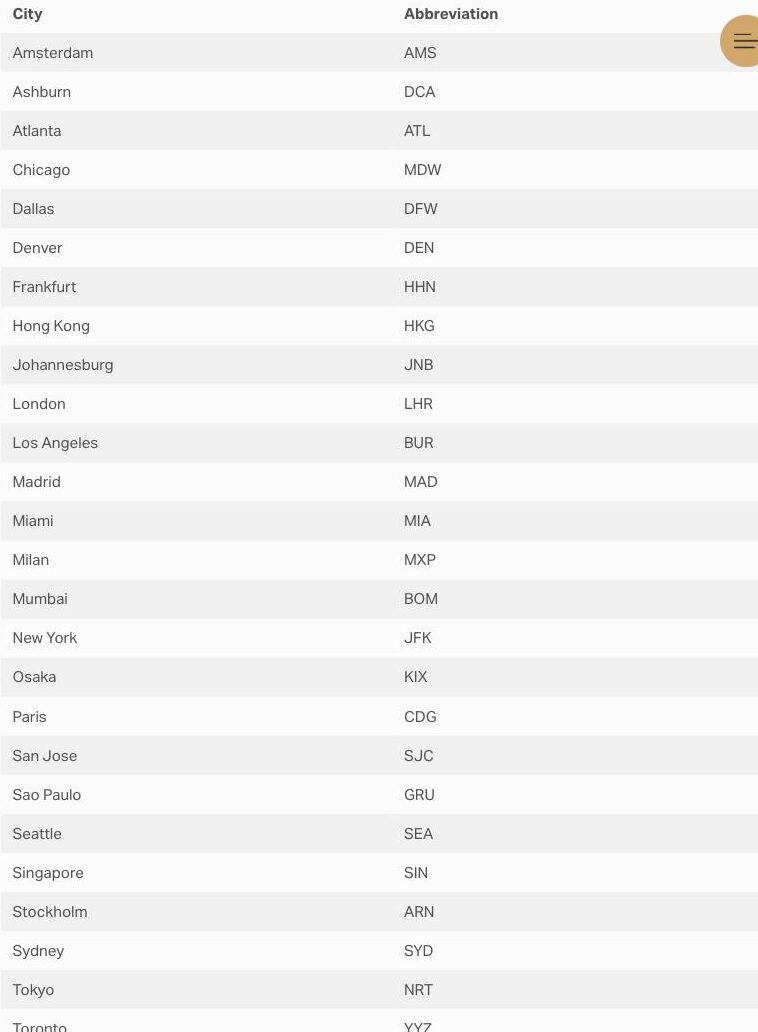
| Its built-in CDN reaches China from across the border, not inside it. VIP says cached content "is served by WPVIP's content delivery network (CDN)," "a global network of edge cache servers" placed "closest to the end user." But its published edge locations nearest China — Hong Kong, Singapore, Tokyo, Osaka, Mumbai and Sydney — include none inside the mainland, so a mainland visitor is served from the closest offshore edge. | WordPress VIP — Infrastructure overview & Global edge server locations (docs.wpvip.com), retrieved 2026-10-07 |
Sources verified by the 21YunBox compliance team on 2026-10-07.
For a mainland-Chinese audience, WordPress VIP raises a question its performance pages never answer: can a site it hosts be run inside China lawfully in the first place? VIP settles the deciding part in its own FAQ — it is a fully managed platform on its own private cloud, with origin data centers in Amsterdam and three United States cities and a global edge network whose closest points are Hong Kong, Singapore and Tokyo, none of them inside the mainland. So a China-facing VIP site is reachable, but hosted wholly offshore — which leaves it no footing for the ICP filing a public mainland site expects, and turns the CMS and visitor data it keeps for Chinese users into a cross-border transfer China’s law governs. The delivery distance is real; the licensing and the data residency are where the exposure lives.
WordPress VIP in China at a glance
| What decides it | In WordPress VIP's own terms |
|---|---|
| Where it runs | A fully managed platform on “its own private cloud infrastructure” — not AWS, GCP or Azure — with origin data centers in Amsterdam; Ashburn, VA; Los Angeles, CA; and Richardson, TX. No region is inside mainland China. |
| Content delivery | Cached content is served by “WPVIP's content delivery network (CDN),” a global network of edge cache servers. Its published edge cities nearest China — Hong Kong, Singapore and Tokyo — are all offshore. |
| Serving the public | A site served to mainland visitors from inside China needs an ICP filing tied to a mainland hosting resource. With no mainland presence, WordPress VIP offers no ICP-filing path of its own. |
| Your data on WordPress VIP | CMS content, user accounts and visitor data for Chinese users sit in its offshore data centers — a cross-border transfer PIPL governs, plus a data-localization duty for CIIOs and large-volume handlers that offshore sites cannot meet. |
| Is it reachable? | Yes — the site loads, but from offshore and with no mainland edge, so distance shows up as slow, cross-border delivery rather than a block. |
Hosted entirely offshore — nothing to attach an ICP filing to
WordPress VIP keeps its whole footprint beyond the mainland’s edge. In its FAQ, asked directly whether the platform can run on a public cloud, VIP replies “No. WordPress VIP is a fully hosted solution running on its own private cloud infrastructure,” one that “lives in the same data centers … that runs WordPress.com and Tumblr,” with “origin data centers … in Amsterdam; Ashburn, VA; Los Angeles, CA; and Richardson, TX.” None of those sites is in mainland China.
Where the servers sit decides the licensing question before speed is ever on the table. A public-facing website delivered to mainland visitors from inside China turns on an ICP filing (ICP 备案) under State Council Order No. 292 and MIIT Order No. 33, and that filing has to attach to a hosting resource that physically sits in the mainland. WordPress VIP runs none, so there is simply nothing on the platform to file against. This is where “our site is already on WordPress VIP” stops short: a site the mainland can open is not a site the mainland has cleared for operation, and tuning the platform will not manufacture the domestic footing a filing demands.
Your users’ CMS and visitor data sits offshore
WordPress VIP is an enterprise WordPress platform, so the personal data your site handles — CMS records, registered-user accounts, editorial logins, form submissions and visitor logs — lives in its data centers in the Netherlands and the United States. For users in China, moving that information offshore is a cross-border transfer under China’s Personal Information Protection Law, and the handler — you, not WordPress VIP — has to give notice, obtain separate consent, and clear one transfer mechanism: a CAC security assessment, the CAC standard contract, or certification (Articles 38–43). If you are a critical information infrastructure operator or a large-volume handler, personal information collected in China must be stored in the mainland (PIPL Article 40; Cybersecurity Law Article 39 (formerly Article 37)) — a residency duty none of VIP’s offshore data centers can satisfy.
It loads — but every byte comes from across the border
A WordPress VIP site is not a blank screen in China; it renders. But every byte arrives from offshore, because VIP’s content delivery network — which it describes as “a global network of edge cache servers” serving content “closest to the end user” — publishes no location inside the mainland. Its nearest edges sit in Hong Kong, Singapore and Tokyo, and a mainland visitor is routed to one of them, still on the far side of the border. So the exposure on a China-facing VIP site is not only that delivery is slow and uneven — it is that reaching the site earns you neither an ICP filing nor in-country data residency. Those are compliance facts, and no cache rule or edge setting closes them.
This is a risk map, not a verdict: whether an ICP filing, in-country storage, or both apply to you turns on what your site serves, how much personal data it holds, and who its users are — a call worth settling with counsel before you build.
Where 21YunBox fits — a compliant overlay, not a migration
Your team keeps publishing on WordPress VIP exactly as it does now. The one thing an offshore platform cannot hand a mainland audience — a legal footing inside China — is what we supply on top of it: compliant, ICP-filed delivery from inside the mainland, placed ahead of the WordPress VIP origin you already run, with no rebuild, no parallel codebase and no migration off your editorial stack. Our China team starts by mapping which duties actually reach you — ICP filing, PIPL cross-border transfer, data residency — for your entity and your data volumes, then establishes the in-country delivery and storage a lawful presence calls for, while your VIP site stays precisely where it is.
Related reading: