Does Spotify for Podcasters Work in China? Offshore Hosting, Delivery & the ICP Gate
Spotify for Podcasters — now Spotify for Creators — hosts your episode audio, RSS feed and dashboard on Spotify's own global infrastructure, with no region inside mainland China. So mainland listeners fetch every episode across the border, your listener data is processed offshore under PIPL, and any China-facing site that embeds your player needs its own ICP filing. A compliance-first look at the real doors.
Does Spotify for Podcasters work in China?
Whether Spotify for Podcasters works for a mainland-China audience is first a delivery-and-licensing question, not a speed one. Spotify for Podcasters — now presented as Spotify for Creators — hosts your episode audio, builds your RSS feed and runs your dashboard on Spotify's own global infrastructure, and none of it sits inside mainland China.
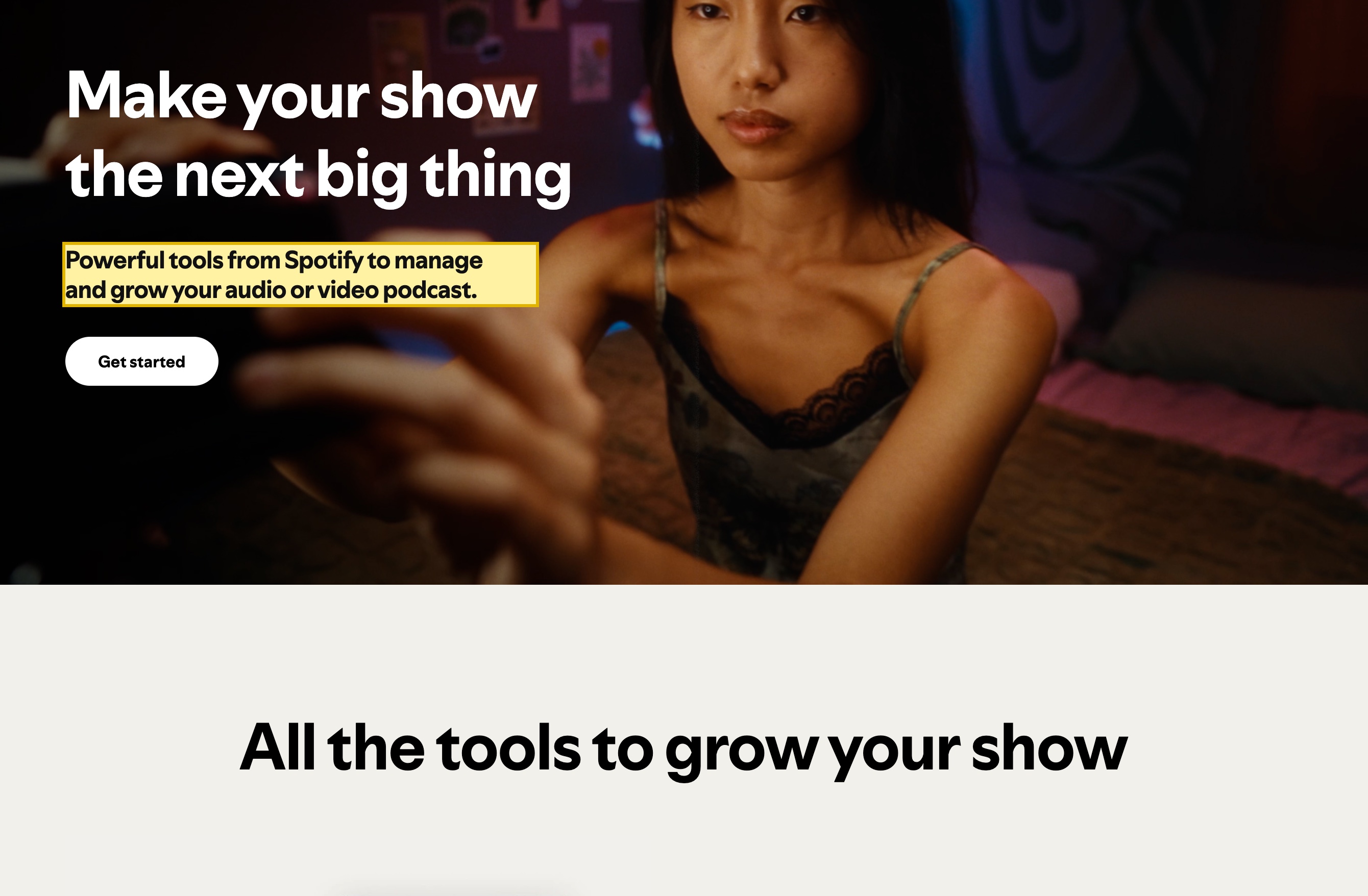
In Spotify's own words the platform is "Powerful tools from Spotify to manage and grow your audio or video podcast," and its privacy policy states that Spotify "transfers personal data internationally with Spotify group companies, subcontractors and partners." So mainland listeners fetch every episode across the border from offshore infrastructure, your listener analytics and account data are processed outside China, and any China-facing site that embeds your player still needs its own ICP filing. A podcast is mostly your own content, so the personal-information exposure is lighter than an identity tool's — real, not zero. The table below is Spotify's own wording and the rules it triggers.
This is a delivery-and-licensing risk map, not a legal verdict — what applies turns on what you serve and to whom. Our China team can map your Spotify for Podcasters delivery and exposure with you →
Compliance snapshot
- ! Your audio, RSS feed and creator dashboard live on Spotify's offshore, global infrastructure — none of it inside mainland China
- ! Mainland listeners fetch every episode across the border; reliable in-country delivery is the exposure, not a dial you can turn
- ! Listener analytics and account data are processed internationally — a lighter, but real, PIPL cross-border-PI matter
- ✕ No mainland-China hosting region, data-residency option, or ICP-filing path on Spotify for Podcasters itself
- ✓ A compliant, ICP-filed in-country delivery path for the same episodes exists — no rebuild, no move off Spotify
What Spotify for Podcasters's own documentation says about China
| Fact | Primary source |
|---|---|
| In Spotify's own words: Spotify for Creators — the platform formerly called Spotify for Podcasters — offers "Powerful tools from Spotify to manage and grow your audio or video podcast," and helps you "distribute your show, engage your listeners, track your growth, and more — no matter where you're hosted." Your episode audio, RSS feed and creator dashboard therefore run on Spotify's own global infrastructure, which publishes no hosting region inside mainland China. | Spotify for Creators — homepage (creators.spotify.com), retrieved 2026-10-07 |
| Spotify's privacy policy states that "Because of the global nature of our business, Spotify transfers personal data internationally with Spotify group companies, subcontractors and partners when carrying out the activities described in this Policy." So listener analytics and account data gathered from users in China are processed offshore — a cross-border transfer of personal information that PIPL governs (notice, separate consent, and one transfer mechanism). Because a podcast is mostly your own content, the exposure is lighter than for an identity or analytics-heavy tool — but it is not zero. | Spotify — Privacy Policy, §7 Transfer to other countries (spotify.com/legal/privacy-policy), retrieved 2026-10-07 |
| A public-facing website delivered to mainland visitors from inside China — including one that embeds or links your Spotify podcast player — turns on an ICP filing (ICP 备案) under State Council Order No. 292 and MIIT Order No. 33, tied to a mainland hosting resource. Spotify for Podcasters hosts your audio, not your website, and offers no ICP-filing path of its own; that filing obligation sits on your China-facing site, whichever platform serves the episodes. | State Council Order No. 292 (Measures for the Administration of Internet Information Services), Article 4; MIIT Order No. 33 |
| Spotify publishes no mainland-China hosting region and no data-residency option; your episodes are served to listeners from offshore infrastructure, so mainland browsers fetch each file across the border. Reliable in-country delivery is therefore a licensing-gated matter, not a performance setting. We describe this qualitatively on purpose: we publish China performance numbers only with the method, sample and date behind them, and hold no first-party Spotify for Podcasters measurement to stand one on here. | Spotify for Creators — product site (no mainland-China region published), retrieved 2026-10-07 |
Sources verified by the 21YunBox compliance team on 2026-10-07.
For a mainland-China audience, the deciding question about Spotify for Podcasters is not how polished the creator dashboard is — it is whether your episodes will reach listeners inside the mainland reliably, and whether the site you publish them through is cleared to operate there. Spotify for Podcasters — the podcast platform Spotify now presents as Spotify for Creators — answers the first part in its own words: it is Spotify’s own toolset for hosting, managing and distributing your show, run on Spotify’s global infrastructure. None of that infrastructure sits inside mainland China. A podcast is mostly your own content rather than a pile of your users’ personal data, so this is more a delivery-and-licensing question than a data-residency one — but it is not a pure speed question either. Reaching China is not the same as being cleared to deliver there.
Spotify for Podcasters in China at a glance
| What decides it | In Spotify's own terms |
|---|---|
| What it is | Spotify's own platform for hosting, managing and distributing a podcast — "Powerful tools from Spotify to manage and grow your audio or video podcast," helping you "distribute your show, engage your listeners, track your growth … no matter where you're hosted." The audio and RSS feed live on Spotify's infrastructure, not yours. |
| Where it serves from | Spotify's global infrastructure. Spotify publishes no mainland-China hosting region; the platform and your episodes are served from offshore. Close to China is still across the border. |
| What that means for delivery | Mainland listeners fetch each episode across the border, subject to cross-border network conditions. An embedded player or a render-blocking player script can stall in the tail even when Spotify itself is healthy. |
| Listener & account data | Spotify's privacy policy states it "transfers personal data internationally." Listener analytics and account data from China users are processed offshore — a cross-border transfer PIPL governs, lighter than for an identity tool but not zero. |
| Your own site | Separate from Spotify: a China-facing site that embeds or links your Spotify player, served to mainland visitors from in-country infrastructure, needs its own ICP filing — whichever platform hosts the audio. |
Reachable is not the same as reliable — the audio is served from offshore
Spotify for Podcasters is a hosting-and-distribution platform: it keeps your episode files, generates the RSS feed listeners subscribe to, and plays episodes through Spotify’s own apps and embeddable player. All of that runs on Spotify’s global infrastructure, and Spotify publishes no region inside mainland China. So every time a listener in the mainland presses play — or a visitor loads a page where you have embedded your Spotify player — the request leaves China and rides whatever the cross-border network is doing at that moment.
When the audio or the embedded player sits in the critical path of a China-facing page, an intermittent cross-border stall does not merely slow one file; it can leave a player spinning or an episode buffering even while Spotify’s own systems are perfectly healthy. That tail — the occasional slow or failed fetch, not the typical case — is the delivery exposure an offshore podcast host leaves on a China-facing experience. We describe this qualitatively on purpose: we publish China performance numbers only with the method, sample and date behind them, and we hold no first-party Spotify for Podcasters measurement to stand one on here. The durable point is not a millisecond figure anyway — it is that the audio is served from outside the mainland, and that where it is served from is governed by licensing, which we turn to next.
No mainland region, so no ICP footing on Spotify — and your site still needs its own
Delivering a website or service to mainland visitors from infrastructure physically located in China turns on an ICP filing (ICP 备案) under the State Council’s Order No. 292 and MIIT’s Order No. 33, and that filing must attach to a hosting resource inside the mainland. Spotify for Podcasters has no mainland region, so there is nothing on Spotify to file against — and, because Spotify hosts your audio rather than your website, it was never the thing a filing would cover in the first place.
That splits the licensing question in two. The episodes themselves are served from offshore, where reliable in-country availability depends on licensing that sits with the platform, not on a performance dial. And your own public-facing site — the one that embeds the player, publishes show notes, or links listeners to your episodes — needs its own ICP filing to be served to mainland visitors from in-country infrastructure, whichever platform hosts the audio behind it. Choosing a podcast host does not create that footing, and it does not remove that obligation from your domain.
Your listeners’ data is processed offshore — a lighter PIPL question
A podcast is mostly your own content, so Spotify for Podcasters is not the identity-and-profile store that makes data residency the whole story for some tools. But it is not nothing, either. Spotify’s privacy policy is explicit that, “because of the global nature of our business, Spotify transfers personal data internationally,” and the listener analytics, account details and engagement data tied to your show are processed in that offshore footprint. For users in China, that is a cross-border transfer of personal information under China’s Personal Information Protection Law: the handler has to give notice, obtain separate consent, and clear one transfer mechanism — a CAC security assessment, the CAC standard contract, or certification. If you are a critical information infrastructure operator or a large-volume handler, personal information collected in China must be stored in the mainland (PIPL Article 40; Cybersecurity Law Article 39 (formerly Article 37)) — a residency duty an offshore host cannot meet.
This is a delivery-and-licensing risk map, not a legal verdict: whether you need reliable in-country delivery, an ICP filing on your own site, in-country storage, or some combination depends on what you serve, how your show is embedded, how much personal data you hold, and who your listeners are — worth settling with counsel before you build.
Where 21YunBox fits — a compliant overlay, not a migration
You keep creating and publishing on Spotify for Podcasters exactly as you do today. We add the one piece an offshore podcast host cannot: compliant, ICP-filed delivery of your episodes from inside the mainland, set in front of your existing origin — no rebuild, no second codebase, and no move off Spotify. Instead of mainland listeners pulling your audio and your embedded player across the border, they load them from in-country, ICP-filed infrastructure that takes the border out of the critical path. Our China team maps which episodes and assets actually matter for mainland listeners, stands up the in-country delivery path, and checks whether your own China-facing domain needs its own ICP filing — so the reliability and the licensing are handled together.
Related reading:
Frequently Asked Questions
Does Spotify for Podcasters store Chinese listeners' data in China?
No. Spotify publishes no mainland-China hosting region, and its privacy policy states that it transfers personal data internationally with its group companies, subcontractors and partners. So the listener analytics and account data tied to your show are processed offshore. Because a podcast is mostly your own content rather than a store of your users' personal data, the PIPL exposure is lighter than for an identity or analytics tool — but a cross-border transfer still exists, so treat it as a risk to confirm with counsel.
Do I need an ICP filing to run a podcast for Chinese listeners?
Spotify for Podcasters hosts your audio, not your website, so it carries no ICP filing of its own. If you run a China-facing site that embeds or links your Spotify player and serve it to mainland visitors from in-country infrastructure, that site needs its own ICP filing under State Council Order No. 292 and MIIT Order No. 33. The episodes themselves are served from offshore, where reliable in-country delivery is licensing-gated rather than a speed setting. Whether and how this applies to you is worth settling with counsel before you build.
Can 21YunBox help serve our Spotify podcast reliably and compliantly in China?
Yes. Our China team can assess your delivery and cross-border exposure for your data volumes and role, and stand up compliant, ICP-filed in-country delivery of the same episodes in front of your existing origin — no rebuild and no move off Spotify — while checking whether your own China-facing domain needs its own ICP filing. Get in touch to work through your specific case.