Does Libsyn Work in China? Offshore Podcast Delivery, Listener Data & ICP
Libsyn (Liberated Syndication) stores and serves your podcast audio, RSS feed and embedded player from the United States, naming no mainland-China point of presence — so mainland listeners fetch your show across the border, your listener data is processed offshore under PIPL, and any China-facing site that embeds your player needs its own ICP filing. A compliance-first look at the delivery path and the data behind it.
Does Libsyn work in China?
Whether Libsyn works in China is first a delivery question — can your episodes reach mainland listeners reliably — with a lighter listener-data question behind it, not a speed benchmark. Libsyn (Liberated Syndication) is a podcast host: it stores your audio and serves your RSS feed, media files and an embedded player, and where it keeps and serves that content is what decides this.
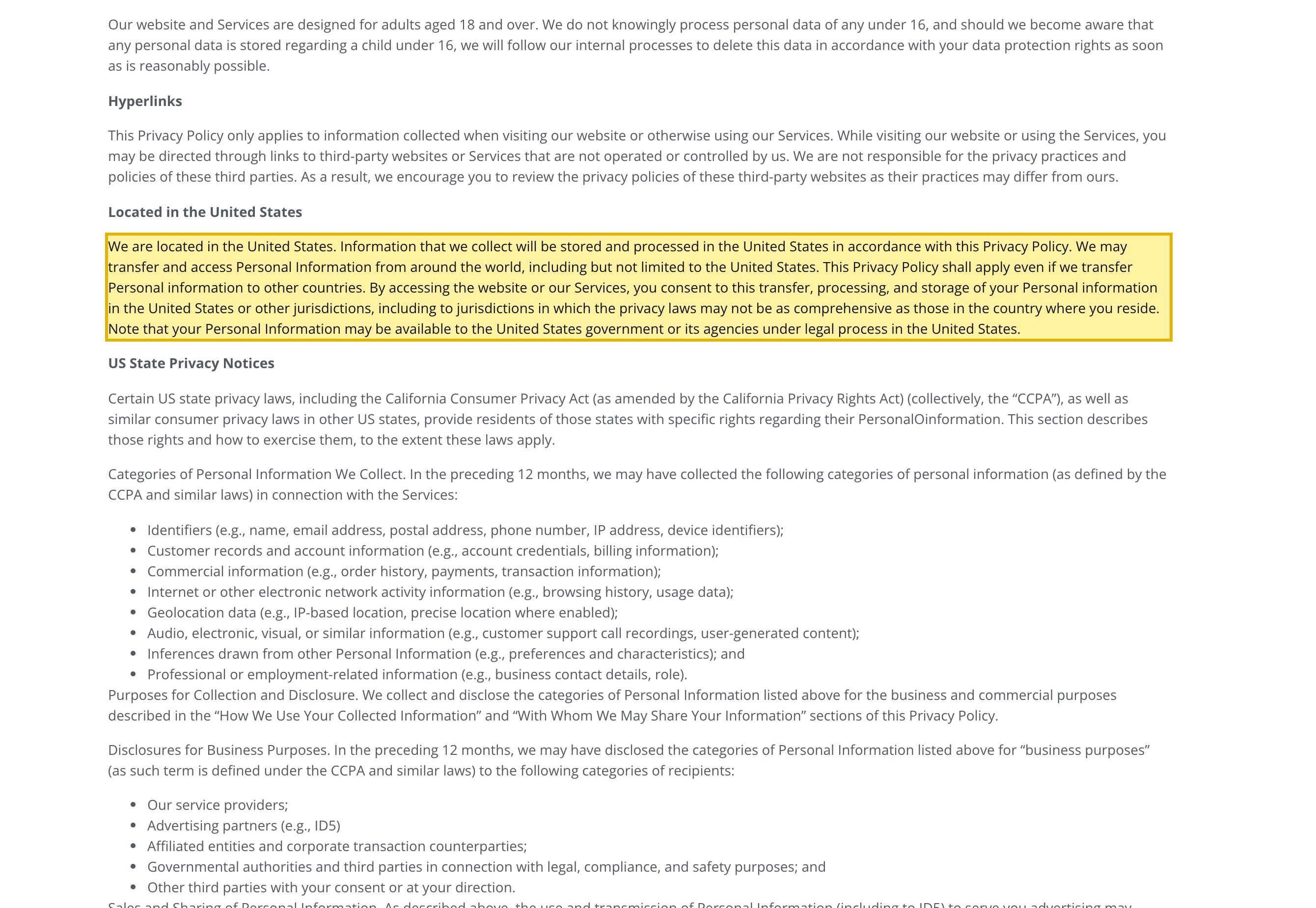
In its own privacy policy Libsyn states it is "located in the United States," and that "Information that we collect will be stored and processed in the United States," adding that it may "transfer and access Personal Information from around the world." No mainland-China point of presence is named, so your feed, media and player reach mainland listeners across the border, and reliable in-country delivery is gated by ICP licensing, not a performance setting. The lighter second question is the listener data Libsyn's servers log on every download to "deliver the audio file, ensure network security, and measure episode performance" — processed in the US, a cross-border transfer under PIPL. The table below is Libsyn's own wording and the rules it triggers.
This is a delivery-and-compliance risk map, not a verdict — your obligations turn on how you publish, your data volumes and your role. Our China team can map your Libsyn exposure with you →
What Libsyn's own documentation says about China
| Fact | Primary source |
|---|---|
| In Libsyn's own words: it is "located in the United States," and "Information that we collect will be stored and processed in the United States in accordance with this Privacy Policy." It adds that it may "transfer and access Personal Information from around the world, including but not limited to the United States." No mainland-China location is named, so your podcast's audio, RSS feed and embedded player are stored and served to mainland listeners from offshore infrastructure — which makes the first China question delivery and reachability. | Libsyn (Liberated Syndication) — Privacy Policy (Located in the United States), retrieved 2026-10-08 |
| Even a public podcast carries a data question. On each episode request, Libsyn says, "our servers automatically record certain technical interactions required to deliver the audio file, ensure network security, and measure episode performance: your IP address, timestamp, information about the requested audio file and the portion of the file streamed or downloaded," together with the listener's user-agent string. Processed in the US, that is a cross-border transfer under PIPL for your China listeners — a lighter question than for an identity tool, but not a non-issue. | Libsyn (Liberated Syndication) — Privacy Policy (Listeners of Hosted Podcasts), retrieved 2026-10-08 |
| Libsyn casts the roles the way China's law does. In its policy "Libsyn acts a processor ... when it is providing its Services to its customers, such as when using our hosting or distribution Services for your podcast or other content," while "Our customer is acting as a controller." In PIPL terms that makes you — not Libsyn — the personal-information handler for your listeners, so the duties of notice, separate consent and one transfer mechanism land on you when their data crosses the border. | Libsyn (Liberated Syndication) — Privacy Policy (Status of Libsyn), retrieved 2026-10-08 |
| Serving a site or service to mainland visitors from infrastructure physically inside China is gated by licensing, not speed: it needs an ICP filing (ICP 备案) under the State Council's Order No. 292 and MIIT's Order No. 33, tied to a mainland hosting resource. Served from the United States, Libsyn gives you no in-country, ICP-filed delivery path of its own — and, separately, your own public-facing site (your podcast website or the page that embeds the Libsyn player) needs its own ICP filing to be served from inside the mainland, whichever host delivers the audio. | PRC Regulations on Telecommunications (State Council Order No. 292); Administrative Measures for the Filing of Non-operational Internet Information Services (MIIT Order No. 33) |
Sources verified by the 21YunBox compliance team on 2026-10-08.
For a mainland-China audience, the first question about Libsyn is not how large its distribution reach is — it is whether your episodes actually reach listeners inside the mainland, and how the listener data logged along the way is handled. Libsyn — Liberated Syndication — is a podcast host: it stores your audio, generates the RSS feed listeners subscribe to, serves your media files, and gives you an embedded player and a podcast site of your own. By its own privacy policy, that content is stored and served from the United States, and the company behind it is a US company. The episodes are reachable; what needs a second look is the cross-border path they ride, the listener data recorded along the way, and the ICP filing the site your audience lands on depends on.
Libsyn in China at a glance
| What decides it | In Libsyn's own terms |
|---|---|
| What it is | A podcast host: it stores your audio, generates your RSS feed, and serves your episodes and an embedded player you drop into your own site. The media is your own content, so the first China question is delivery and reachability, with a lighter listener-data question behind it. |
| Where it's served from | By its privacy policy, Libsyn is “located in the United States,” and your “Information … will be stored and processed in the United States.” No mainland-China point of presence is named; your show is served from offshore. |
| What that means for listeners | Mainland browsers fetch your feed, player and episodes across the border. Large audio — and especially video — on a cross-border path can stall or fail in the tail for some mainland listeners even when Libsyn itself is healthy. A reliability exposure, not a block. |
| Listener & account data | On each download Libsyn's servers record a listener's IP address, timestamp, file and stream details and user-agent; account sign-up adds your name, address, business details and billing information. All handled in the US, with Libsyn as processor and you as controller — a cross-border-PI question under PIPL, lighter for the listener analytics. |
| Your own site | Separate from Libsyn: your podcast website or the page that embeds the player, served to mainland visitors from in-country infrastructure, needs its own ICP filing — whichever host serves the audio. |
Reachable, but served from the United States — delivery comes first
Libsyn is not blocked in mainland China, and nothing here is about getting around a block. The question is where your podcast is served from. Libsyn answers it in its own privacy policy: it is “located in the United States,” and “Information that we collect will be stored and processed in the United States in accordance with this Privacy Policy,” while it may “transfer and access Personal Information from around the world, including but not limited to the United States.” Nowhere does it name a point of presence inside mainland China.
So every time a listener in the mainland opens your feed, loads the embedded player, or downloads an episode, the request leaves China, fetches from offshore infrastructure, and comes back. Podcast files are large — more so once you publish video — and a large file on a cross-border path is exactly where reliability frays: an episode can stall mid-download or fail in the tail for some mainland listeners while Libsyn’s own systems are perfectly healthy. We describe this qualitatively on purpose. We publish China delivery numbers only alongside the method, sample and date that produced them, and we hold no first-party Libsyn measurement to put one here. The honest status of any offshore-served media on a China-facing experience is this: reachable, but riding a border you do not control.
The lighter second question — listener data across the border
A podcast host is not an identity platform, so the data question is lighter than for a tool built around personal information — but it is not nothing, and Libsyn spells out what it records. When someone listens, “our servers automatically record certain technical interactions required to deliver the audio file, ensure network security, and measure episode performance: your IP address, timestamp, information about the requested audio file and the portion of the file streamed or downloaded,” together with the listener’s user-agent string. Sign up as a customer and Libsyn also holds account details including your “name, address, business information, e-mail” and billing information.
Libsyn is clear about the roles, and they line up with how China’s law assigns responsibility. In its policy “Libsyn acts a processor … when it is providing its Services to its customers,” while “Our customer is acting as a controller.” In PIPL terms that makes you — not Libsyn — the personal-information handler for your listeners. Because that data is stored and processed in the United States, your China listeners’ information is a cross-border transfer under PIPL, and the handler’s duties of notice, separate consent, and one transfer mechanism fall on you. How heavily it lands turns on your volumes and your role; size it with counsel rather than reading a blanket verdict off this page.
Why in-country delivery is a licensing question — ICP
The reason you cannot simply switch on a mainland point of presence for your podcast is not engineering — it is licensing. Delivering a site or service to mainland visitors from infrastructure physically inside China turns on an ICP filing (ICP 备案) under the State Council’s Order No. 292 and MIIT’s Order No. 33, tied to a mainland hosting resource. Served from the United States, Libsyn gives you no in-country, ICP-filed delivery path of your own — which is why reliable in-mainland delivery is a licensing question first, ahead of any network tuning.
There is a second ICP point that catches podcasters specifically. Libsyn can give your show its own website and player, and many creators also embed that player on a separate marketing or WordPress site. Either way, the public-facing page your mainland audience actually lands on needs its own ICP filing to be served from inside the mainland, whichever host delivers the audio behind it. Choosing or switching podcast hosts does not create that footing, and it does not lift the obligation from your domain. Treat all of this as a delivery-and-licensing risk map, not a legal opinion: how it applies depends on what you publish, from where, and to whom — worth settling with counsel before you build.
Where 21YunBox fits — a compliant overlay, not a migration
You keep publishing on Libsyn exactly as you do today. We add the one piece an offshore-served podcast host cannot: compliant, ICP-filed delivery from inside the mainland, set in front of your existing origin — no rebuild, no second codebase, and no move off Libsyn. Instead of mainland listeners pulling your feed, player and episodes across the border, they load them from in-country, ICP-filed infrastructure that takes the border out of the critical path. Our China team maps how your show actually reaches the mainland, what listener and account data crosses the border, and whether the site your player lives on needs its own ICP filing — so the delivery and the compliance are handled together.
Related reading: