Does Hostinger Work in China? ICP, Data Residency & an Offshore Host
Hostinger hosts every plan outside mainland China — Europe, the USA, Brazil, and three Asian locations in India, Indonesia and Malaysia — so a China-facing Hostinger site is always served across the border, with no ICP-filing path and your visitors' personal data held offshore under PIPL. A compliance-first look at the two doors.
Does Hostinger work in China?
Whether you can use Hostinger for a site aimed at China is a hosting-location and ICP-filing question, not a speed one. Hostinger serves every plan from data centers outside mainland China, so a Hostinger site always reaches Chinese visitors across the border.
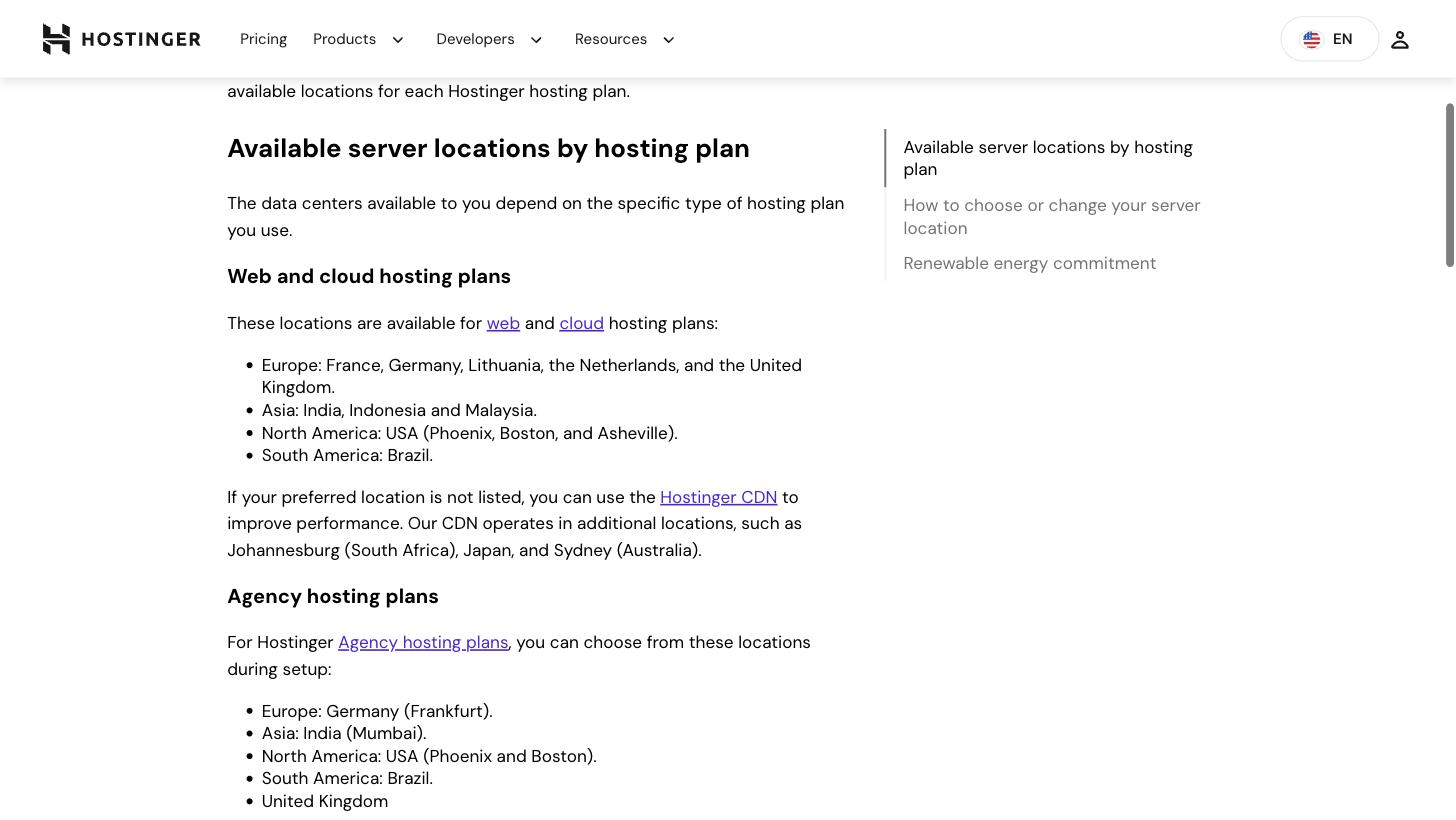
By Hostinger's own server-locations page, its web and cloud hosting runs from Europe, the USA, Brazil and three Asian locations — India, Indonesia and Malaysia — with no data center in mainland China; China is not on the list. That leaves two options, and each has a catch: host offshore and every request still crosses into China (slow, unstable, and with no filing), or serve the site from inside the mainland — which no one may lawfully do without an ICP filing (备案) that Hostinger does not provide. The table below is Hostinger's own location list and the filing rule it runs into.
This is a risk picture, not a legal verdict — whether you need an ICP filing turns on where you serve the site from and what it does. Our China team can map your exposure with you →
What Hostinger's documentation says, and what we measured from inside China
| Fact | Primary source |
|---|---|
| In Hostinger's own words, its web and cloud hosting data centers are in "Europe: France, Germany, Lithuania, the Netherlands, and the United Kingdom. Asia: India, Indonesia and Malaysia. North America: USA (Phoenix, Boston, and Asheville). South America: Brazil." No mainland-China data center appears on any Hostinger plan — the nearest the platform reaches is India, Indonesia or Malaysia, all outside the mainland. Hostinger's own fallback for an unlisted location is a content network, not in-country hosting: "If your preferred location is not listed, you can use the Hostinger CDN to improve performance." | Hostinger — Where are Hostinger servers located? (Help Center), retrieved 2026-10-07 |
| Serving a website from a server inside mainland China is a filing event. Under State Council Order No. 292 (《互联网信息服务管理办法》, 2000, revised 2011) and MIIT Decree No. 33 (《非经营性互联网信息服务备案管理办法》), a site hosted on mainland infrastructure must complete an ICP filing (备案) before it may go live, and the filing can be held only by a China-registered entity. Hostinger offers neither a mainland data center nor an ICP filing, so its platform cannot take you through either door. | State Council Order No. 292, Measures for the Administration of Internet Information Services (2000, revised 2011); MIIT Decree No. 33 |
Requested directly from a probe inside mainland China (Alibaba Cloud cn-zhangjiakou) on 2026-08-28, hostinger.com returned a first byte in a median of 1,010ms but did not finish loading within 60 seconds on any of three attempts. The connection opens, then stalls — the quiet, no-error failure of serving across the border instead of from inside it. | 21YunBox — China delivery measurement, measured from inside mainland China |
| A secondary point if the site collects personal information from visitors in China — sign-ups, accounts, orders, form fills: hosting it only on offshore Hostinger servers means that data is handled outside the mainland, which raises separate cross-border personal-information questions under PIPL. Whether this bites turns on what your site does and your data volumes; it sits beneath the filing point, not above it. | PIPL (Personal Information Protection Law of the PRC), Chapter III — cross-border provisions |
Sources verified by the 21YunBox compliance team on 2026-10-07.
If you are aiming a Hostinger site at mainland China, the question that actually decides things is not how quickly it loads — it is which country your server sits in, and which country holds your visitors’ data. Hostinger settles the first half on its own server-locations page: it operates no data center inside mainland China. A Hostinger site built for Chinese users is therefore reachable only from across the border, and that single fact opens two compliance gaps at once — there is no mainland resource to attach an ICP filing to, and any personal data you gather from Chinese visitors is stored offshore, where China’s cross-border rules apply. Being reachable is not the problem; the licensing and the data residency are.
Hostinger in China at a glance
| What decides it | In Hostinger's own terms |
|---|---|
| Where it runs | Web and cloud hosting in Europe (France, Germany, Lithuania, the Netherlands, the UK), Asia (India, Indonesia, Malaysia), North America (Phoenix, Boston and Asheville, USA) and South America (Brazil). None of these sit inside mainland China; the closest — India, Indonesia and Malaysia — are still offshore. |
| Hostinger's own fallback | For a location it does not list, Hostinger's advice is to “use the Hostinger CDN to improve performance” — a content network set over an offshore server, not hosting inside the mainland. |
| Serving the public | A public site shown to mainland visitors from inside China needs an ICP filing (备案) attached to a mainland hosting resource held by a China-registered entity. Hostinger provides neither the resource nor the filing. |
| Your China users' data | Personal information collected from Chinese visitors and kept only on Hostinger's offshore servers is handled outside the mainland — a cross-border transfer governed by PIPL. |
| Is it reachable? | The connection opens — a median first byte of 1,010ms from an Alibaba Cloud probe in Zhangjiakou on 2026-08-28 — but the page did not finish loading within 60 seconds on any of three attempts. Not a block; a cross-border stall. |
Door one — no mainland data center, so nothing to file an ICP against
Hostinger lists its hosting locations in its own help center — France, Germany, Lithuania, the Netherlands and the UK across Europe; India, Indonesia and Malaysia across Asia; Phoenix, Boston and Asheville in the US; and Brazil — and where a location is missing it tells you to “use the Hostinger CDN to improve performance” rather than offering hosting on the ground. Mainland China is on none of those lists.
That geography decides the licensing question up front, before speed is ever on the table. A public-facing website delivered to mainland visitors from inside China depends on an ICP filing (备案) under State Council Order No. 292 and MIIT Decree No. 33, and that filing can only attach to a mainland hosting resource held by a China-registered entity. Hostinger supplies neither the mainland resource nor the filing, so there is simply nothing on the platform to file against. That is the wall “we’re already on Hostinger” runs into: reaching Chinese users and being licensed to serve them are two different things, and draping a content network over an offshore origin does not create the in-country footing a filing requires.
Door two — your visitors’ data never enters the mainland
Keep serving China from Hostinger’s offshore servers and any personal information your site collects from Chinese visitors — account sign-ups, orders, support forms — is handled outside the mainland. Under China’s Personal Information Protection Law that counts as a cross-border transfer, and the obligation falls on you as the handler, not on Hostinger: give notice, take separate consent, and clear one transfer route — a CAC security assessment, the CAC standard contract, or certification. A critical information infrastructure operator or a high-volume handler faces a firmer line still: personal information gathered in China has to be stored in the mainland (PIPL Article 40; Cybersecurity Law Article 39 (formerly Article 37)), a residency duty an offshore-only host cannot satisfy. This exposure sits beneath the filing question rather than above it — how hard it bites depends on what your site does and how much data it holds — but on Hostinger’s geography it is live by default.
Not blocked — but it didn’t finish loading from inside China
Hostinger is not walled off in China; the failure is quieter than that. In 21YunBox’s own measurement from inside the mainland — a request issued directly from an Alibaba Cloud probe in Zhangjiakou on 2026-08-28 — hostinger.com returned its first byte in a median of 1,010ms, so the connection plainly opens and nothing is actively blocking it. What it did not do is finish: across three attempts the page failed to complete loading within 60 seconds every time. The handshake lands, then the transfer stalls partway — the undramatic, error-free way an offshore origin tends to fail when every byte has to cross into China instead of starting inside it. So the real exposure on a China-facing Hostinger site is not that visitors are stopped at the door; it is that getting through the door still leaves you with neither an ICP filing nor in-country data residency, and no amount of tuning the offshore path converts those two gaps into compliance.
Read this as a risk map rather than a ruling: whether an ICP filing, in-country storage, or both apply to you turns on where you serve the site from, what it does, and how much personal data it holds — a question worth settling with counsel before you commit.
Where 21YunBox fits — a compliant overlay, not a migration
You carry on building on Hostinger. We supply the single piece an offshore-only host structurally cannot: compliant, ICP-filed delivery that originates inside the mainland, set in front of your existing Hostinger origin — no rebuild, no parallel codebase, and no move off Hostinger. Our China team reads your ICP and data-residency obligations against your entity and your data volumes, then stands up the in-country delivery and storage a lawful China presence calls for, while your Hostinger site keeps running exactly where it is today.
Related reading: