Does Ngrok Work in China? ICP, Cross-Border Data & an Offshore Edge
Ngrok is an ingress tool, not a China host: every point of presence sits offshore, so mainland users reach a tunnel across the border, a public service you expose still needs an ICP filing a tunnel can't carry, and client IPs and data cross into PIPL territory. A compliance-first look at the doors.
Does Ngrok work in China?
ngrok is an ingress tool, not a China hosting path. A tunnel will happily expose your service to the internet — but every ngrok point of presence sits outside mainland China, so Chinese users reach your endpoint across the border, and the public service on the other end gets nothing an ICP filing can attach to.
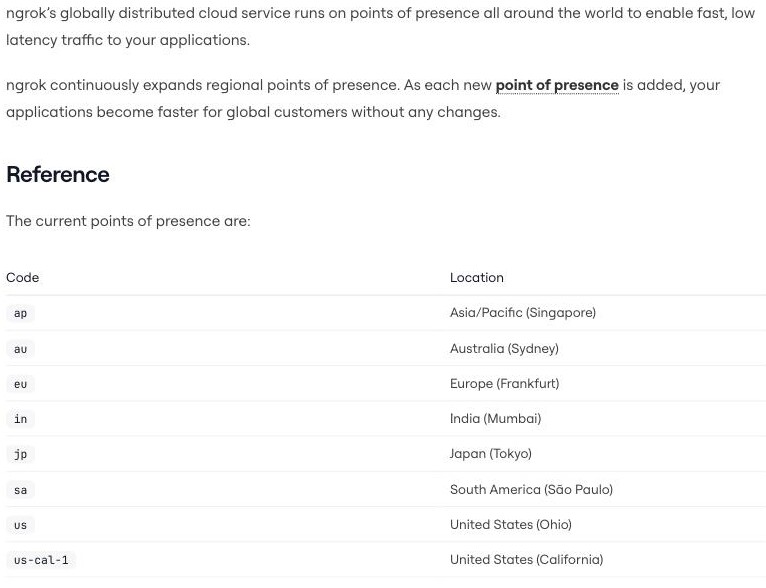
In its own words ngrok lets you "Expose a service running on localhost to the internet, even from behind a NAT or firewall," running on a "globally distributed cloud service [that] runs on points of presence all around the world" — and its own list of those points names Singapore, Sydney, Frankfurt, Mumbai, Tokyo, São Paulo, Ohio and California, none inside mainland China. Two consequences follow, and neither is about speed. A public service you expose to mainland visitors still needs an ICP filing bound to a mainland hosting resource, and an offshore tunnel endpoint has none to offer. And the client IPs and any personal data your users send travel offshore to ngrok's edge — a cross-border transfer PIPL governs. The table below pairs ngrok's own wording with the rule each point triggers.
This is a risk map, not a verdict — whether you owe an ICP filing, a PIPL transfer mechanism, or both turns on what you expose and who reaches it. Our China team can map your exposure with you →
What Ngrok's own documentation says about China
| Fact | Primary source |
|---|---|
| Every ngrok point of presence is offshore — none is in mainland China. ngrok states its "globally distributed cloud service runs on points of presence all around the world," and its own list of those points of presence is Asia/Pacific (Singapore), Australia (Sydney), Europe (Frankfurt), India (Mumbai), Japan (Tokyo), South America (São Paulo) and the United States (Ohio and California). The nearest to China is Singapore. Traffic between a mainland user and your ngrok endpoint therefore crosses the border every time. | ngrok Docs — Points of Presence (ngrok.com), retrieved 2026-10-07 |
ngrok is an ingress tool, not a place your app lives. In its own words ngrok lets you "Expose a service running on localhost to the internet, even from behind a NAT or firewall," and it "works everywhere, and it works the same everywhere: AWS, GCP, Azure, your on-prem data center, a Raspberry Pi, or your laptop." Your service keeps running wherever it already does; ngrok only carries traffic to it. That makes ngrok a developer and connectivity layer — not a licensed mainland presence you can operate a public China service on. | ngrok Docs — What is ngrok (ngrok.com), retrieved 2026-10-07 |
| Exposing a public service to mainland users still triggers ICP — and a tunnel cannot carry the filing. A public-facing site or API served to visitors inside China turns on an ICP filing (ICP 备案) under State Council Order No. 292 and MIIT Order No. 33, and that filing must attach to a hosting resource physically inside the mainland. An ngrok endpoint lives on an offshore point of presence, so there is nothing in-country for a filing to bind to. Reaching China is not the same as being cleared to operate there. | China's ICP filing regime — State Council Order No. 292; MIIT Order No. 33 (MIIT ICP filing portal, beian.miit.gov.cn) |
| Your users' traffic and data leave the mainland the moment they hit the tunnel. Because ngrok's edge is offshore, the client IP addresses and any personal information your China users submit are carried across the border to a point of presence outside the mainland. Under China's Personal Information Protection Law that is a cross-border transfer of personal information — requiring notice, separate consent and a transfer mechanism (PIPL Articles 38–43) — and for a critical information infrastructure operator or large-volume handler, personal information collected in China must be stored in the mainland (PIPL Article 40; Cybersecurity Law Article 39 (formerly Article 37)). | ngrok Docs — Points of Presence (offshore edge), retrieved 2026-10-07; PIPL Articles 38–43 & 40; Cybersecurity Law Article 39 (formerly Article 37) |
Sources verified by the 21YunBox compliance team on 2026-10-07.
For a mainland-China audience the question about ngrok is not whether a tunnel will open — it is what that tunnel is allowed to do. ngrok is an ingress tool: it takes a service you are already running and exposes it to the internet through ngrok’s own edge. But every one of ngrok’s points of presence sits outside mainland China, so a Chinese visitor reaches your endpoint only by crossing the border, and the public service on the other end is still subject to China’s licensing regime. Two doors decide the outcome, and neither is about speed — a public site exposed to mainland users needs an ICP filing that an offshore tunnel endpoint cannot carry, and the client IPs and personal data flowing out to ngrok’s edge are a cross-border transfer under China’s data law. The connection is the easy part; the license and the data path are the exposure.
Ngrok in China at a glance
| What decides it | In Ngrok's own terms |
|---|---|
| Where its edge runs | Eight points of presence — Singapore, Sydney, Frankfurt, Mumbai, Tokyo, São Paulo, Ohio and California. ngrok's own list has none inside mainland China; the nearest, Singapore, is still offshore. |
| What ngrok actually is | An ingress tool. ngrok “expose[s] a service running on localhost to the internet” and “works … the same everywhere: AWS, GCP, Azure, your on-prem data center, a Raspberry Pi, or your laptop.” Your service stays where it is; ngrok only carries traffic to it. |
| Reaching mainland users | Every request from inside China crosses the border to an offshore point of presence. That makes delivery variable — a reachability issue, not a license. |
| Serving the public | A public site or API exposed to mainland visitors needs an ICP filing bound to a mainland host. An offshore tunnel endpoint has no in-country footing to carry one. |
| Your users' data | Client IPs and any personal data flow out to ngrok's offshore edge — a cross-border transfer PIPL governs, with a storage-in-China duty for CIIOs and large-volume handlers. |
An offshore edge, by ngrok’s own map
ngrok’s “globally distributed cloud service runs on points of presence all around the world,” and its published list of those points is Asia/Pacific (Singapore), Australia (Sydney), Europe (Frankfurt), India (Mumbai), Japan (Tokyo), South America (São Paulo) and the United States in Ohio and California. Not one of them is inside mainland China, and the closest — Singapore — is still outside it. ngrok is explicit about what it does with that network: it lets you “Expose a service running on localhost to the internet, even from behind a NAT or firewall,” and it “works everywhere, and it works the same everywhere: AWS, GCP, Azure, your on-prem data center, a Raspberry Pi, or your laptop.”
That design is the honest first fact about ngrok in China: a mainland visitor can only reach your tunnel by crossing the border to an offshore point of presence, so delivery is variable in the way any cross-border path into China is. But reachability is the easy half of the question. It tells you nothing about whether you are permitted to run the public service you have just exposed — and that is where the two compliance doors open.
A tunnel is not a mainland presence — so ICP has nothing to attach to
A public-facing website or API served to visitors inside China turns on an ICP filing (ICP 备案) under State Council Order No. 292 and MIIT Order No. 33. The filing is not a formality you bolt on afterward: it must attach to a hosting resource that is physically located in the mainland, and a domain without one may not lawfully provide internet information service to Chinese users. An ngrok endpoint lives on an offshore point of presence, so there is simply nothing in-country for a filing to bind to.
This is where “we just expose it through ngrok” runs out. ngrok is a developer and connectivity layer — it carries traffic to a service that keeps running wherever it already runs. It does not give you a mainland hosting footprint, and it is not a production China hosting path. Opening a tunnel makes your service reachable; it does not make you cleared to operate a public presence in China.
Your users’ IPs and data cross the border
Because ngrok’s edge is offshore, every request from a Chinese user — the client IP address and any personal information they submit — is carried out of the mainland to a point of presence outside it. Under China’s Personal Information Protection Law that movement is a cross-border transfer of personal information, which obliges the handler (you, not ngrok) to give notice, obtain separate consent, and clear a transfer mechanism: a CAC security assessment, the CAC standard contract, or certification (PIPL Articles 38–43). If you are a critical information infrastructure operator or a large-volume handler, personal information collected in China must be stored in the mainland (PIPL Article 40; Cybersecurity Law Article 39 (formerly Article 37)) — a duty no offshore point of presence can meet. ngrok is not a datastore, but it is the point at which the data leaves the country, so the transfer rule bites at the ingress itself.
This is a risk map, not a verdict: whether you owe an ICP filing, a PIPL transfer mechanism, in-country storage, or some combination turns on what you expose, how much personal data you handle, and who your users are — worth settling with counsel before you ship.
Where 21YunBox fits — a compliant overlay, not a migration
Keep ngrok where it earns its place — in development, for demos, for webhook testing. For a production service you need to put in front of mainland users, we add the one piece an offshore ingress tool cannot: compliant, ICP-filed delivery from inside the mainland, placed in front of your existing origin — no rebuild, no second codebase, and no move off the stack you already run. Our China team maps your ICP and PIPL cross-border obligations against your entity and your data, then stands up the in-country delivery a lawful public presence needs, while your application keeps running exactly where it does today.
Related reading: