Does SingleStoreDB Cloud Work in China? Data Residency, PIPL & the ICP Question
SingleStore's managed Helios cloud runs only on AWS, Azure and GCP — with no region inside mainland China — so serving Chinese users keeps their personal data offshore under PIPL. A database carries no ICP of its own, and only the self-managed build can stay in-country. A compliance-first look at the doors.
Does SingleStoreDB Cloud work in China?
SingleStoreDB Cloud reaches China, but its managed Helios service runs only on AWS, Azure and GCP — with no region inside mainland China — so serving Chinese users keeps their personal data offshore. A database is a backend and carries no ICP of its own; the licensing risk sits on the public app in front of it, and the data risk sits on where the records live.
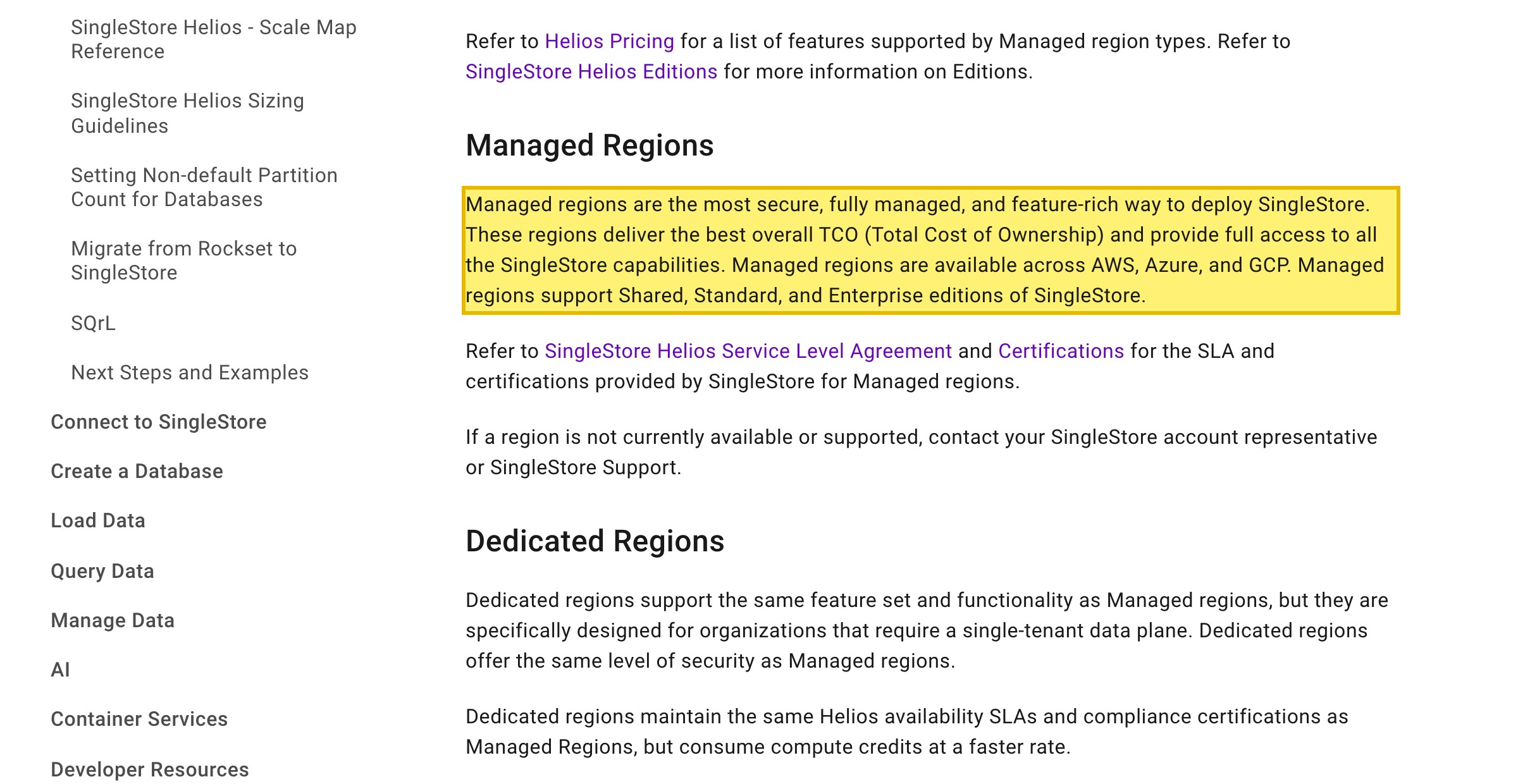
SingleStore's own documentation defines a Helios region as a location “provided by AWS, Google Cloud (GCP), and Microsoft Azure where SingleStore can be deployed,” and states “Managed regions are available across AWS, Azure, and GCP” — none of which gives SingleStore a mainland region. Keep your Chinese users' records in a managed cluster and that personal information is stored offshore, a cross-border transfer PIPL governs (notice, separate consent and a transfer mechanism), with an in-country storage duty for a CIIO or large-volume handler. SingleStore's self-managed build can instead be installed on mainland infrastructure to keep data in-country — but then the ICP filing on your public app and the residency duty become yours. The table below is SingleStore's own wording and the rule each door triggers.
This is a risk map, not a verdict — which door fits turns on your entity, your data volumes and who your users are. Our China team can map your exposure with you →
What Singlestoredb Cloud's own documentation says about China
| Fact | Primary source |
|---|---|
| Managed SingleStore (Helios) runs only on AWS, Azure and GCP — with no region inside mainland China. SingleStore's own documentation defines a Helios region as a location “provided by AWS, Google Cloud (GCP), and Microsoft Azure where SingleStore can be deployed,” and states “Managed regions are available across AWS, Azure, and GCP.” None of those three global clouds gives SingleStore a mainland region — AWS China and Azure China are separate, locally-operated partitions, and GCP operates no mainland region (inference) — so a managed cluster serving Chinese users keeps their personal information offshore. | SingleStore Helios Region Types (docs.singlestore.com), retrieved 2026-10-07 |
| SingleStore is also self-managed software you can run on your own hosts — the one door that can keep data in-country. Its deployment docs state SingleStore “can be deployed on bare metal, on virtual machines, or in the cloud by using SingleStore Tools, or via popular configuration management tools.” Install that self-managed build on mainland-China infrastructure and the records can stay inside the country — but the ICP filing on your public app and the data-residency duty then fall on you, not on SingleStore. | SingleStore self-managed Deploy docs, v9.1 (docs.singlestore.com), retrieved 2026-10-07; State Council Order No. 292; MIIT Order No. 33 |
| Where your users' records sit decides the PIPL question. Hold Chinese users' personal data in a managed, offshore Helios cluster and that is a cross-border transfer under PIPL — the handler (you, not SingleStore) must give notice, obtain separate consent, and clear one transfer mechanism: a CAC security assessment, the CAC standard contract, or certification (Articles 38–43). For a critical information infrastructure operator or a large-volume handler, personal information collected in China must be stored in the mainland (PIPL Article 40; Cybersecurity Law Article 39 (formerly Article 37)) — a duty no AWS, Azure or GCP region outside the mainland can satisfy. | PIPL Articles 38–43 & 40; Cybersecurity Law Article 39 (formerly Article 37); SingleStore Helios Region Types (docs.singlestore.com), retrieved 2026-10-07 |
| A database carries no ICP filing of its own — the licence attaches to the public site in front of it. An ICP filing (ICP 备案, under State Council Order No. 292 and MIIT Order No. 33) is bound to the public-facing website or app that serves mainland visitors, not to the SingleStore cluster behind it. SingleStore gives you no mainland region to file against in any case — its docs tell you to “contact your SingleStore account representative or SingleStore Support” when a region is not available — so the licensed footing has to come from the mainland delivery layer in front of your database, never from the database itself. | SingleStore Helios Region Types (docs.singlestore.com), retrieved 2026-10-07; State Council Order No. 292; MIIT Order No. 33 |
Sources verified by the 21YunBox compliance team on 2026-10-07.
For a mainland-China audience, the question about SingleStoreDB Cloud is not how quickly it answers a query — it is where your users’ records are allowed to live and who is licensed to serve the application that reads them. SingleStore settles the first half in its own documentation: its managed Helios service deploys only on AWS, Google Cloud and Microsoft Azure, and none of those gives SingleStore a region inside the mainland. A database is a backend, so it never carries an ICP filing of its own — but hold Chinese users’ personal data in an offshore cluster and you have a cross-border transfer China’s law governs, while the public app in front of it still needs a mainland, licensed footing. Reachability is the easy half; residency and licensing are the exposure.
SingleStoreDB Cloud in China at a glance
| What decides it | In SingleStore's own terms |
|---|---|
| Where it runs | A Helios region is a location “provided by AWS, Google Cloud (GCP), and Microsoft Azure where SingleStore can be deployed.” SingleStore names no mainland-China region, and says to “contact your SingleStore account representative or SingleStore Support” when one is not available. |
| Managed vs self-managed | “Managed regions are available across AWS, Azure, and GCP” — the managed service never lands in the mainland. Only the self-managed build, which “can be deployed on bare metal, on virtual machines, or in the cloud,” can run on your own in-country hosts. |
| Serving the public | A SingleStore cluster is a backend and holds no ICP filing. The ICP 备案 attaches to the public website or app in front of it, which needs a mainland, in-country footing under State Council Order No. 292 and MIIT Order No. 33. |
| Your data on managed Helios | Personal data of Chinese users in a managed cluster sits offshore — a cross-border transfer PIPL governs, plus a data-localization duty for CIIOs and large-volume handlers that an offshore region cannot meet. |
| Self-managed on mainland infra | Self-hosting SingleStore on mainland infrastructure can keep records in-country — but the ICP filing on the public app and the residency duty then become yours, not SingleStore's. |
Managed Helios deploys offshore — there is no mainland region to land in
SingleStore’s managed cloud, Helios, is a service SingleStore operates for you on top of the big three public clouds. In its own words a region is a location “provided by AWS, Google Cloud (GCP), and Microsoft Azure where SingleStore can be deployed,” and “Managed regions are available across AWS, Azure, and GCP.” That sentence is the whole compliance story for the managed product: none of those three global clouds offers SingleStore a region inside mainland China. AWS China and Azure China are separate, locally-operated partitions SingleStore does not deploy into, and Google Cloud runs no mainland region at all. When a region you want is not on the menu, SingleStore’s own answer is to “contact your SingleStore account representative or SingleStore Support” — not to spin one up in Beijing or Shanghai.
So a managed Helios cluster serving Chinese users keeps their personal information in the United States, Europe or the Asia-Pacific — everywhere except the mainland. The distance is not the problem a filing or a residency rule cares about; the location is. “We already run on SingleStore” settles none of it, because the managed service has no mainland footing to begin with.
Self-managed SingleStore is the only in-country door — and it moves the duties onto you
SingleStore is not only a managed cloud. It is also software you can install and run yourself: its deployment docs state SingleStore “can be deployed on bare metal, on virtual machines, or in the cloud by using SingleStore Tools, or via popular configuration management tools.” That is the one door that can put your data inside China — stand the self-managed build up on mainland infrastructure and the records stay in-country, which is exactly what a data-localization duty asks for.
But the honest trade is that the self-managed door hands you the obligations the managed cloud never had to meet. Running on a mainland host does not file anything for you: the public app in front of the database still needs its own ICP filing, and you — as the handler — own the residency and security duties that come with holding Chinese personal data on Chinese soil. The self-managed build makes a compliant posture possible; it does not make it automatic.
The cluster holds no ICP — the licence lives on the app in front of it
It is worth being precise about what an ICP filing even attaches to, because a database is where that distinction bites. The ICP filing (ICP 备案), under State Council Order No. 292 and MIIT Order No. 33, is bound to the public-facing website or app that serves mainland visitors — never to the backend data store behind it. A SingleStore cluster, managed or self-hosted, is that backend. So the right question is not “can we ICP-file SingleStore” (you cannot, and you do not need to) but “does the public application reading from SingleStore have a mainland, ICP-filed footing” — and whether the personal data in the cluster is handled lawfully wherever it sits.
That second clause is where the managed cloud’s offshore geography returns as risk. Under China’s Personal Information Protection Law, storing your Chinese users’ personal information on an offshore Helios region is a cross-border transfer: you must give notice, obtain separate consent, and clear one transfer mechanism — a CAC security assessment, the CAC standard contract, or certification (Articles 38–43). If you are a critical information infrastructure operator or a large-volume handler, personal information collected in China has to be stored in the mainland (PIPL Article 40; Cybersecurity Law Article 39 (formerly Article 37)) — a residency duty that an AWS, Azure or GCP region outside China simply cannot discharge, and that only the in-country, self-managed path can.
This is a risk map, not a verdict: whether you need an ICP-filed app, in-country storage, or both depends on what the public application does, how much personal data you hold, and who your users are — worth settling with counsel before you build.
Where 21YunBox fits — a compliant overlay, not a migration
You keep running SingleStore exactly as you do now — managed Helios offshore, or your own self-managed cluster. What a database cannot give you, we add alongside it: compliant, ICP-filed delivery from inside the mainland, placed in front of the public application that reads from SingleStore — no rebuild, no second codebase, and no move off your data platform. Our China team works through which door your case turns on, weighs your PIPL cross-border and data-residency exposure against your entity and data volumes, and stands up the in-country, licensed footing a lawful China presence needs while your database stays where it already lives.
Related reading: