Does Framer Work in China? ICP, Reachability & an Offshore CDN
Framer publishes and hosts every site on its own offshore global CDN — it names no mainland-China location — so a China-facing Framer site has no ICP-filing path, and reaching it from inside the mainland is a delivery-and-cross-border question, not a tuning one. A compliance-first look at the two doors.
Does Framer work in China?
For a public, mainland-China audience the honest answer is "not on its own" — and the reason is licensing and reachability, not tuning. You keep designing and publishing in Framer; what a public China site needs on top is an ICP-filed, in-country presence that Framer's offshore hosting was never meant to provide.
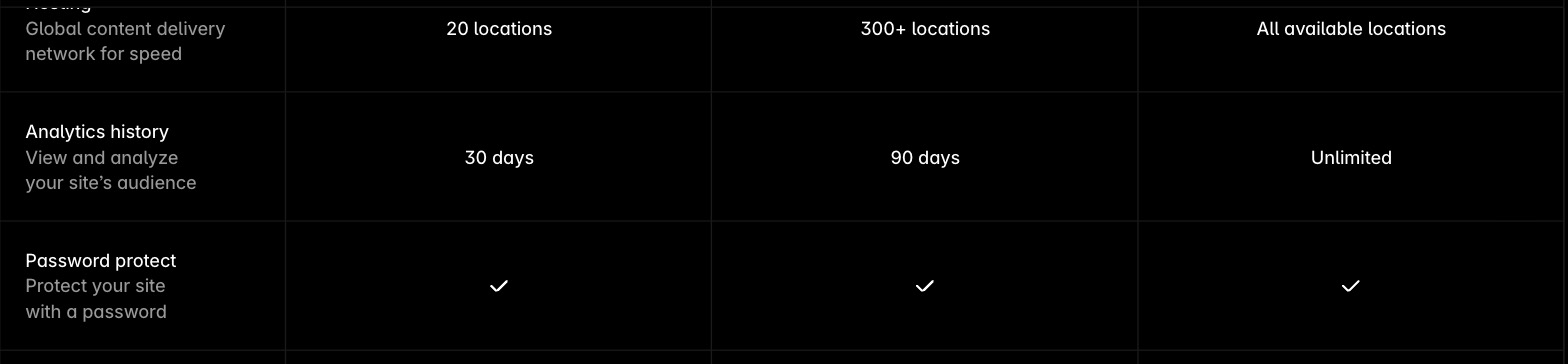
Framer hosts every published site on its own CDN: its hosting features name a "Global content delivery network for speed" reaching from "20 locations" to "300+ locations", served on a Framer address or a custom domain — and Framer documents no mainland-China location. Two things follow for a public China site, and the table below sets them against Framer's own wording: a site served from that offshore CDN has no ICP filing to attach to in-country; and reaching it from inside the mainland is a delivery question — in 21YunBox's own tests Framer's own site answered but did not finish loading from two China vantages. A visitor's real IP crossing the border adds a lighter PIPL question on top.
This is a risk picture to take to counsel, not a verdict — what applies turns on whether you serve the public in China, your entity, and the data your site handles. Our China team can map the Framer + 21YunBox path with you →
What Framer's documentation says, and what we measured from inside China
| Fact | Primary source |
|---|---|
| In Framer's own words, every published site is served from Framer's own global CDN — and Framer names no mainland-China location. Framer's hosting features list a "Global content delivery network for speed" spanning "20 locations", "300+ locations" and "All available locations", and let you "Connect your own domain to your website." Whether you keep the Framer-provided address or a custom domain, the site is published from that offshore CDN; Framer documents no mainland-China region. A foreign CDN edge is offshore infrastructure, not a licensed in-country host — so it cannot carry an ICP filing even where an edge sits near China. | Framer — Pricing (hosting features), retrieved 2026-10-07 |
| A public mainland-China site needs an ICP filing, and there is nothing on Framer for it to attach to. Under State Council Order No. 292 (Article 4) and MIIT Order No. 33, an ICP filing (备案) attaches to a hosting resource physically inside mainland China and to a mainland legal entity. A Framer-published site runs on Framer's offshore CDN with no in-country host and no mainland entity to file against — so the ICP door simply isn't on Framer. That is a licensing-and-location boundary, not a defect in Framer. | State Council Order No. 292 (Measures for the Administration of Internet Information Services), Article 4; MIIT Order No. 33 (ICP filing measures) |
| A mainland visitor's real IP address is personal information, so how it crosses the border is a PIPL question. Serving the mainland from an offshore CDN and carrying visitors' real IPs and request logs out of the country is a cross-border transfer under PIPL (Chapter III, Articles 38–43: notice, separate consent, and one permitted transfer mechanism; Article 40, with Cybersecurity Law Article 39 (formerly Article 37), adds in-country storage for a CIIO or large-volume handler). A mostly static marketing site is lighter here than a data-heavy app, but the compliant design still answers it the same way — an in-country, ICP-filed entry that sends a fixed in-country IP to your origin rather than forwarding each visitor's real IP across the border. | PIPL Chapter III, Articles 38–43 and Article 40; Cybersecurity Law Article 39 (formerly Article 37) |
Measured from inside mainland China, Framer's own site answered quickly but did not finish loading. Requested from an Alibaba Cloud probe in cn-zhangjiakou on 2026-08-28 and again from a residential broadband line in Beijing on 2026-08-30 — three runs each — framer.com (which Framer builds and serves on its own infrastructure) returned a first byte in a median of 339ms and 622ms respectively, yet navigation did not complete within the 60-second window on any of the six attempts. On the Beijing line Framer's published-asset host framerusercontent.com returned 138 of 139 requests while offshore third-party calls (Google Tag Manager and a Cloudflare worker) hung — so the failure to finish is the offshore delivery showing, not a hard block. | 21YunBox — China delivery measurement, measured from inside mainland China (cn-zhangjiakou 2026-08-28; Beijing residential broadband 2026-08-30) |
Sources verified by the 21YunBox compliance team on 2026-10-07.
For a mainland-China audience the deciding question about Framer is not how polished the site looks or how quickly its first byte arrives — it is whether a site published on Framer can be licensed to serve the public from inside China, and whether it reaches visitors there at all. Framer answers the hosting part in its own words: every published site is served from Framer’s own global CDN, on a Framer address or a custom domain, and Framer names no mainland-China location. That settles two things before performance ever enters — there is no in-country host for an ICP filing to attach to, and the site is reaching China from offshore — while a mainland visitor’s real IP crossing the border adds a lighter data question on top. You keep designing in Framer; the gap is licensing and in-country delivery, and tuning does not close it.
Framer in China at a glance
| What decides it | In Framer's own terms |
|---|---|
| Where it's hosted | Every published site is served from Framer's own “Global content delivery network for speed” — from “20 locations” up to “300+ locations” — on a Framer address or a custom domain. No location is inside mainland China. |
| Serving the public | A site served to mainland visitors from inside China needs an ICP filing tied to a mainland host and a mainland entity. Framer publishes from its offshore CDN, so there is no in-country resource to file against. |
| Is it reachable? | Reachable, but not reliably complete. From two China vantages (2026-08-28 and 2026-08-30) framer.com answered fast yet finished loading on 0 of 6 attempts within the 60-second window. |
| Your visitors' data | Serving the mainland from offshore carries visitors' real IPs and request logs across the border — a cross-border transfer PIPL governs, lighter for a static site but answered the same way in a compliant design. |
| What doesn't change | Your Framer project, CMS and the visual editor stay exactly where they are. The compliant piece is added in front of the published site, not migrated off Framer. |
No in-country host, so no footing for an ICP filing
Framer serves every published site from its own global CDN. In its own hosting features Framer lists a “Global content delivery network for speed,” scaling from “20 locations” to “300+ locations” and “All available locations,” and lets you “Connect your own domain to your website.” Keep the Framer-provided address or point your own domain at it, and either way the site is published from that offshore CDN — Framer documents no mainland-China location.
That geography settles the licensing question before performance enters it. A public-facing website delivered to mainland visitors from inside China turns on an ICP filing (ICP 备案) under State Council Order No. 292 and MIIT Order No. 33, and that filing must attach to a hosting resource physically located in the mainland and to a mainland legal entity. A Framer-published site has neither — there is no in-country host and no mainland entity on Framer for a filing to sit on. So “our site is already live on Framer” does not carry across the border: reaching China is not the same as being cleared to serve the public there, and a foreign CDN edge, however close, is offshore infrastructure that cannot be ICP-filed.
Reachable from China, but not reliably complete
Framer is not hard-blocked in China. In 21YunBox’s own measurements from inside the mainland — an Alibaba Cloud probe in cn-zhangjiakou on 2026-08-28 and a residential broadband line in Beijing on 2026-08-30, three runs each — framer.com (which Framer builds and serves on its own infrastructure) answered quickly, with a median time to first byte of 339ms and 622ms respectively. Yet navigation did not complete within the 60-second window on any of the six attempts. On the Beijing line Framer’s published-asset host framerusercontent.com returned 138 of 139 requests while offshore third-party calls — Google Tag Manager and a Cloudflare worker — hung with no response.
So the pattern is “answers, then stalls”: a fast first byte is not the same as a page that finishes loading, and the stall is the offshore distance and offshore dependencies showing through, not a block. That is the reachability half of the question, and it is separate from — and on top of — the licensing half. Tuning the assets does not change that a Framer-served site reaches China from offshore and still has no in-country footing.
Your visitors’ data still crosses the border
A mostly static marketing site is lighter on data than a logged-in application, but it is not weightless: a mainland visitor’s real IP address and request logs are personal information, and serving them from offshore moves that data out of the country. Under China’s Personal Information Protection Law that is a cross-border transfer — the handler (you, not Framer) must give notice, obtain separate consent, and satisfy one transfer mechanism: a CAC security assessment, the CAC standard contract, or certification. For a critical information infrastructure operator or a large-volume handler, personal information collected in China must be stored in the mainland (PIPL Article 40; Cybersecurity Law Article 39 (formerly Article 37)).
The compliant design answers this the same way it answers the ICP and reachability gaps: keep an in-country, ICP-filed entry point and send a fixed in-country IP to your origin, rather than carrying each visitor’s real IP across the border. This is a risk map, not a verdict — whether an ICP filing, in-country storage, or both apply turns on what your site serves, how much personal data it handles, and who your users are, and is worth settling with counsel before you build.
Where 21YunBox fits — a compliant overlay, not a migration
You keep designing and publishing in Framer. We add the one piece a hosted builder serving from offshore cannot: compliant, ICP-filed delivery from inside the mainland, set in front of your existing Framer-published site — no rebuild, no second codebase, and no move off Framer. Our China team maps your ICP and cross-border obligations against your entity and your data, handles the filing, and stands up the in-country delivery a lawful China presence needs, while Framer stays your editor and your source of truth.
Related reading: