Does Algolia Work in China? Data Residency, PIPL & an Offshore Search Index
Algolia runs no cluster inside mainland China — its search index and the queries, clicks and IP addresses it logs sit offshore, the nearest region being Hong Kong or Singapore — so powering on-site search for China visitors is a PIPL cross-border transfer with no ICP-filing path. A compliance-first look at where your search data lives.
Does Algolia work in China?
Whether you can use Algolia in China is first a data-residency and cross-border-data question, not a speed one. Algolia is hosted search: it keeps a copy of your content as an index and, to rank and tune results, records the queries your visitors type and the results they click.
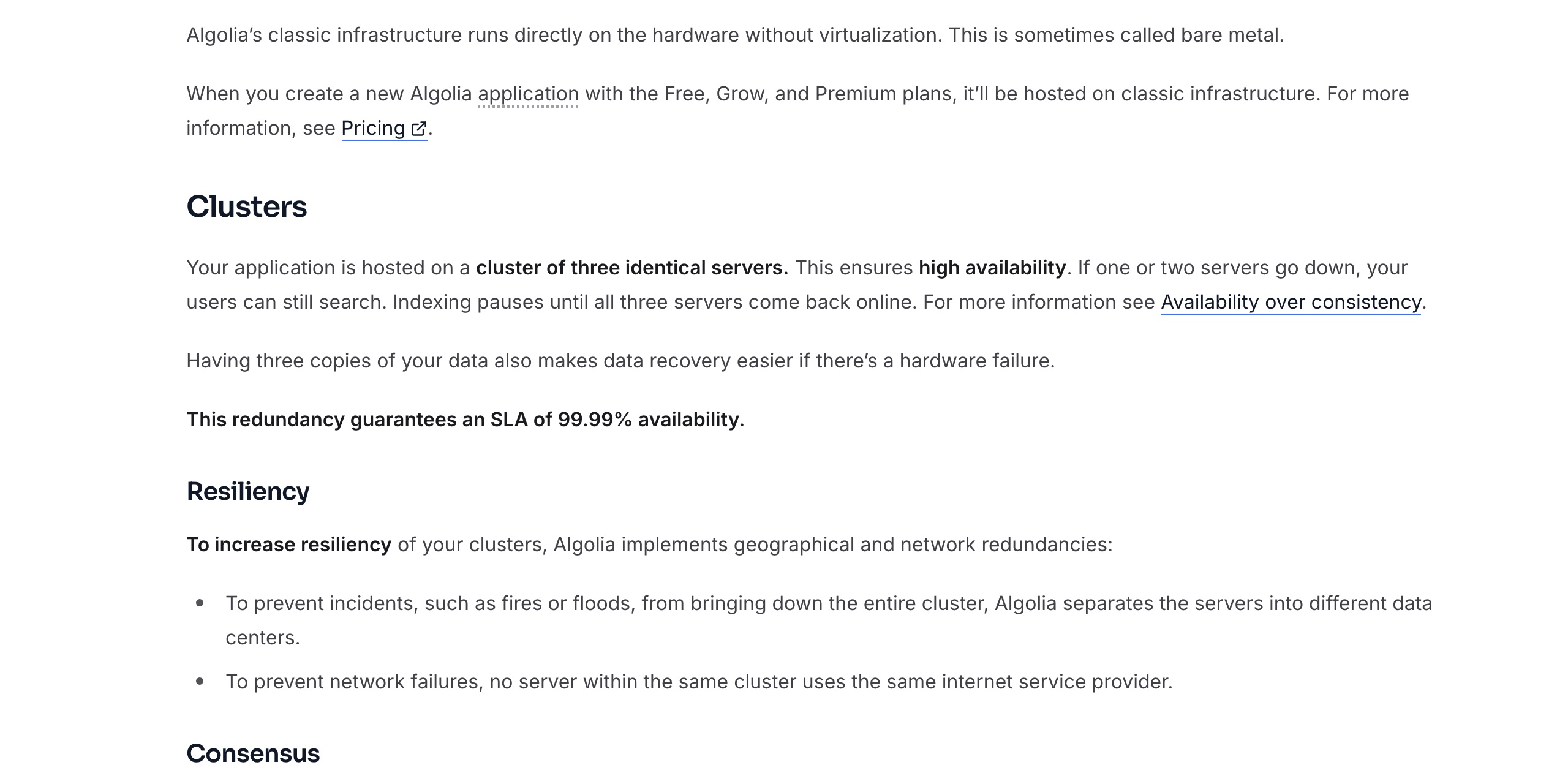
By Algolia's own infrastructure documentation an application "is hosted on a cluster of three identical servers," and when you create one you "choose a region" from a list that runs from Virginia and Germany to Singapore, Japan and Hong Kong — none in mainland China. So your index, the searches your China visitors type, and the click and behavioral analytics tied to them are processed and stored offshore: a cross-border transfer of personal information that PIPL governs, needing notice, separate consent, a transfer mechanism, and for a CIIO or large-volume handler, in-country storage. The table below is Algolia's own wording and the rules it triggers.
This is a risk picture, not a verdict — your obligations turn on your data volumes and your role. Our China team can map your Algolia exposure with you →
Compliance snapshot
- ! Reachable, but search is served from offshore clusters — the nearest are Hong Kong and Singapore, so every keystroke's query crosses the border
- ! Your search index and the queries, clicks and IP addresses it logs are stored offshore (US, EU, Canada, Brazil, Singapore, Japan, Australia, India, Hong Kong, South Africa)
- ! That offshore query and behavioral data is personal information — a PIPL cross-border transfer the handler (you, not Algolia) must clear
- ✕ No mainland-China cluster or data-residency option; a closer DSN edge is still a duplicate served from offshore
- ✓ A compliant, ICP-filed in-country delivery path exists — no rebuild, no migration
What Algolia's own documentation says about China
| Fact | Primary source |
|---|---|
| In Algolia's own words: an application "is hosted on a cluster of three identical servers," and "when you create new Algolia applications with classic infrastructure, you can choose a region where your new application will be hosted." The current region list runs US-East (Virginia), US-West (California), US-Central (Texas), Europe (France, the Netherlands, Germany and the UK), Canada, Dubai, Singapore, Brazil, Japan, Australia, India, Hong Kong and South Africa — none in mainland China, the nearest being Hong Kong and Singapore, both still offshore. | Algolia — Servers and clusters (classic infrastructure regions), last modified 2026-09-16, retrieved 2026-10-07 |
| A closer point of presence does not move the data onshore. Algolia's Distributed Search Network "makes search faster by adding extra servers close to your users," and those servers "aren't backups. They're independent duplicates of your cluster's data and configuration." The nearest Algolia offers is Hong Kong or Singapore, so a DSN replica still copies your index and serves it from outside the mainland — latency relief, not a mainland-China residency option. | Algolia — Distributed Search Network (DSN), retrieved 2026-10-07 |
| What sits in that offshore cluster is personal information. Algolia's Search Analytics records the queries your visitors type (it surfaces your most-popular searches), and its click and conversion events tie that behavior to a per-user token. Algolia's privacy policy states it "may collect and process personal data about our subscribers' … end users … as a processor … in accordance with our subscriber's instructions," and that the log data it keeps "includes your Internet Protocol address." Under PIPL the personal-information handler is you, Algolia's customer — not Algolia. | Algolia — Privacy Policy; Search Analytics, retrieved 2026-10-07 |
| Data collected from users in China and stored in a US, European, Singapore, Japanese or Hong Kong cluster leaves the country. PIPL governs that cross-border transfer: the handler (you, Algolia's customer) must give notice, obtain separate consent, and satisfy one transfer mechanism — a CAC security assessment, the CAC standard contract, or certification. | PIPL Chapter III, Articles 38–43 |
| For a CIIO or large-volume handler, personal information collected in China must be stored inside mainland China (PIPL Article 40; CSL Article 39 (formerly Article 37)). Algolia publishes no mainland-China region, so the only way to keep your China visitors' search and behavioral data on Chinese soil is to run that search and its storage on infrastructure inside the mainland — and standing that up legally is what brings an ICP filing into the picture. | PIPL Article 40; CSL Article 39 (formerly Article 37); Algolia — Servers and clusters (no mainland region), retrieved 2026-10-07 |
Sources verified by the 21YunBox compliance team on 2026-10-07.
For a mainland-China audience, the deciding question about Algolia is not how quickly results appear — it is where your search index is allowed to sit and where the things your visitors type are allowed to live. Algolia is hosted search: it keeps a copy of your content as an index and, to rank and tune results, records the queries people enter and the results they click. Algolia answers the location question in its own documentation — its clusters run in the United States, Europe, Canada, Brazil, Singapore, Japan, Australia, India, Hong Kong and South Africa, and not one of them is inside mainland China. A China-facing site can still reach Algolia, but the index, the queries and the click data are served and stored offshore — which turns on-site search into a cross-border transfer of personal information China’s law governs, and leaves no mainland footing for an ICP filing. The reachability is a delivery matter; the residency and the licensing are the exposure.
Algolia in China at a glance
| What decides it | In Algolia's own terms |
|---|---|
| Where it runs | Your application is “hosted on a cluster of three identical servers” in a region you pick when you create it — Virginia, California, Texas, France, the Netherlands, Germany, the UK, Canada, Dubai, Singapore, Brazil, Japan, Australia, India, Hong Kong or South Africa. None is inside mainland China; the nearest, Hong Kong and Singapore, are still offshore. |
| What's stored | Your search index (a copy of your searchable content), plus the queries your visitors type and the click and conversion analytics tied to them — kept in that offshore cluster. |
| A nearer edge (DSN) | The Distributed Search Network can add “independent duplicates of your cluster's data” closer to users, but a Hong Kong or Singapore replica still serves from outside the mainland — latency relief, not mainland residency. |
| Serving the public | Running search from inside China to serve the public needs an ICP filing tied to a mainland hosting resource. With no mainland region, Algolia offers no ICP-filing path of its own. |
| Your data under PIPL | Queries, click behavior and IP addresses of China visitors held offshore are a cross-border transfer PIPL governs, plus a data-localization duty for CIIOs and large-volume handlers that offshore clusters cannot meet. |
Where your search index and query logs live
Algolia keeps a copy of your searchable content as an index, and in its own words that index is “hosted on a cluster of three identical servers” in a single region you choose when you create the application. The regions Algolia lists are Virginia, California and Texas in the United States; France, the Netherlands, Germany and the UK in Europe; and Canada, Dubai, Singapore, Brazil, Japan, Australia, India, Hong Kong and South Africa. Not one sits inside mainland China, and the two closest — Hong Kong and Singapore — are outside it. Alongside the index, Algolia’s Search Analytics records the queries your visitors type, surfacing your most-popular searches, while its click and conversion events attach that behavior to a per-user token. All of it lives in the offshore cluster you picked.
A nearer point of presence is not a mainland region
If your China plan leaned on Algolia’s Distributed Search Network to put results closer to users, read what DSN is in Algolia’s own words: it “makes search faster by adding extra servers close to your users,” and those servers “aren’t backups. They’re independent duplicates of your cluster’s data and configuration.” The nearest Algolia offers is a Hong Kong or Singapore replica, which copies your index and serves it from outside the mainland. That can shorten the round trip, but it does not create a mainland-China region and it does not change where the data of record lives. So “we’ll just add a closer edge” answers latency — not residency, and not the question of whether the data may leave China at all.
Your China visitors’ queries and behavior cross the border
Serve search from any of those regions and the things your China visitors type — along with the clicks, the user tokens and, in Algolia’s own privacy policy, their “Internet Protocol address” — are processed and stored offshore. Under China’s Personal Information Protection Law that is a cross-border transfer, and the handler is you, Algolia’s customer, not Algolia: its privacy policy describes itself processing this data “as a processor … in accordance with our subscriber’s instructions.” As the handler you have to give notice, obtain separate consent, and clear one transfer mechanism — a CAC security assessment, the CAC standard contract, or certification. If you are a critical information infrastructure operator or a large-volume handler, personal information collected in China must be stored in the mainland (PIPL Article 40; Cybersecurity Law Article 39 (formerly Article 37)) — a residency duty none of Algolia’s regions can satisfy, and an offshore search endpoint cannot be ICP-filed under State Council Order No. 292 and MIIT Order No. 33.
This is a risk map, not a verdict: whether you need in-country storage, an ICP-filed in-country search path, or both turns on what you serve, how much personal data you hold, and who your users are — worth settling with counsel before you build.
Reachable, but search feels the distance
Algolia is not blocked in China, but search is the most latency-sensitive thing on a site — a visitor types and expects results between keystrokes — so every query making a cross-border round trip to an offshore cluster is felt sharply, and a poor network path can degrade or break on-site search. That is a delivery problem worth solving. It is a separate matter from the compliance one, though: tuning the network does not move your index onshore, and it does not clear the PIPL transfer that offshore storage creates.
Where 21YunBox fits — a compliant overlay, not a migration
You keep building on Algolia. We add the piece a search provider with no mainland region cannot: compliant, ICP-filed delivery from inside the mainland, set in front of your existing search so your China visitors reach it in-country — no rebuild, no second codebase, and no move off Algolia. Our China team maps your PIPL cross-border and data-residency obligations against your entity and data volumes, then stands up the in-country delivery and, where the law requires it, the in-country storage a lawful China search presence needs, while your application keeps running exactly where it already does.
Related reading:
Frequently Asked Questions
Does Algolia store Chinese visitors' search data in China?
No. By Algolia's own infrastructure documentation, an application is hosted on a cluster in the region you choose, and that list runs from Virginia and Germany to Singapore, Japan and Hong Kong — none in mainland China. Its Distributed Search Network can place a closer replica (nearest Hong Kong or Singapore), but those are independent duplicates of the same offshore cluster, not a mainland-China region. So your index, your visitors' search queries and the click analytics tied to them are held offshore.
Is it against the law to use Algolia in China?
Not inherently. The issue is the cross-border transfer of the personal data inside your queries, click events and logs (including IP addresses), which PIPL permits if you give notice, obtain separate consent and meet one of its transfer mechanisms. Whether you also face an in-country storage obligation depends on your role (for example, whether you are a CIIO) and the volume of personal information you handle — a smaller, non-sensitive volume carries lighter obligations than a large one. Treat this as a risk to assess with counsel, not a blanket prohibition.
Can 21YunBox help make our Algolia-powered search compliant in China?
Yes. Our China team can help you assess the cross-border and data-residency exposure for your data volumes and role, and stand up the compliant, ICP-filed in-country delivery — and, where the law requires your China visitors' search and behavioral data to stay on the mainland, in-country storage — without moving you off Algolia. Get in touch to work through your specific case.