Does BombBomb Work in China? PIPL, Your Contacts' Data & Offshore Storage
BombBomb stores your contacts' and recipients' personal information on U.S. servers and runs no mainland-China region — so using it for a Chinese audience is a PIPL cross-border transfer of personal data, not a speed problem. A compliance-first look at the exposure.
Does BombBomb work in China?
BombBomb is reachable from China, but that is not the question. It stores your contacts' and recipients' personal information on U.S. servers and runs no mainland-China region — so using it for a Chinese audience is a PIPL cross-border transfer you are responsible for legalizing, not a speed problem.
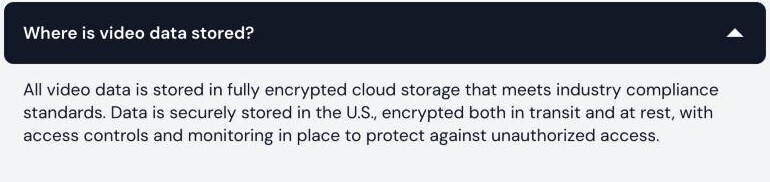
In its own words BombBomb keeps "Data is securely stored in the U.S., encrypted both in transit and at rest," and the data in question is other people's: its privacy notice says "Subscriber Information includes the names and e-mail addresses of the individuals whom you contact." Load a mainland contact list and you export their personal data out of China — a cross-border transfer PIPL governs (notice, separate consent and a transfer mechanism; Articles 38–43), with a data-residency duty for CIIOs and large-volume handlers that U.S.-only storage cannot meet. Where the player is embedded in a public mainland site, the ICP filing falls on that site, not on BombBomb. The table below is BombBomb's own wording and the rule each line triggers.
This is a risk map, not a verdict — which duties apply turns on your entity, your data volumes and who your contacts are. Our China team can map your exposure with you →
Compliance snapshot
- ! BombBomb stores your contacts' and recipients' personal data on U.S. servers
- ! Using it for mainland contacts is a PIPL cross-border transfer of personal data
- ✕ No mainland-China region, so data can't be kept in-country on BombBomb
- ! Videos and open/click tracking reach your China viewers from offshore
- ! Embed the player in a mainland site and the ICP filing is on that site, not BombBomb
What Bombbomb's own documentation says about China
| Fact | Primary source |
|---|---|
| BombBomb keeps your data in the United States, with no mainland-China region. On its own Security & Compliance page it states, "Data is securely stored in the U.S., encrypted both in transit and at rest," and that "All video data is stored in fully encrypted cloud storage." The contact and recipient personal information you load — and your videos — therefore sit offshore, which for a mainland audience is a cross-border transfer of personal information under PIPL (Articles 38–43). | BombBomb — Security & Compliance (bombbomb.com), retrieved 2026-10-07; PIPL Articles 38–43 |
| What BombBomb holds is your contacts' personal data. Its privacy notice says "Subscriber Information includes the names and e-mail addresses of the individuals whom you contact," alongside your own "name, e-mail address, physical address, telephone number." Loading a mainland contact list means exporting other people's personal information out of China — and PIPL puts the duty to legalize that cross-border transfer (notice, separate consent and one mechanism; Articles 38–43) on you as the handler, not on BombBomb. | BombBomb Privacy Notice (bombbomb.com/privacy), retrieved 2026-10-07; PIPL Articles 38–43 |
| BombBomb treats a cross-border data transfer as regulated — but documents one only for the EU, not China. Its notice says, "Personal information that you provide while in the European Union may be transferred to the United States," under safeguards such as the EU-U.S. Data Privacy Framework or standard data protection clauses. China has no place in that framework: a transfer of mainland personal information needs its own PIPL route — a CAC security assessment, the CAC standard contract, or certification (Articles 38–43). That route is yours to secure before you send. | BombBomb Privacy Notice (bombbomb.com/privacy), retrieved 2026-10-07; PIPL Articles 38–43 |
| Residency and ICP are settled off BombBomb, not on it. Because everything is stored in the U.S., a critical information infrastructure operator or large-volume handler cannot meet the duty to keep mainland personal information in China while using BombBomb (PIPL Article 40; Cybersecurity Law Article 39 (formerly Article 37)). And BombBomb is not itself a site you file: where its player or tracking link is embedded in a public mainland site, the ICP filing (State Council Order No. 292; MIIT Order No. 33) attaches to that site — BombBomb is the service holding your contacts' data abroad, not the thing on record. | BombBomb — Security & Compliance and Privacy Notice (bombbomb.com), retrieved 2026-10-07; PIPL Article 40; Cybersecurity Law Article 39 (formerly Article 37); State Council Order No. 292; MIIT Order No. 33 |
Sources verified by the 21YunBox compliance team on 2026-10-07.
For a mainland-China audience, the deciding question about BombBomb is not how quickly a video paints — it is whose personal data you move offshore to use it, and under what law. BombBomb is a video-email platform: it holds your contact lists and your recipients’ names and email addresses, records who opened and played each message, and stores all of it on servers in the United States. It runs no region inside mainland China. So a BombBomb workflow aimed at Chinese contacts is reachable, but it carries their personal information out of the country — and that, not latency, is the exposure China’s law cares about.
BombBomb in China at a glance
| What decides it | In BombBomb's own terms |
|---|---|
| Where it runs | U.S.-based cloud storage, with no mainland-China region. BombBomb states “Data is securely stored in the U.S., encrypted both in transit and at rest,” and that “All video data is stored in fully encrypted cloud storage.” |
| What it holds for you | Your contacts' and recipients' personal data — “Subscriber Information includes the names and e-mail addresses of the individuals whom you contact” — plus your own “name, e-mail address, physical address, telephone number,” and the open/play/click tracking that is the product's point. |
| Crossing the border | Sending mainland contacts' personal information to U.S. servers is a cross-border transfer under PIPL — notice, separate consent and a transfer mechanism (Articles 38–43). BombBomb documents an EU-to-U.S. framework, but none for China. |
| Data residency | No in-country storage option, so a CIIO or large-volume handler cannot keep mainland personal information in China while using BombBomb (PIPL Article 40; Cybersecurity Law Article 39 (formerly Article 37)). |
| Serving & reaching the public | BombBomb is not the site you ICP-file; embed its player in a public mainland site and the ICP filing attaches to that site (State Council Order No. 292; MIIT Order No. 33). Its videos and tracking load from offshore, so mainland playback depends on cross-border delivery. |
Door one — your contacts’ personal data lives in the United States
BombBomb says plainly where everything sits. On its Security & Compliance page it states “Data is securely stored in the U.S., encrypted both in transit and at rest,” and that “All video data is stored in fully encrypted cloud storage.” There is no mainland-China region to opt into. The sensitive part is what that data is: BombBomb’s privacy notice defines “Subscriber Information [as] the names and e-mail addresses of the individuals whom you contact,” on top of your own “name, e-mail address, physical address, telephone number.”
So the moment you load a mainland contact list, you are sending other people’s personal information out of China to U.S. servers. Under China’s Personal Information Protection Law that is a cross-border transfer, and the handler — you, not BombBomb — has to give notice, obtain separate consent, and clear one transfer mechanism: a CAC security assessment, the CAC standard contract, or certification (Articles 38–43). BombBomb plainly understands a border transfer as a regulated act — its notice says “Personal information that you provide while in the European Union may be transferred to the United States” under the EU-U.S. Data Privacy Framework or standard data protection clauses. China sits in no such framework, so that convenience does not extend to your Chinese contacts; the mechanism is yours to secure. And if you are a critical information infrastructure operator or a large-volume handler, personal information collected in China must be stored in the mainland (PIPL Article 40; Cybersecurity Law Article 39 (formerly Article 37)) — a residency duty that U.S.-only storage cannot satisfy.
Door two — ICP attaches to the site that embeds the player, not to BombBomb
Here the honest answer is narrower than for a web host. BombBomb is a tool you embed, not the public-facing site itself; the thing your Chinese recipients actually open is your landing page, your email, or a BombBomb-hosted viewing page. A public-facing website served to mainland visitors from inside China turns on an ICP filing (ICP 备案) under State Council Order No. 292 and MIIT Order No. 33, and that filing attaches to the mainland site doing the serving. So “is BombBomb ICP-filed?” is the wrong question. The right one is whether the page where your recipients land and play is served from an ICP-filed mainland resource — and if your videos play from an offshore BombBomb domain, there is no mainland footing to file against. BombBomb’s role in the compliance picture is not the record on file; it is the service holding your contacts’ data abroad.
The delivery half — videos and tracking served from offshore
Reachability is the supporting question, not the legal one. BombBomb’s player, its video assets and its engagement tracking are served from U.S. infrastructure, so a mainland viewer’s playback — and the open, play and click signals that make the product worth using — travel a cross-border path to reach you. Reachable is not the same as consistent, and distance from the mainland tends to show up in playback rather than in a block. But either way this is the delivery half of the question; it never decides whether you are allowed to use BombBomb for a China audience. The legal half already answered that, and no amount of network tuning closes a cross-border-transfer or data-residency gap.
This is a risk map, not a verdict: which duties bite — a cross-border transfer, a data-residency obligation, or an ICP filing on the embedding site — turns on your entity, how much personal data you hold, and who your contacts are, and it is worth settling with counsel before you launch.
Where 21YunBox fits — a compliant overlay, not a migration
Nothing about your BombBomb workflow has to change. What an offshore video tool cannot give a mainland audience, we add alongside it: compliant, ICP-filed delivery from inside the mainland, set in front of the pages your China recipients actually open — no rebuild, no second codebase, and no move off BombBomb. Our China team maps your PIPL cross-border and data-residency duties against your entity and your contact volumes, then stands up the in-country delivery and the filing footing a lawful China presence needs, while your sending stays exactly where it runs today.
Related reading:
Frequently Asked Questions
Does our existing BombBomb account store any data in China?
No. BombBomb states "Data is securely stored in the U.S., encrypted both in transit and at rest," and it runs no mainland-China region. The contacts and recipients you load — "the names and e-mail addresses of the individuals whom you contact" — plus your videos all live on U.S. servers. For a China audience that makes ordinary use a cross-border transfer of personal information under PIPL, with the legal duty falling on you as the handler.
Is it illegal to use BombBomb with mainland-China contacts?
Treat it as a risk to assess with counsel, not a blanket yes or no. What follows from offshore storage is concrete: your China contacts' personal information leaves the mainland, which PIPL governs as a cross-border transfer — notice, separate consent and one transfer mechanism (a CAC security assessment, the CAC standard contract, or certification). Whether a data-localization duty also applies turns on your role (for example a CIIO) and your data volumes, and if you embed the player in a public mainland site that site needs its own ICP filing. The obligations sit with you, not with BombBomb.
Can 21YunBox help us use BombBomb compliantly in China?
Yes. Our China team can assess your PIPL cross-border and data-residency exposure for your entity, contact volumes and audience, and stand up the ICP-filed, in-country delivery a compliant mainland presence needs — in front of the BombBomb workflow you already run, with no migration. Get in touch to work through your specific case.