What is Red Xiaohongshu and how to get started
Xiaohongshu, also known as Little Red Book, RED, or 小红书, is one of the largest and fastest growing social e-commerce apps in China, mainly targeting women.
What does a foreign brand need to market or sell on Xiaohongshu (RED) in China?
Opening the RED app and posting is free; running a brand that markets or sells on it is not. The gate is verification — a business-document review behind any store or official brand account, every commercial post judged as advertising under Chinese law, and PIPL over the user data your presence collects. A mainland entity is not strictly required, but passing verification is.
On Xiaohongshu — Little Red Book, 小红书 — a commercial presence runs on a verified professional (enterprise) account, and opening a store adds a document review the platform runs before you can trade. A company registered offshore can apply with its overseas registration papers (translated) rather than incorporating in China, but the individual, sole-trader and standard-corporate store types are reserved for mainland entities, so foreign brands onboard through a brand-based store — proving trademark or brand-authorization rights — or reach Chinese shoppers through the cross-border e-commerce retail-import channel. On top of that, your notes, ads and influencer collaborations are regulated commercial content under China's Advertising Law, and the follower and customer data you gather is personal information that becomes a cross-border transfer the moment it leaves the mainland. The guide below walks the sign-up mechanics; the facts here are what decides whether you can operate.
This is a risk map to work through with counsel, not a yes/no verdict — which route and which documents apply turn on your entity, your brand rights, what you sell and whose data you touch. Our China team can map your path with you →
What a foreign brand must clear to market or sell on RED
| Fact | Primary source |
|---|---|
| Selling or running an official brand account is gated by document verification — and an overseas company can apply, but not for every store type. An overseas-seller guide reads Xiaohongshu's current merchant standards as follows: "A company registered overseas can apply to sell on Xiaohongshu," using "overseas registration documents, with translations where required," yet "an overseas individual cannot directly apply for an individual, sole-trader or standard corporate store" because "these three store types are only available to mainland entities." A brand-based store additionally turns on brand rights — "trademark registration documents" plus either "proof that the business owns the brand" or "brand authorisation documents that meet the requirements for the chosen store type." The platform "reviews the applicant, brand, product category and proposed business operations" and may request more, and professional-account verification is "separate from the process of opening an e-commerce store" — so passing verification, not merely signing up, is the gate. | Wise — How to sell on Xiaohongshu: a guide for overseas brands entering China, retrieved 2026-10-07 |
| Underneath every account that posts or sells is a verified real identity. China's real-name system requires a network operator to "require users to provide real identity information when signing agreements with users" (Cybersecurity Law, Article 24), and "where users do not provide real identity information, network operators must not provide them with relevant services." On Xiaohongshu that puts publishing notes, running a store and livestream selling behind identity verification — so a foreign brand needs a verifiable Chinese identity, or an entity or licensed local partner, standing behind the account, not just an app login. | Cybersecurity Law of the PRC, Art. 24 (DigiChina / Stanford translation), retrieved 2026-10-07 |
| The offshore alternative to a domestic store is the cross-border e-commerce retail-import channel — which carries customs rules of its own. Selling to Chinese consumers from outside the mainland runs under China's cross-border e-commerce retail-import regime, where "all Goods must be included in the 2018 List" (a positive list of eligible categories) and goods are "regulated as articles imported for personal use," within a per-transaction and an annual cap set by regulation. Sellers must tell buyers that "Goods are for personal use only and may not be re-sold," and for each order "the transactional, payment and logistics electronic information of Goods must be able to be cross-checked." This is the channel through which RED's overseas-brand shopping reaches Chinese users, and it decides what you may sell and how fulfilment clears customs. | CMS, "China published new regulations on Cross-border E-commerce Retail Imports" (law-firm analysis), retrieved 2026-10-07; MOF / MOFCOM / General Administration of Customs Goods List and supervision circular (gov.cn) |
| Your notes, ads and influencer collaborations are regulated advertising under Chinese law. Under China's Advertising Law a KOL is an endorser — one who "recommend[s] or demonstrate[s] products or services in their name or image in advertisements" (CAL Art. 2) — and once "a payment is made by the brand, the endorsement will normally be considered an advertisement." Advertising must be "distinguishable from other information" (CAL Art. 14) and, under the market regulator's internet-advertising rules, "marked with '广告' ('advertisement') in a prominent way," while for a false claim "the influencer may be held jointly and severally liable with the advertiser (ie the brand in most cases)" (CAL Art. 56). The law "is applicable to internet advertising activities" (CAL Art. 44) and reaches advertising of goods or services "marketed... within China," so a campaign aimed at Chinese users sits inside it regardless of where the brand is based. | Hogan Lovells — "Dealing with social media influencers in China" (law-firm analysis), citing Advertising Law Arts. 2, 14, 44 & 56 and SAMR internet-advertising rules, retrieved 2026-10-07 |
| The follower and customer data your RED presence collects is governed by PIPL — and moving it offshore is a cross-border transfer. Follower lists, campaign analytics, comments, order details and contact information are personal information under the Personal Information Protection Law; sending them to your headquarters, CRM or analytics outside the mainland is a cross-border transfer that PIPL conditions on notice, separate consent and a lawful transfer mechanism (Articles 38–43). A critical-information-infrastructure operator or large-volume handler must store that personal information in China (PIPL Article 40; Cybersecurity Law Article 39 (formerly Article 37), renumbered by the amended law in force 2026-01-01). Where your RED data lands is a risk to settle with counsel before you scale. | Personal Information Protection Law, Arts. 38–43 & 40 (China Law Translate); Cybersecurity Law Article 39 (formerly Article 37) (2025 amendment, effective 2026-01-01), retrieved 2026-10-07 |
Sources verified by the 21YunBox compliance team on 2026-10-07.
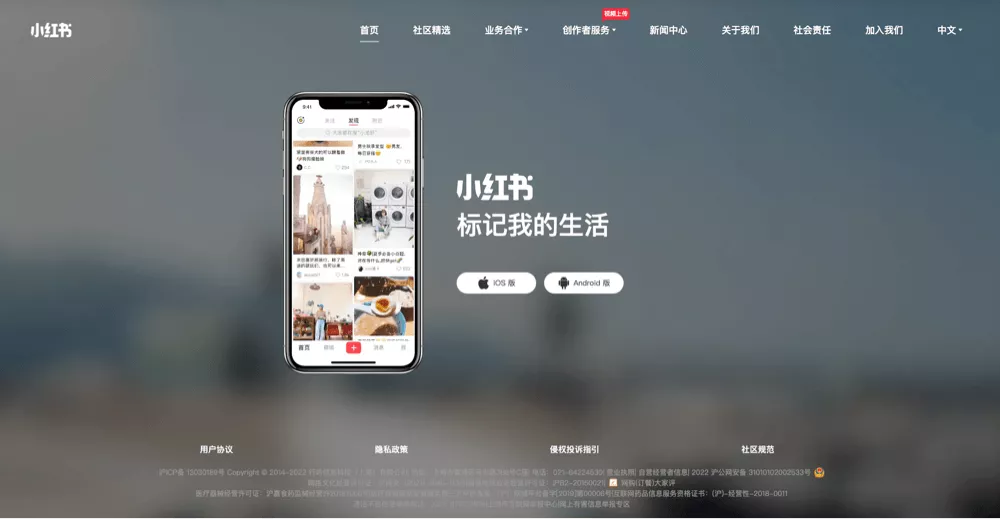
About Red Xiaohongshu
Xiaohongshu app, also known as Little Red Book, RED, Xiao Hong Shu, or 小红书, is one of the largest and fastest growing social e-commerce apps in China, mainly targeting women, and a leading Chinese fashion lifestyle platform.
Founded in 2013, Xiaohongshu Redbook China started as an online tour guide for Chinese shoppers, for users to review products and share their shopping experiences with the community. It is often referenced as the Chinese version of Instagram.
Due to the platform’s early focus on fashion and beauty trends, Xiaohongshu’s user base is predominantly female, mostly in first and second-tier cities, and is now China’s top how-to guide for all things fashion, beauty, and lifestyle. It also established its cross-border e-commerce platform, where Chinese consumers can buy products from overseas and order directly. It is now a combination of social media and an e-commerce platform, where users can first browse user-generated content and then shop within the app.
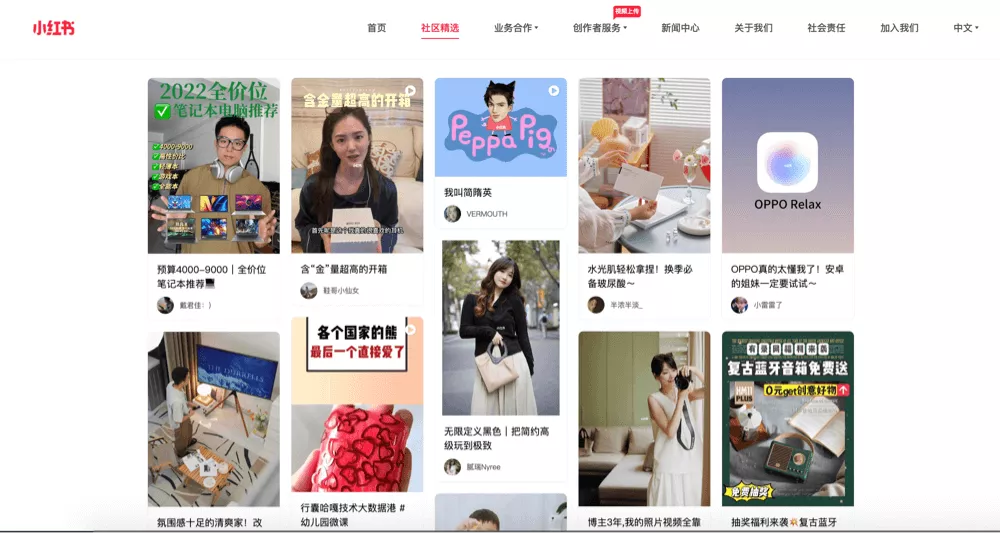
How To Get Started On Xiaohongshu
Create Content On Xiaohongshu
Xiaohongshu is commonly used by businesses and brands to gain organic growth by creating content, or to do integrated marketing by using integrated ads. Businesses may create a brand account to create their content on Xiaohongshu.
Advertising On Xiahongshu
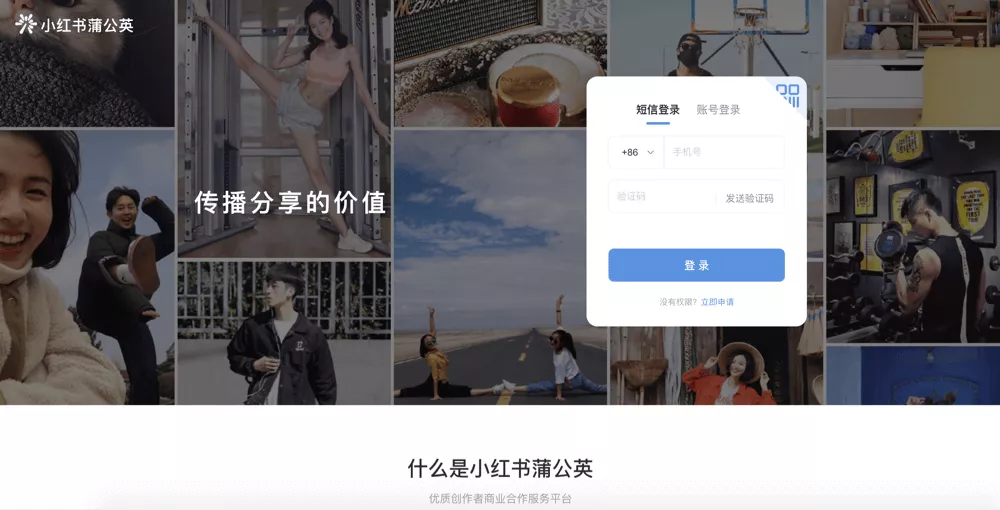
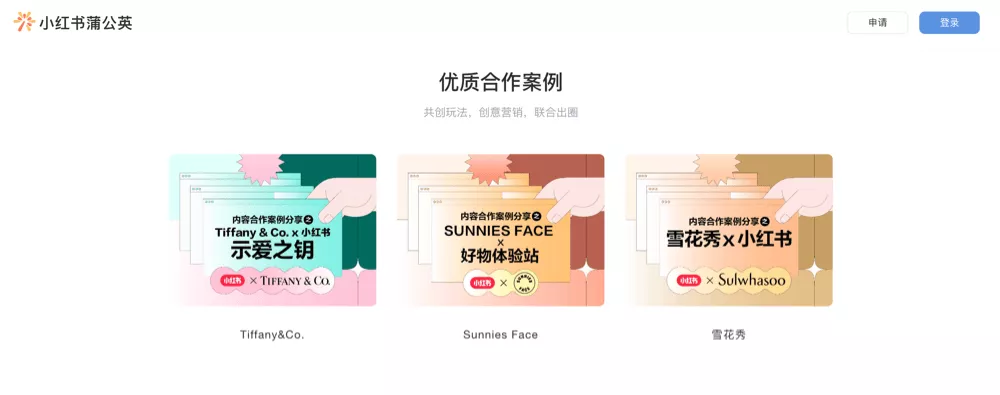
You can sign up on Xiaohongshu’s ad platform Pugongying, where you can find influencers, their pricing for collaboration, and their past cases. Many major brands like Tiffany have had successful social marketing campaigns on Xiaohongshu.
Sell On Xiaohongshu
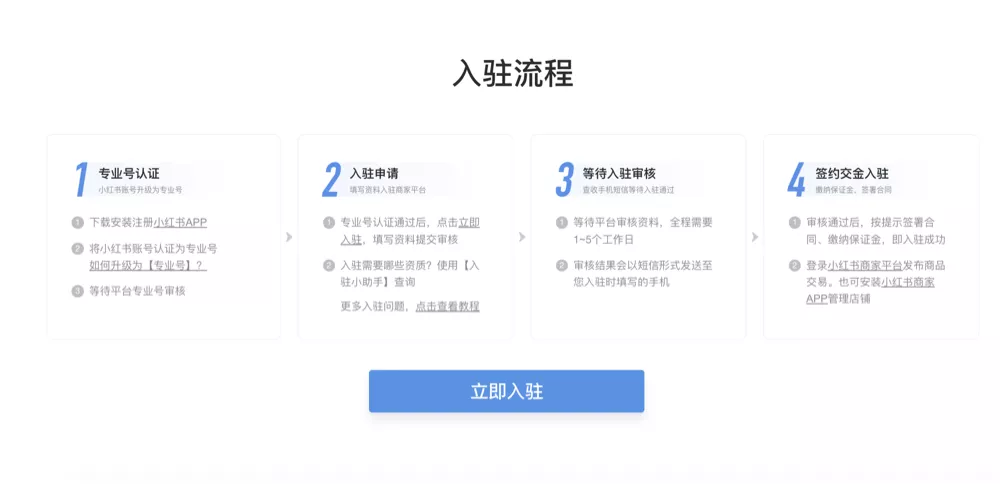
Xiaohongshu is popular among e-commerce businesses as it allows users to browse social content while finishing transactions within the app. To open a store on Xiaohongshu, you need to follow the steps below:
Step 1. Submit your company information on Xiaohongshu’s merchants’ site.
Step 2. Wait for the Xiaohongshu team to verify your application. It usually takes 1-5 business days.
Step 3. Sign the service agreement and pay a security deposit and an annual fee.
Step 4. List products and launch your store.
Cost To Sell On Xiaohongshu
To open a store on Xiaohongshu, the fees needed are a security deposit and a commission fee based on transactions.
Generally, the deposit for general merchants is 20,000 yuan, the deposit for cross-border merchants is 3,500 US dollars, and the commission rate is 15%-20%, subject to specific product categories.
Do not have a Chinese entity, Chinese phone number or Chinese ID? We can help!
If you do not have a Chinese entity, Chinese ID, or Chinese phone number, which is essential to register an account on Xiaohongshu, 21YunBox is here to help.
We can provide the necessary supporting documents to use Xiaohongshu and walk you through the process. Meanwhile, we will also bring your company, product, and service into full compliance with Chinese law.
Contact us now to learn more about our solutions for doing business in China legitimately!
RELATED COMPANIES













ARTICLES RELATED TO XIAOHONGSHU
- China Implements Stricter Regulations on Internet Comment Services
- Does reCAPTCHA Work in China? Reachability, Google's Servers & PIPL
- China Cross-Border Data Transfer: What the Regulation Actually Says
- Tips for Businesses Looking to Sell Products in China: How to Start and Where to Start
- What is data privacy?
- Baidu Tieba - build brand reputation and improve search engine optimization in China!
- A Guide to Baidu PPC Advertising in China
- Why has my app been deleted from Chinese app stores, and how can I fix it?
- 15 Tips on How to Make a Website Load Faster
- Baidu vs Google
- Baidu Wangpan Guide
- How To Create A Little Red Book Brand Account And Store?
- How To Sell Products to China via WeChat?
- How to Publish My Mobile App in China: A Comprehensive Guide
- How to register a .cn domain?
- Trademark registration in China
- How to Do Baidu SEO (Baidu Search Engine Optimization): The Ultimate Guide

PARENT COMPANY
Xiaohongshu Inc.
OWN BY THE SAME PARENT COMPANY
WESTERN EQUIVALENTS
Ready to Accelerate Your Site in China Legitimately?
Join 21YunBox and the 5,000+ developers and enterprises to use modern deployment technology
Get StartedLaunch Your Site in China with Confidence