What is Pinduoduo and how to get started
Pinduoduo, also known as 拼多多, which translates to “together, more savings, more fun,” revealing the platform’s unique selling point—group shopping for discounted prices, is now China’s new e-commerce leader.
What does a foreign company need to sell on Pinduoduo in mainland China?
The free “open a store” button in the app is not the gate. Selling on Pinduoduo’s domestic marketplace runs on a mainland China business license and real-name identity, so a purely offshore company cannot open a storefront directly — and the group’s cross-border route for overseas sellers is a separate platform, Temu, not Pinduoduo itself.
Pinduoduo is a domestic-China marketplace: in its parent’s own 2024 letter to the U.S. SEC, “[b]oth platforms serve merchants in China” and “substantially all” of the group’s revenue came from “third-party merchants in China.” Opening a storefront means registering a market entity — a Chinese business license — plus the category qualifications your goods require and a refundable store deposit, and the marketplace is legally obliged to verify that license and those permits under the PRC E-Commerce Law. An offshore-only brand clears none of this directly, so the realistic compliant route onto Pinduoduo is a mainland China entity of your own or a licensed local partner; reaching shoppers from abroad instead means the separate cross-border channel. Either way you handle Chinese shoppers’ personal data under PIPL. The guide below walks the original sign-up steps — read them knowing this entity-and-qualification gate comes first.
Which route is compliant for you depends on your entity, the categories you sell and where your customer data flows — this is a risk map, not a verdict. Our China team can map your route onto Pinduoduo with you →
What a foreign company must clear to sell on Pinduoduo
| Fact | Primary source |
|---|---|
| Pinduoduo is a domestic-China marketplace — its sellers are merchants in China, and its overseas-facing sibling is a different platform. In PDD Holdings’ 2024 response letter to the U.S. Securities and Exchange Commission, the parent states that “[b]oth platforms serve merchants in China, assisting them in reaching consumers and growing their sales,” that “[m]any of these Chinese merchants operate on both platforms,” and that “substantially all of our revenues were derived from third-party merchants in China.” The overseas-facing platform, Temu, “was founded in September 2022 in Boston, Massachusetts, the United States” and serves consumers worldwide — so reaching mainland shoppers on Pinduoduo itself is a China-merchant channel, not an offshore sign-up. | PDD Holdings Inc. — response letter to the U.S. SEC (SEC.gov EDGAR correspondence, dated 2024-09-30), retrieved 2026-10-07 |
| Opening a Pinduoduo store means registering a market entity in China — a business license, plus whatever permits your category needs. Under the PRC E-Commerce Law, as a China law firm summarizes it, “[t]he Law requires nearly all e-commerce operators to register as market entities,” and the marketplace itself must “verify the identity, business registration, tax registration and any other required permit or licenses of any on-platform operator.” That verification is the platform’s own legal duty — so a company with no mainland entity has no business license to register and nothing for the platform to verify, and regulated categories (such as food or health products) layer their own qualifications on top. | Harris Sliwoski — “China’s E-Commerce Law and Its Foreign Company Impacts” (named law firm), retrieved 2026-10-07; PRC E-Commerce Law (2019), Arts. 10 & 27 |
| Selling from offshore is a separate, regulated channel — not a side door into the domestic marketplace. China treats “a company formed outside China that sells to consumers in China from overseas” as a cross-border e-commerce company that must “register with China customs through a company registered in China” and “report real-time transaction data of retail imports.” For PDD’s group that overseas-facing route is a distinct platform (Temu) with its own onboarding; a purely foreign brand does not get a domestic Pinduoduo storefront this way, and even the cross-border path carries a China-side customs-registration and transaction-reporting footprint worth scoping before you commit. | Harris Sliwoski — “China’s E-Commerce Law and Its Foreign Company Impacts” (named law firm), retrieved 2026-10-07; PRC E-Commerce Law Art. 26 and the 2018 cross-border retail-import Notice (Shang Cai Fa [2018] No. 486) |
| Whichever route you take, you handle Chinese shoppers’ personal data — PIPL governs it. The order, identity, contact and shipping data collected through the marketplace is personal information under the Personal Information Protection Law; moving it out of the mainland is a cross-border transfer that needs notice, the individual’s separate consent and a lawful transfer mechanism (PIPL Articles 38–43), while a critical-information-infrastructure operator or large-volume handler “shall store personal information collected and produced within the borders of the People’s Republic of China domestically” (PIPL Article 40; Cybersecurity Law Article 39 (formerly Article 37) — the data-localization provision renumbered by the amended law in force 2026-01-01). Treat data residency and cross-border transfer as risk to confirm with counsel. | DigiChina, Stanford University — PIPL English translation, retrieved 2026-10-07; PIPL Articles 38–43 & 40; PRC Cybersecurity Law Article 39 (formerly Article 37), amended law in force 2026-01-01 |
Sources verified by the 21YunBox compliance team on 2026-10-07.
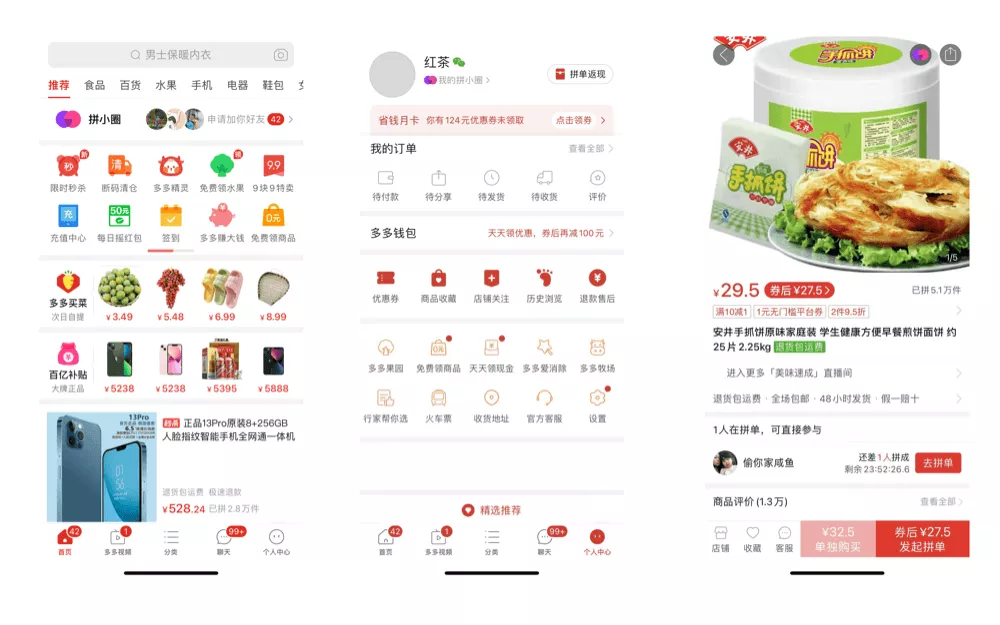
About Pinduoduo
Pinduoduo, also known as 拼多多, which translates to “together, more savings, more fun,” revealing the platform’s unique selling point—group shopping for discounted prices, is now China’s new e-commerce leader.
Founded in 2015, Pinduoduo is one of the fastest-growing tech companies in the world and was listed on the Nasdaq in 2018. It offers various products, from daily groceries to home appliances.
Pinduoduo’s annual active buyers reached 849.9 million in 2021 and are now essential for retailers and brands looking to do business in the Chinese market.
How To Get Started On Pinduoduo
Buyers
Buyers
Download the Pinduoduo app and sign up with a mobile number or social login.
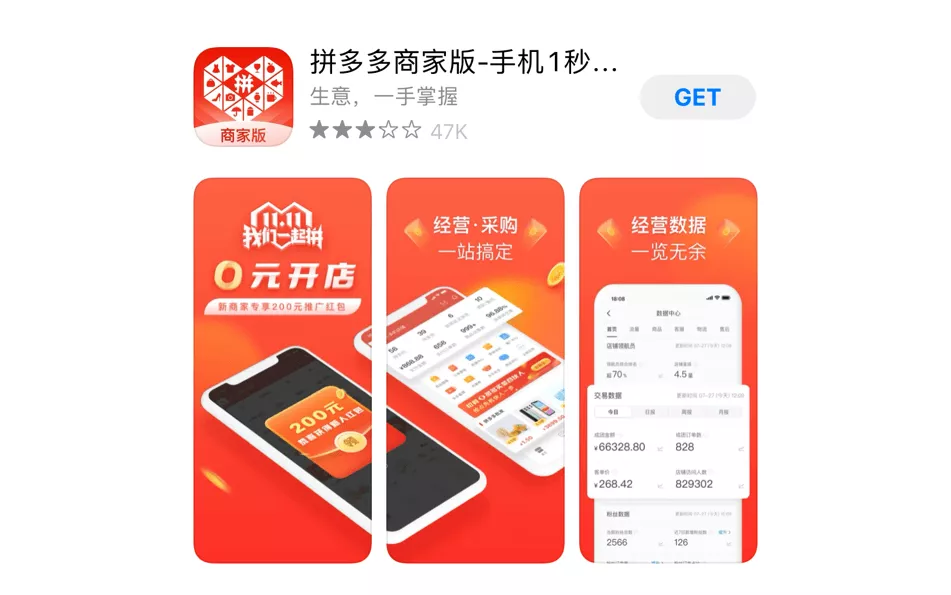
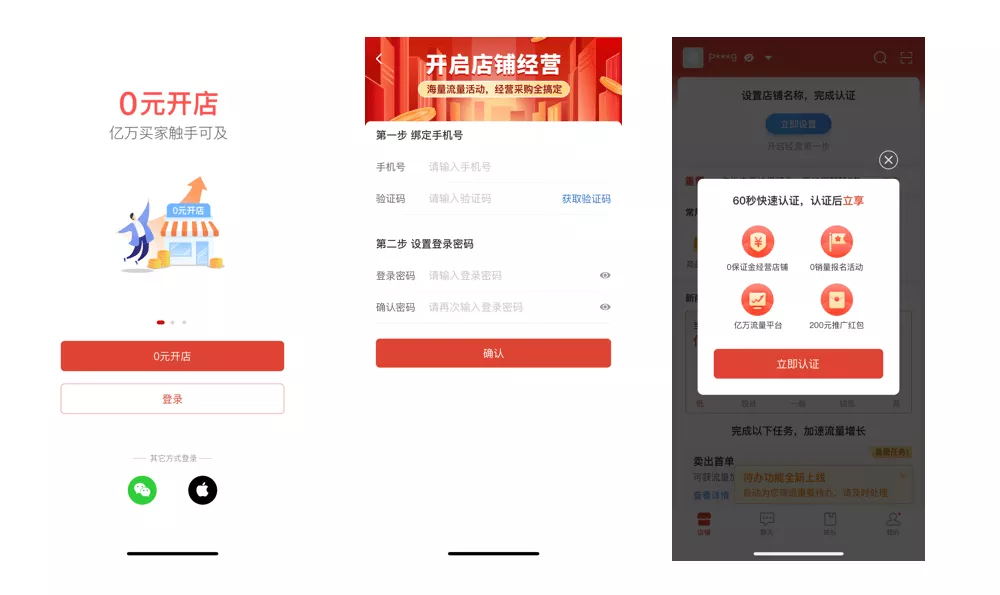
Sellers You can open a store for free on the Pinduoduo Seller app with a phone number and a verified ID card.
Cost To Sell On Pinduoduo
There is no commission for sales on Pinduoduo. The only fee for selling on Pinduoduo is a refundable security deposit, which is different for different types of stores.
Pinduoduo has two types of stores: individual stores and enterprise stores.
Individuals need a deposit of 2,000 yuan to open a store, while businesses need a deposit of 1,000 yuan. If you want to close your store anytime, you can get the deposit refunded.
Do not have a Chinese entity, Chinese phone number or Chinese ID? We can help!
If you do not have a Chinese entity, Chinese ID, or Chinese phone number, which is essential to get started on Pinduoduo, 21YunBox is here to help.
We can provide the necessary supporting documents to use Pinduoduo and walk you through the process. Meanwhile, we will also bring your company, product, and service into full compliance with Chinese law.
Contact us now to learn more about our solutions for doing business in China legitimately!
RELATED COMPANIES








ARTICLES RELATED TO PINDUODUO
- China Implements Stricter Regulations on Internet Comment Services
- Does reCAPTCHA Work in China? Reachability, Google's Servers & PIPL
- China Cross-Border Data Transfer: What the Regulation Actually Says
- Tips for Businesses Looking to Sell Products in China: How to Start and Where to Start
- What is data privacy?
- Baidu Tieba - build brand reputation and improve search engine optimization in China!
- Why has my app been deleted from Chinese app stores, and how can I fix it?
- 15 Tips on How to Make a Website Load Faster
- Baidu vs Google
- Baidu Wangpan Guide
- How To Create A Little Red Book Brand Account And Store?
- How To Sell Products to China via WeChat?
- How to Publish My Mobile App in China: A Comprehensive Guide
- How to register a .cn domain?
- Trademark registration in China
PARENT COMPANY
Pinduoduo Inc.
OWN BY THE SAME PARENT COMPANY
CATEGORIES
eCommerceWESTERN EQUIVALENTS
- Ebay
Ready to Accelerate Your Site in China Legitimately?
Join 21YunBox and the 5,000+ developers and enterprises to use modern deployment technology
Get StartedLaunch Your Site in China with Confidence