What is Ctrip and how to get started
C-trip, also known as 携程 or Xiecheng, is China's largest online travel agency (OTA) and one of the largest travel service providers in the world.
What does a foreign hotel, airline, or attraction need to list and sell on Ctrip in China?
The gate is a commercial contract plus qualification documents to distribute as a supplier — and a travel-agency license, and a China entity or local partner, if you actually operate as an agency — not an eBooking sign-up alone.
Listing your own rooms, flights, or experiences on Ctrip — run by Trip.com Group — is supplier distribution: you create an eBooking account, a market manager verifies your details, and "both parties will sign a secure e-contract," with the platform expecting a "legally operated" business that holds whatever licenses your local law requires. That is a different thing from running a travel agency inside mainland China, which under the Regulations on Travel Agencies is a licensed activity — the tourism administration "shall grant the travel agency business license" only after it approves an application — and in which foreign investment is a separately regulated, restricted category. Separately, the traveler personal data you handle through the platform is governed by PIPL, and pushing it to your offshore systems is a cross-border transfer. The guide below walks through onboarding; the facts first set out what actually gates it.
This is a risk map to work through with counsel, not a verdict — which gate applies turns on whether you distribute as a supplier or operate as an agency, and on the data you handle. Our China team can map your path with you →
What a foreign travel business must clear to sell on Ctrip
| Fact | Primary source |
|---|---|
| Listing on Ctrip is a contract-and-verification process, and the platform expects a legally operated business. On Trip.com Group's own "list your property" flow you "sign up for an eBooking account," then "a market manager will reach out to verify details and publish your listing," and "both parties will sign a secure e-contract." Eligible properties include "any other legally operated accommodation," and hosts are told to "check your local laws for any licensing requirements" — the platform pushes the licensing question back onto you rather than clearing it for you. | Trip.com Group — List Your Property / eBooking (us.trip.com), retrieved 2026-10-07 |
| Distributing your own inventory is not the same as operating a travel agency — and the second is a licensed activity. A hotel, airline, or attraction that contracts to sell its own rooms or seats through Ctrip is a supplier. Assembling or reselling travel products to travelers inside mainland China is "travel agency business," which the Regulations on Travel Agencies (旅行社条例) permit only after the competent tourism administration approves an application, upon which it "shall grant the travel agency business license to the applicant" (Article 7). Which side of that line your China activity sits on decides what you must hold. | Regulations on Travel Agencies (State Council Order No. 550, as amended), English translation via LexisNexis China — Article 7, retrieved 2026-10-07 |
| Foreign investment in a China travel agency is a restricted, separately regulated category. Article 23 of the Regulations on Travel Agencies provides that "Foreign-invested travel agencies are not permitted to organize travel for mainland Chinese residents outside of China" — the same clause reaches trips to Hong Kong, Macao, or Taiwan — "unless otherwise stipulated by a decision of the State Council" or a trade agreement. Narrow, time-boxed pilots (for example a State Council adjustment covering Shanghai and Chongqing) have opened outbound business to qualifying foreign-invested agencies, so confirm the current pilot status with the provincial tourism bureau rather than planning around the baseline. | Regulations on Travel Agencies, Article 23; China Briefing (Dezan Shira & Associates), retrieved 2026-10-07 |
| Traveler data you take off the platform is governed by PIPL, and moving it offshore is a cross-border transfer. Names, passport or ID and contact details, payment data, and itineraries are personal — often sensitive — information. PIPL requires a handler to meet an Article 38 transfer condition and, under Article 39, to inform travelers of "the overseas recipient's name and contact information, the purposes and means of processing, the categories of personal information," and to "obtain individual's separate consent." In September 2024 the Guangzhou Internet Court, ruling on a hotel group that sent a member's booking data abroad, held that "checkbox consent to a general privacy policy does not constitute separate consent." How China's cross-border data rules work → | PIPL Articles 38–39 (NPC English text via China Justice Observer); Paul, Weiss analysis of the Guangzhou Internet Court decision, Sept 2024, retrieved 2026-10-07 |
| Hold enough traveler data, or run critical infrastructure, and that data must stay in China. PIPL Article 40 requires critical information infrastructure operators and handlers processing personal information "up to the amount prescribed by the national cyberspace department" to "store domestically the personal information collected and generated within the territory," and to pass a security assessment before any export. The Cybersecurity Law carries a parallel in-country storage duty for critical information infrastructure (Article 39, renumbered from the 2016 Article 37, effective 2026-01-01). Whether either threshold catches you turns on your role and data volumes — a question to put to counsel, not a default. | PIPL Article 40 (NPC English text via China Justice Observer), retrieved 2026-10-07; Cybersecurity Law Article 39 (renumbered from 2016 Article 37, effective 2026-01-01) |
Sources verified by the 21YunBox compliance team on 2026-10-07.
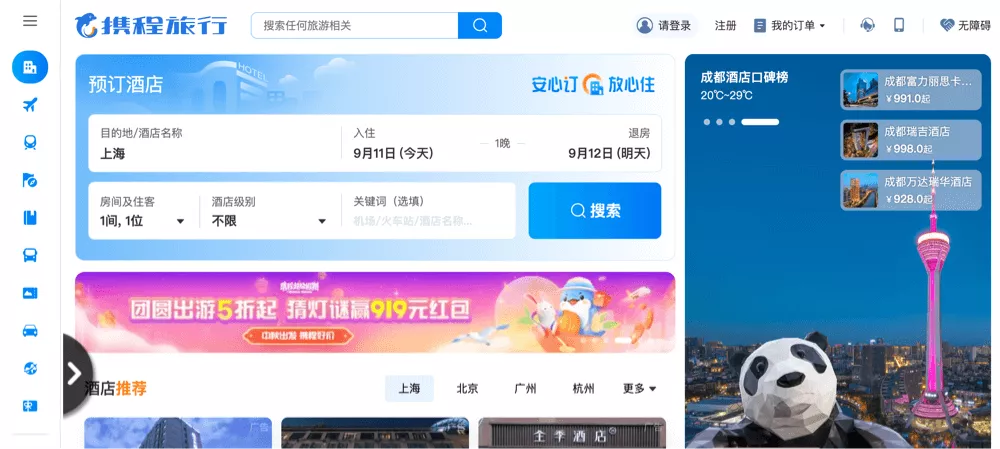
About Ctrip
C-trip, also known as 携程 or Xiecheng, is China’s largest online travel agency (OTA) and one of the largest travel service providers in the world that provide services including accommodation reservation, transportation ticketing, packaged tours, and corporate travel management.
Founded in 1999, Trip.com Group Limited (Chinese: 携程集团, formerly Ctrip.com International) owns and operates Ctrip, together with Skyscanner, Qunar, and Travix, all of which are online travel agencies.
The company was listed on the NASDAQ in 2003 and has established partnerships with over a million hotels locally and internationally, such as Hotels by Hilton, United Airlines, etc.
How To Get Started On Ctrip
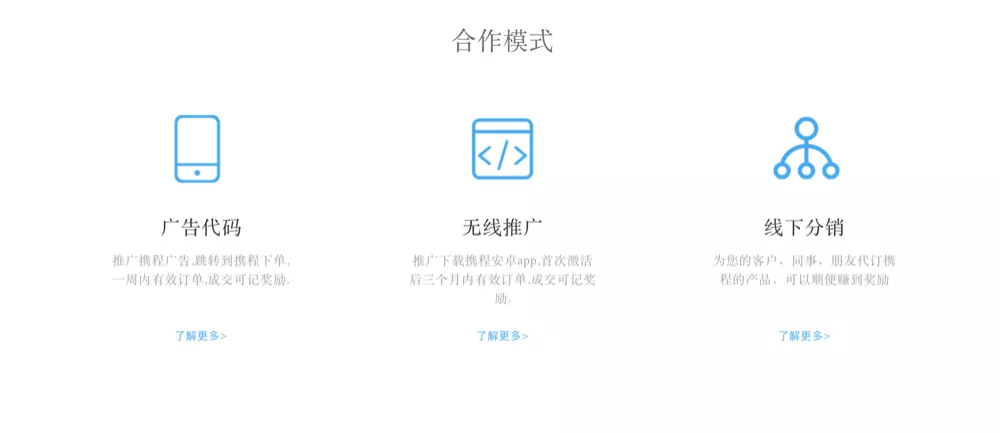
As China’s largest online travel agency (OTA), top-rated among middle-to-high class consumers, Ctrip is a good advertising platform for airlines, hotels, or tourism-related businesses. It provides different advertising formats, such as affiliate marketing, mobile app promotion, commission-based pop-up advertisements, etc.
To get started, you can submit your business information here or email them directly at xcfx@ctrip.com.
Do not have a Chinese entity, Chinese phone number or Chinese ID? We can help!
If you do not have a Chinese entity, Chinese ID, or Chinese phone number, which is essential to get started on Ctrip, 21YunBox is here to help.
We can provide the necessary supporting documents to get started on Ctrip and walk you through the process. Meanwhile, we will also bring your company, product, and service into full compliance with Chinese law.
Contact us now to learn more about our solutions for doing business in China legitimately!
RELATED COMPANIES












ARTICLES RELATED TO CTRIP
- China Implements Stricter Regulations on Internet Comment Services
- Does reCAPTCHA Work in China? Reachability, Google's Servers & PIPL
- China Cross-Border Data Transfer: What the Regulation Actually Says
- Tips for Businesses Looking to Sell Products in China: How to Start and Where to Start
- What is data privacy?
- Baidu Tieba - build brand reputation and improve search engine optimization in China!
- Why has my app been deleted from Chinese app stores, and how can I fix it?
- 15 Tips on How to Make a Website Load Faster
- Baidu vs Google
- Baidu Wangpan Guide
- How To Create A Little Red Book Brand Account And Store?
- How To Sell Products to China via WeChat?
- How to Publish My Mobile App in China: A Comprehensive Guide
- How to register a .cn domain?
- Trademark registration in China

PARENT COMPANY
Trip.com Group Limited
OWN BY THE SAME PARENT COMPANY
CATEGORIES
eCommerceWESTERN EQUIVALENTS
- Agoda
- Booking.com
Ready to Accelerate Your Site in China Legitimately?
Join 21YunBox and the 5,000+ developers and enterprises to use modern deployment technology
Get StartedLaunch Your Site in China with Confidence
