What is Wechat Mini Programs and how to get started
WeChat Mini Programs are “mini-applications” built within the WeChat platform, which allows 3rd party companies to develop mobile-app-like Mini Programs for users that can run within the WeChat app.
What does a foreign company need to launch a WeChat Mini Program in China?
Creating a Mini Program takes an afternoon; earning the right to run one for mainland China does not. For most commercial use the real gate is a China-registered entity: the mainstream registration route is built around a mainland company with a Chinese legal representative, an overseas business is pushed onto a narrower non-mainland lane, regulated categories open only against China-issued permits, and every piece of personal data you collect answers to PIPL.
Publishing requires Tencent account verification, and WeChat's enterprise quick-registration route checks you against China's National Enterprise Credit Information Disclosure System and binds a Chinese legal person through face verification — it assumes a mainland company. An overseas entity can register on a separate non-Chinese-Mainland track, but that lane is walled off from the core mainland functions: its own payment service excludes consumers on mainland phone numbers, and categories such as healthcare, education and news unlock only against permits a mainland regulator issues. Each Mini Program must also complete its own filing before it can operate, and WeChat will not let your code read a user's personal information until you have declared that data in a privacy guideline. The numbered steps further down walk through sign-up and development; this layer is what decides whether you are allowed to ship them.
This is a risk map, not legal advice — which entity, filing and permits apply turn on your category, your users and your data. Our China team can map your path with you →
What a foreign company must clear before a Mini Program goes live
| Fact | Primary source |
|---|---|
| For mainland commercial use, the account itself presumes a China-registered company. WeChat's enterprise quick-registration flow verifies the applicant against China's "National Enterprise Credit Information Disclosure System" and the "industrial and commercial department," and binds a Chinese "legal person" through ID and face verification — in other words it assumes a mainland company with a Chinese legal representative. An overseas business can register through a separate non-Chinese-Mainland track, but China Briefing (Dezan Shira & Associates) notes it "may be difficult for app operators who are based overseas to navigate the registration procedures by themselves," and that lane is boxed out of the mainland payment and category functions below. Many foreign brands therefore run through a mainland entity or a licensed local partner — a point to confirm with counsel for your situation. | WeChat Open Platform — Quick Registration of Mini Programs (developers.weixin.qq.com), retrieved 2026-10-07; China Briefing / Dezan Shira & Associates, "All Apps and Mini Programs to be Registered by End of March 2024," retrieved 2026-10-07 |
| Taking payments is a separate, licensed capability — and it splits on where your buyers are. WeChat's own docs state that "Tenpay Global and WeChat Pay operate independently with separate account setup processes and funding channels," and the overseas payment service is tightly gated: "Currently, only Merchant entities registered in Singapore or Macau, China are eligible," a paying consumer "must be a WeChat user registered with a non-mainland Chinese phone number," and "Users registered with mainland Chinese phone numbers are not eligible at this time," with "Additional due diligence" flagged for categories including Financial Services and Real Estate and a blunt "Entities that do not meet the requirements will not be granted access to this service." Charging mainland consumers instead runs through the mainland WeChat Pay merchant track, which sits behind PBOC-licensed payment institutions and business-license, real-name merchant verification (inference from WeChat's own split of the two services) — in practice a China entity or a licensed cross-border acquirer. | WeChat Mini Program — Tenpay Global payment capability (developers.weixin.qq.com), retrieved 2026-10-07 |
| Regulated categories open only against China-issued industry permits. WeChat's certification guidelines require sector credentials before a category's functions switch on. A non-public "medical institution including cosmetology" must supply a "medical institution practice permit"; "training and education" bodies must supply a "school license"; and news and broadcast categories must supply licenses such as the "Internet News Information Service License" or the "Information Network Dissemination Audio-Visual Program License." These are permits a mainland regulator issues to a mainland operator, so an offshore entity generally cannot hold them — the same internet-information-service licensing regime that governs who may publish online content in China. (WeChat marks its English text "for reference only," with the Chinese version controlling, so confirm the exact document list with counsel.) | WeChat Mini Program Certification Guidelines (developers.weixin.qq.com), retrieved 2026-10-07 |
| WeChat will not let your Mini Program read a user's personal information until you declare it. WeChat requires developers to "configure the User Privacy Guidelines," and a data-reading interface "can only be invoked if the user information processed is declared in the guidelines" — "If not declared, the corresponding interface or component will be disabled directly." The platform "will review the purpose of the developer's processing of the information," and since October 17, 2023 these controls apply regardless of a version's own setting, with each user's consent synced to WeChat before a declared interface runs. This platform rule sits on top of — and does not replace — China's personal-information law. | WeChat Mini Program — User Privacy Protection Guidelines & Privacy Policy Development Guide (developers.weixin.qq.com), retrieved 2026-10-07 |
| The personal data your Mini Program collects answers to PIPL — and an offshore backend turns it into a cross-border transfer. A Mini Program serving mainland users is a personal-information handler under the Personal Information Protection Law. If any of that data is processed or stored outside the mainland — your analytics, CRM or servers abroad — it becomes a cross-border transfer that needs notice, separate consent and a lawful transfer mechanism (PIPL Articles 38–43), while critical-information-infrastructure operators and large-volume handlers carry in-country storage duties (Cybersecurity Law Article 39 (formerly Article 37); PIPL Article 40). Where this data physically sits is a risk to settle with counsel before launch, not an afterthought. | Personal Information Protection Law (PIPL), Articles 38–43 & 40; Cybersecurity Law Article 39 (formerly Article 37) (npc.gov.cn), retrieved 2026-10-07 |
Sources verified by the 21YunBox compliance team on 2026-10-07.
About Wechat Mini Programs
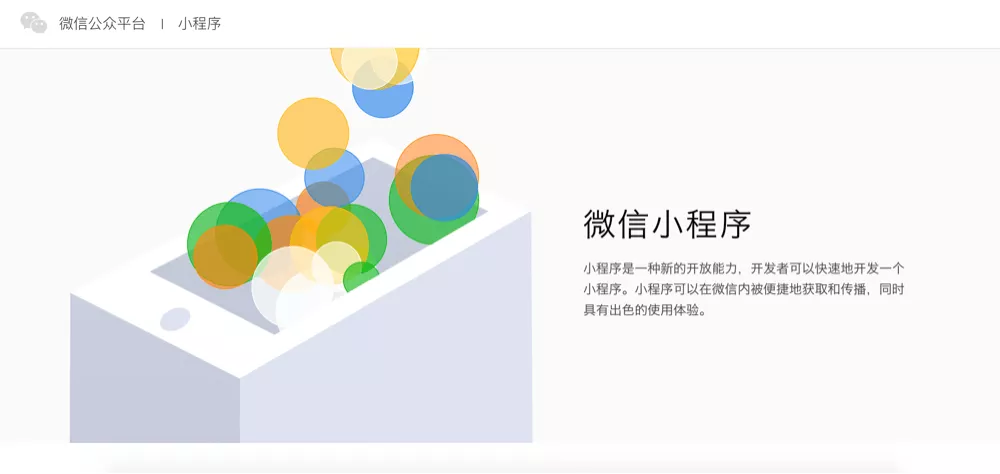
WeChat Mini Programs, also known as 微信小程序, are “mini-applications” built within the WeChat platform, which allows 3rd party companies to develop mobile-app-like Mini Programs for users that can run within the WeChat app.
Launched in 2017, WeChat mini program is considered WeChat’s own “app within an app.” Implemented using JavaScript plus a proprietary API, WeChat mini-programs allow users to install these inside the WeChat app without downloading another app or leaving WeChat, with instant loading and ease of use.
Many brands, businesses, and organizations have leveraged WeChat mini-programs to provide advanced features to users.
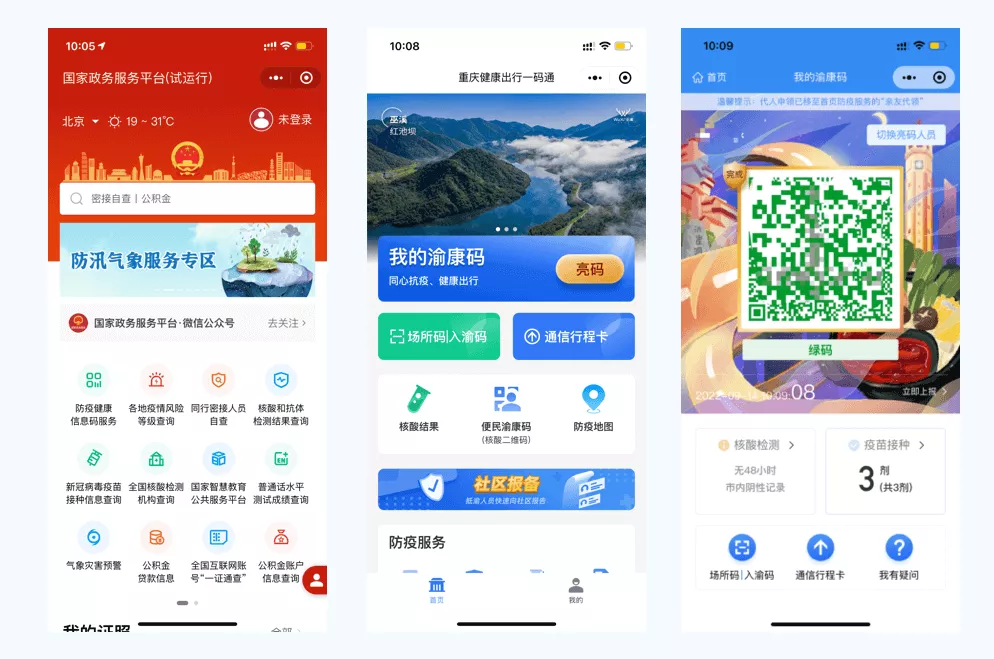
For example, local Chinese governments have been using WeChat mini-programs to control the spread of Covid-19, including real-time health QR codes, PCR test results, vaccination registration, etc.
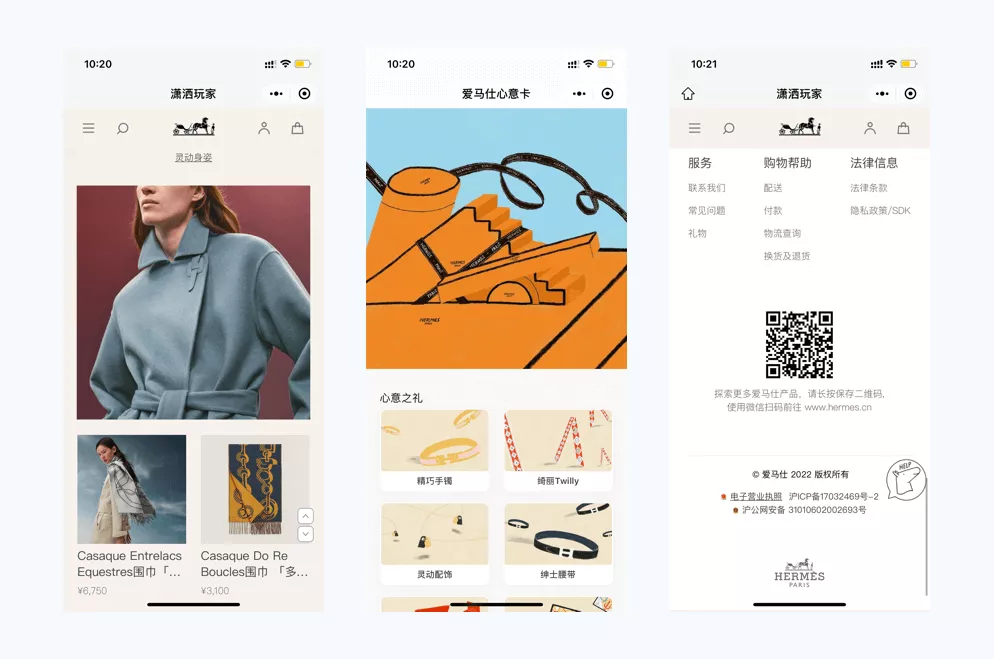
Luxury brand Hermes has developed several e-commerce mini-programs to enable easier purchases for Chinese consumers.
How To Get Started On Wechat Mini Programs
WeChat Mini Programs offer an open-source platform with detailed technical guidelines on building a Mini Program.
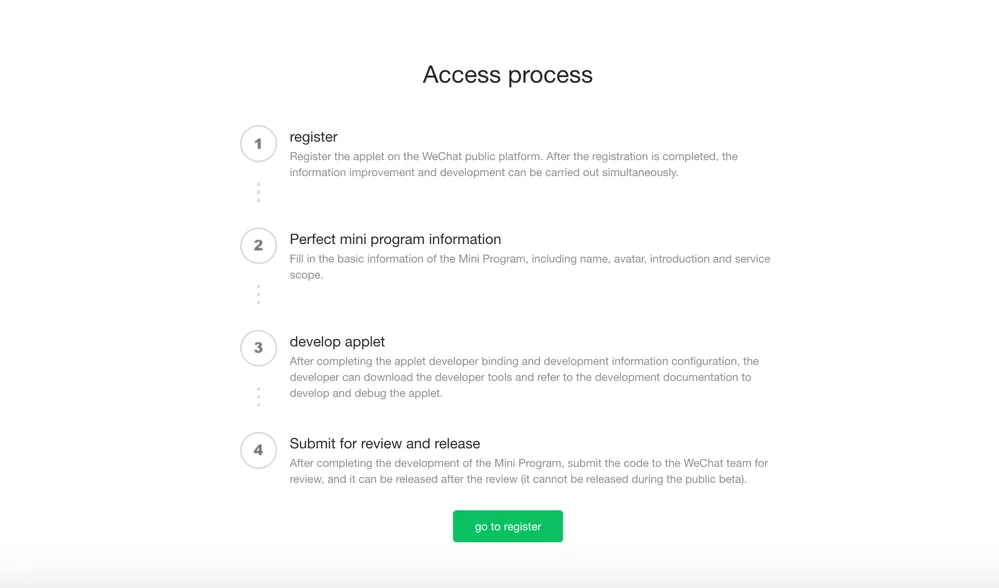
Step 1 To get started, sign up for a WeChat Official Account on WeChat Public Platform with an email address, a business license or entity, your company bank account, and a copy of the ID card of the contact person.
Step 2 Fill Out detailed information about your WeChat Mini Program, including name, avatar, introduction, and service scope.
Step 3 Your developer can download the developer tools and refer to the WeChat Mini Programs development documentation to develop and debug the Mini Program.
Step 4 Submit your code for WeChat to review and release after.
Do not have a Chinese entity, Chinese phone number or Chinese ID? We can help!
If you do not have a Chinese entity, Chinese ID, or Chinese phone number, which is essential to use WeChat Mini Program, 21YunBox is here to help.
We can provide the necessary supporting documents to use WeChat Mini Program and walk you through the process. Meanwhile, we will also bring your company, product, and service into full compliance with Chinese law.
Contact us now to learn more about our solutions for doing business in China legitimately!
RELATED COMPANIES




ARTICLES RELATED TO WECHAT MINI PROGRAMS
Ready to Accelerate Your Site in China Legitimately?
Join 21YunBox and the 5,000+ developers and enterprises to use modern deployment technology
Get StartedLaunch Your Site in China with Confidence
