Does Adobe Commerce Work in China? ICP, Commercial Licensing & Data Residency
Adobe Commerce on cloud infrastructure runs only in offshore AWS and Azure regions — none in mainland China — so a China-facing storefront is served offshore with no mainland footing for the ICP filing and commercial licence a public store needs, and your shoppers' order and personal data lands outside the mainland under PIPL. A compliance-first look at the two doors.
Does Adobe Commerce work in China?
Whether you can run Adobe Commerce for mainland China is first a licensing and data-residency question, not a speed one. A store that sells to shoppers in China is a for-profit online service that has to be licensed and hosted inside the mainland, and the shopper and order data it collects is personal information China's law follows wherever it is kept.
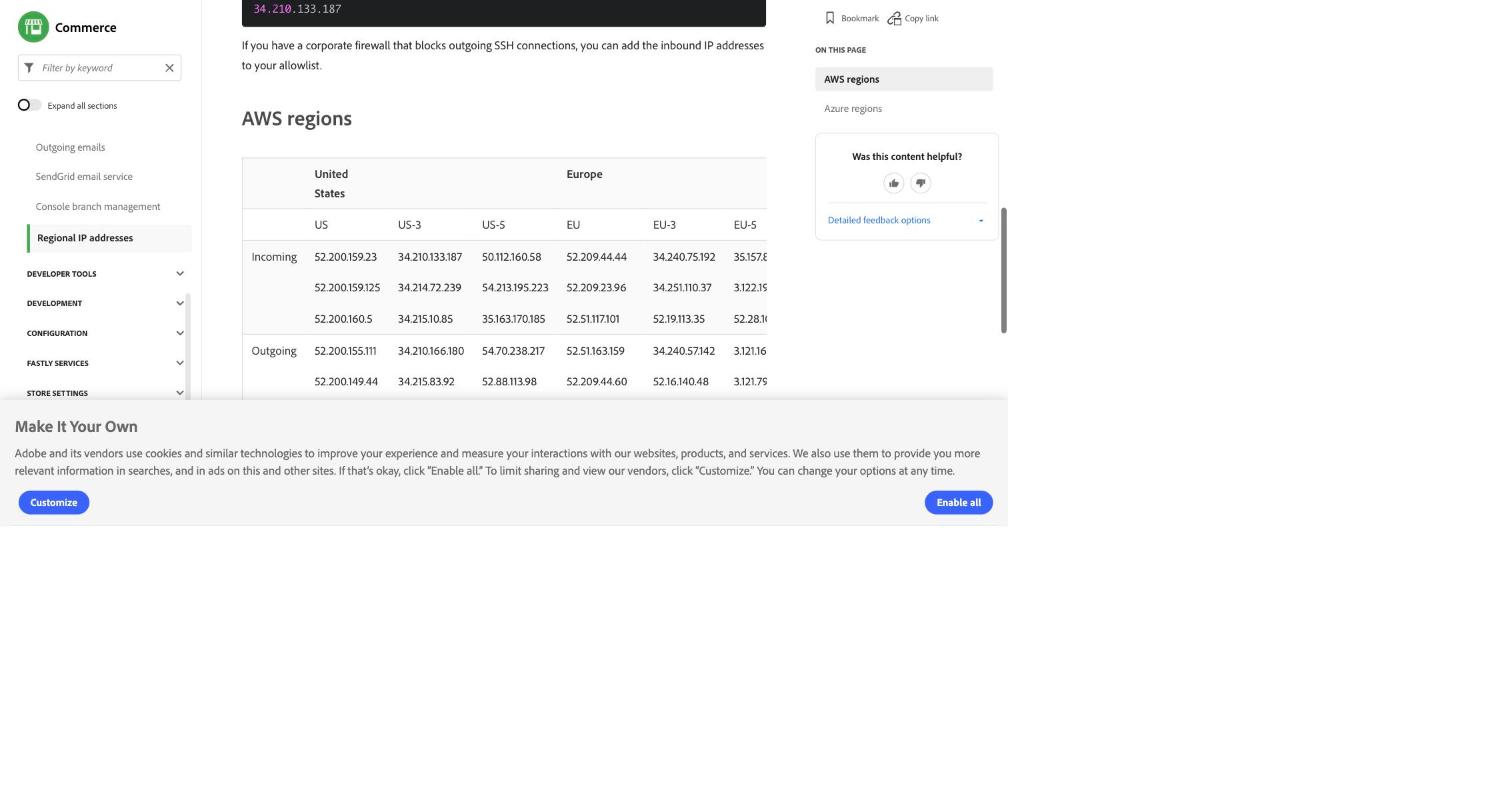
On its managed cloud, Adobe's own region list runs across the United States, Europe and Asia-Pacific — AWS US-3, US-5, EU, EU-3, EU-5, EU-6, AP-3 and Azure US-A1, AZ-WESTEUROPE-1, with none inside mainland China. So a China-facing storefront is served offshore, with no mainland footing for the ICP filing and commercial licence a public store needs, while your shoppers' names, addresses and order history sit outside the mainland — a cross-border transfer PIPL governs. The table below is Adobe's own wording and the rules it triggers.
This is a risk map, not a verdict — your duties turn on what you sell, your data volumes and who your users are. Our China team can map your Adobe Commerce exposure with you →
Compliance snapshot
- ✕ Adobe Commerce on Cloud runs only in offshore AWS & Azure regions (US, Europe, Asia-Pacific) — none in mainland China
- ✕ A public storefront needs a mainland-hosted ICP filing and a commercial licence — Adobe's cloud has no mainland region to file against
- ! Shopper & order data held in an offshore region is a cross-border transfer — PIPL applies
- ! E-commerce collects high volumes of personal (often sensitive) data — residency duties trigger faster for CIIOs & large-volume handlers
- ✓ A compliant in-country delivery path exists — set in front of your Adobe Commerce origin, no rebuild, no migration
What Adobe Commerce's own documentation says about China
| Fact | Primary source |
|---|---|
In Adobe's own documentation: Adobe Commerce on cloud infrastructure lists its regions as AWS US-3, US-5, EU, EU-3, EU-5, EU-6 and AP-3, plus Azure US-A1 and AZ-WESTEUROPE-1 — spanning the United States, Europe and Asia-Pacific. None is inside mainland China; the nearest, AP-3, is still offshore. The managed cloud is offered only in these regions, so a China-facing storefront on Adobe Commerce on Cloud is served from outside the mainland. | Adobe — Commerce on Cloud Infrastructure: Regional IP addresses, retrieved 2026-10-07 |
| A storefront that takes orders and payments from mainland shoppers is a for-profit (经营性) internet information service. Under the Measures for the Administration of Internet Information Services (State Council Order No. 292) a for-profit online service needs an operating licence — in practice the value-added telecommunications business licence (commercial ICP), a step beyond the ICP filing a non-commercial site uses. Both attach to a hosting resource physically inside mainland China, which an offshore Adobe region cannot provide. | Measures for the Administration of Internet Information Services (State Council Order No. 292); Telecommunications Business Licensing Measures (MIIT Order No. 42) |
| Personal information a storefront collects in China — names, delivery addresses, phone numbers, order history and payment details — stored in an offshore Adobe region leaves the mainland. PIPL governs that cross-border transfer: the handler (you, the merchant — not Adobe) must give notice, obtain separate consent, and satisfy one transfer mechanism — a CAC security assessment, the CAC standard contract, or certification. | PIPL Chapter III, Articles 38–43 |
| The exposure scales with volume and role. Under the CAC's March 2024 cross-border rules, a non-CIIO transferring fewer than 100,000 individuals' non-sensitive personal information in a calendar year is exempt from the security assessment, standard contract and certification — a line a growing storefront can cross quickly. For a CIIO or large-volume handler, personal information collected in China must be stored inside the mainland (PIPL Article 40; Cybersecurity Law Article 39 (formerly Article 37)), which an offshore Adobe region cannot do. | CAC — Regulations on Promoting and Regulating Cross-border Data Flows, March 2024; PIPL Art. 40; CSL Art. 39 (formerly Art. 37) |
Sources verified by the 21YunBox compliance team on 2026-10-07.
For a mainland-China audience, the deciding question about Adobe Commerce is not how quickly the storefront paints — it is whether you are licensed to run a store there at all, and where your shoppers’ data is allowed to live. Adobe answers the first half in its own documentation: its managed cloud, Adobe Commerce on cloud infrastructure, runs only in offshore AWS and Azure regions, with none inside mainland China. A China-facing store on that cloud is therefore served from outside the mainland — which leaves it with no footing for the filing and licence a public, for-profit storefront requires, and turns the personal data it collects from Chinese shoppers into a cross-border transfer China’s law governs. Reaching shoppers is real; being cleared to sell to them is the exposure.
Adobe Commerce in China at a glance
| What decides it | In Adobe's own terms |
|---|---|
| Where it runs | Adobe Commerce on cloud infrastructure runs in AWS regions US-3, US-5, EU, EU-3, EU-5, EU-6 and AP-3, and Azure regions US-A1 and AZ-WESTEUROPE-1 — across the United States, Europe and Asia-Pacific. No region sits inside mainland China; the nearest, AP-3, is still offshore. |
| How you deploy it | Two models — Adobe Commerce on cloud infrastructure (a managed service Adobe runs on AWS or Azure) or a self-managed install you host yourself. The managed cloud is offered only in the offshore regions above; a mainland deployment means running Adobe Commerce on in-country infrastructure you stand up. |
| Serving a storefront to the public | A for-profit store sold to mainland shoppers is a commercial internet information service. It needs a mainland-hosted ICP filing and, as a paid service, a value-added telecom (commercial ICP) licence — and Adobe's managed cloud has no mainland region to attach either to. |
| Your shoppers' data | Shopper names, addresses, phone numbers, order history and payment details collected in China but stored in an offshore Adobe region are a cross-border transfer PIPL governs; for a CIIO or large-volume handler, that data must instead stay inside the mainland. |
| Speed vs. clearance | How fast the storefront loads is a delivery question handled downstream. What decides whether you may operate it is licensing and where the data lives — and no amount of network tuning creates a mainland filing or in-country storage. |
No mainland region, so no footing for a storefront licence
Adobe Commerce ships in two shapes: the managed Adobe Commerce on cloud infrastructure, which Adobe runs for you on AWS or Azure, and a self-managed install you host wherever you choose. On the managed cloud, the regions you can pick are the ones Adobe publishes — AWS US-3, US-5, EU, EU-3, EU-5, EU-6 and AP-3, and Azure US-A1 and AZ-WESTEUROPE-1 — every one of them in the United States, Europe or Asia-Pacific, and not one inside mainland China.
That geography settles the licensing question before performance enters it. A storefront that takes orders and payments from mainland shoppers is a for-profit (经营性) internet information service under State Council Order No. 292 — which means it needs more than the ordinary ICP filing a brochure site uses. A transactional, paid service in practice turns on a value-added telecommunications business licence, the commercial ICP, and both the filing and the licence must attach to a hosting resource physically in the mainland. Adobe’s managed cloud has none, so there is simply nothing on it to file against. That is where “we already run Adobe Commerce” runs out: reaching shoppers in China is not the same as being cleared to sell to them.
Self-managed is a different host, not a different rule
Because Adobe Commerce can also be self-managed, a China-facing store could in principle run on infrastructure inside the mainland. That is the only in-country option Adobe’s own footprint leaves open — and it moves the compliance work onto you rather than removing it. You would stand up and keep a mainland host, carry the ICP filing and commercial licence against it, and keep your shoppers’ data in-country. The managed cloud spares you the servers but fixes your regions offshore; self-managing frees the region but hands you the filing, the licence and the residency duty. Whichever path you take, the two doors are the same.
Your shoppers’ data leaves the country
A storefront collects a great deal of personal information — names, delivery addresses, phone numbers, order history, and payment details, sometimes sensitive data. Served from an offshore Adobe region, all of it lives in the US, Europe or Asia-Pacific. Under China’s Personal Information Protection Law that is a cross-border transfer, and the handler — you, the merchant, not Adobe — has to give notice, obtain separate consent, and clear one transfer mechanism: a CAC security assessment, the CAC standard contract, or certification. E-commerce volumes rise quickly, and if you are a critical information infrastructure operator or a large-volume handler, personal information collected in China must be stored in the mainland (PIPL Article 40; Cybersecurity Law Article 39 (formerly Article 37)) — a residency duty no offshore region can meet.
A risk map, not a verdict
Whether you need a commercial licence, in-country storage, or both depends on what you sell, how much personal data you hold, and who your shoppers are — worth settling with counsel before you build. The point is that these are compliance facts, not performance ones: tuning the network does not create the mainland footing a filing needs, nor bring offshore data back onto Chinese soil.
Where 21YunBox fits — a compliant overlay, not a migration
You keep building on Adobe Commerce. We add the one piece a storefront served from offshore cannot supply on its own: compliant, ICP-filed delivery from inside the mainland, set in front of your existing Adobe Commerce origin — no rebuild, no second codebase, and no move off your current stack. Our China team maps your ICP, commercial-licensing and data-residency obligations against your entity and your data volumes, then stands up the in-country delivery and storage a lawful China storefront needs, while your store stays exactly where it already runs.
Related reading:
- How to get an ICP filing for China
- The commercial ICP: China’s value-added telecom licence
- Cross-border data transfers under PIPL
Frequently Asked Questions
Does Adobe Commerce store Chinese shoppers' data in China?
Not on its managed cloud. Adobe Commerce on cloud infrastructure runs only in offshore AWS and Azure regions — across the US, Europe and Asia-Pacific, with none in mainland China — so the shopper and order data of a China-facing store is held offshore. Self-managed, the data lives wherever you host it; keeping it on the mainland means standing up in-country infrastructure yourself.
Is it illegal to run an Adobe Commerce store for China?
Not inherently — it is a risk to manage, not a blanket prohibition. A public storefront selling to mainland shoppers needs mainland hosting with an ICP filing and, as a for-profit service, a commercial (value-added telecom) licence; and shopper personal data held offshore is a cross-border transfer PIPL permits only with notice, separate consent and a transfer mechanism. Whether in-country storage is also required depends on your role and data volume. Confirm the specifics with counsel.
Can 21YunBox help make our Adobe Commerce store compliant in China?
Yes. Our China team can assess your licensing, cross-border and data-residency exposure for your data volumes and role, then stand up compliant, ICP-filed in-country delivery in front of your existing Adobe Commerce origin — no rebuild, no migration — and in-country storage where the law requires your China shoppers' data to stay on the mainland. Get in touch to work through your specific case.
RELATED TECHNOLOGIES





















ARTICLES RELATED TO ADOBE COMMERCE
- China Implements Stricter Regulations on Internet Comment Services
- Does reCAPTCHA Work in China? Reachability, Google's Servers & PIPL
- China Cross-Border Data Transfer: What the Regulation Actually Says
- Tips for Businesses Looking to Sell Products in China: How to Start and Where to Start
- What is data privacy?
- Baidu Tieba - build brand reputation and improve search engine optimization in China!
- Why has my app been deleted from Chinese app stores, and how can I fix it?
- 15 Tips on How to Make a Website Load Faster
- Baidu vs Google
- Baidu Wangpan Guide
- How To Create A Little Red Book Brand Account And Store?
- How To Sell Products to China via WeChat?
- How to Publish My Mobile App in China: A Comprehensive Guide
- How to register a .cn domain?
- Trademark registration in China