Does WooCommerce Work in China? ICP, PIPL & Where You Host It
WooCommerce is open-source software you host yourself — it has no China region, so whether your store works in mainland China turns on where you host WordPress and the customer and payment data you collect. A compliance-first look at the ICP and PIPL doors.
Does WooCommerce work in China?
WooCommerce has no China region to switch on — it is open-source software you host yourself, so whether it "works" in mainland China is decided by where you put the server and what you do with the customer data it collects, not by WooCommerce.
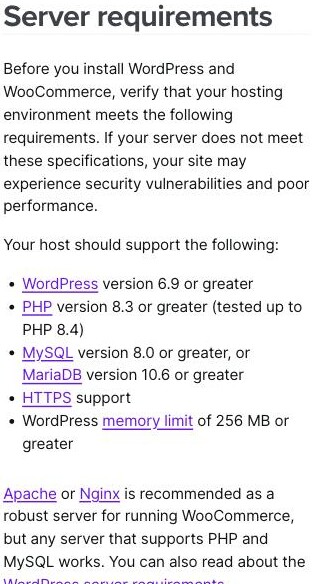
WooCommerce calls itself "the open-source ecommerce platform for WordPress," and its server requirements say "any server that supports PHP and MySQL works" — you provide that server. Host it offshore to reach mainland shoppers and a public commercial storefront has no ICP filing bound to a licensed mainland host, while the name, address, phone and payment details it collects at checkout — where "some of your — and your customers' — data will be passed to the respective third party" — become a cross-border transfer of personal information under PIPL. The table below is WooCommerce's own wording and the rule each choice triggers.
This is a risk map, not a verdict — which filing and which data path you need turn on your entity, your hosting and who your shoppers are. Our China team can map your exposure with you →
What WooCommerce's own documentation says about China
| Fact | Primary source |
|---|---|
| WooCommerce is software you host, not a service with a China region. WooCommerce calls itself "the open-source ecommerce platform for WordPress," and its own Server Requirements say "Apache or Nginx is recommended as a robust server for running WooCommerce" but "any server that supports PHP and MySQL works." You choose and run that server — so there is no WooCommerce-operated region to switch on, and whether your storefront can even be licensed in mainland China is decided by where you install WordPress, not by WooCommerce. A public commercial store served to mainland shoppers needs an ICP filing bound to a licensed mainland host — the regime under State Council Order No. 292 and MIIT Order No. 33. | WooCommerce — WordPress.org plugin page & Server Requirements doc (woocommerce.com/document/server-requirements), retrieved 2026-10-07; State Council Order No. 292; MIIT Order No. 33 |
| Your store's data belongs to you — and lives wherever you put the server. WooCommerce's own pitch is that "you retain full ownership of your store's content and data forever." That cuts both ways in China: the customer accounts, orders and addresses WooCommerce keeps in your WordPress database sit on the host you picked, so if that host is offshore, your mainland shoppers' personal information is being held outside the mainland — a cross-border transfer under PIPL that calls for notice, separate consent and a transfer mechanism (Articles 38–43). | WooCommerce — WordPress.org plugin page (wordpress.org/plugins/woocommerce), retrieved 2026-10-07; PIPL Articles 38–43 |
| Checkout collects personal and payment data — and some of it leaves for third parties. WooCommerce's privacy documentation lists what a store gathers at payment — "Name, Email, Address, Phone, City/State/ZIP, Unique payment identifier, Payment provider identifier" — and warns that when you take payment, "some of your — and your customers' — data will be passed to the respective third party." For mainland shoppers every one of those fields is personal information under China's PIPL, and a critical-information-infrastructure or large-volume handler may have to store it inside China (Cybersecurity Law Article 39 (formerly Article 37); PIPL Article 40). | WooCommerce — Privacy documentation (woocommerce.com/document/privacy), retrieved 2026-10-07; PIPL Article 40; Cybersecurity Law Article 39 (formerly Article 37) |
| A transactional storefront raises the ICP bar from filing to license. A site that only publishes information needs the basic ICP filing (ICP 备案); a store that sells and takes payment is conducting commercial internet information service, which generally calls for a commercial ICP license (ICP 经营许可证) and can pull value-added telecom requirements into scope. Because WooCommerce hands you the hosting decision, obtaining that license and binding it to a licensed mainland host is your responsibility, not the plugin's. | 21YunBox Compliance Team — State Council Order No. 292; MIIT Order No. 33, reviewed 2026-10-07 |
Sources verified by the 21YunBox compliance team on 2026-10-07.
For a mainland-China audience the first question about WooCommerce is not how quickly a product page paints — it is whether you are cleared to run the store at all, and where the data behind it is allowed to live. WooCommerce makes that unavoidable: it is open-source software you host yourself, so it hands you no China region and no ready-made compliance. Where you install WordPress decides whether your storefront can hold an ICP filing, and the customer and payment records WooCommerce collects decide what China’s personal-information law expects of you. A store can be reachable from Shanghai and still be non-compliant — those are two separate questions, and only one of them is about speed.
WooCommerce in China at a glance
| What decides it | In WooCommerce's own terms |
|---|---|
| Where it runs | WooCommerce is self-hosted — “the open-source ecommerce platform for WordPress,” where “any server that supports PHP and MySQL works.” You pick and operate the server; there is no WooCommerce-run region, in China or anywhere else. |
| Who holds the data | “You retain full ownership of your store's content and data forever.” The customer, order and address records live in your WordPress database, on whatever host you chose. |
| Serving the public | A public commercial storefront reaching mainland shoppers needs an ICP filing tied to a licensed mainland host — generally the commercial ICP license for a store that takes payment. Host offshore and there is no mainland footing to file against. |
| Data at checkout | WooCommerce collects name, email, address and phone, and at payment “some of your — and your customers' — data will be passed to the respective third party.” For mainland shoppers that is personal information PIPL governs. |
| Is it reachable? | Yes — the software and plugins download and run normally, and WooCommerce itself isn't blocked. Reachability is not the compliance question; where you host and what you do with the data is. |
No WooCommerce region to switch on — so where you host decides it
WooCommerce is not a hosted service with a Chinese partition you can enable; it is, in its own words, “the open-source ecommerce platform for WordPress” — code you install on a server you choose. Its Server Requirements make the point plainly: “Apache or Nginx is recommended as a robust server for running WooCommerce,” but “any server that supports PHP and MySQL works.” That single fact sets the whole China question. Put WordPress on an offshore host and your storefront is reachable but has no mainland footing, so there is nothing in China to attach an ICP filing to — and a public-facing store served to mainland visitors needs one under State Council Order No. 292 and MIIT Order No. 33. Because the store sells and takes payment, it is commercial internet information service, which generally raises the bar from the basic filing (备案) to a commercial ICP license (经营许可证). None of that comes from WooCommerce; all of it follows from where you decide to host.
Your shoppers’ data sits wherever you host WordPress
WooCommerce’s own selling point is that “you retain full ownership of your store’s content and data forever” — and that ownership has a location. The accounts, orders and addresses WooCommerce records live in your WordPress database, on the host you picked, and its privacy documentation spells out what checkout gathers: name, email, address, phone and, when you take payment, “some of your — and your customers’ — data will be passed to the respective third party.” For mainland shoppers every one of those fields is personal information under China’s Personal Information Protection Law. Hold it on an offshore host and you have a cross-border transfer — the handler (you, not WooCommerce) has to give notice, obtain separate consent and clear one transfer mechanism: a CAC security assessment, the CAC standard contract, or certification, under Articles 38–43. If you are a critical information infrastructure operator or a large-volume handler, personal information collected in China must be stored in the mainland (PIPL Article 40; Cybersecurity Law Article 39 (formerly Article 37)) — a residency duty an overseas server cannot meet.
Reachable is not the same as compliant
Nothing here is about a block. WooCommerce and its plugins download and run normally, and a store hosted offshore will usually load for a visitor in China. But reaching the store and being cleared to operate it are different questions: the first is about the network, the second about a filing and a data path. An offshore WooCommerce store can answer the first and still fail the second, and no amount of tuning the WordPress stack changes that — the gaps are an ICP filing it cannot hold and in-country data residency it cannot provide.
This is a risk map, not a verdict: which filing you need, whether in-country storage applies, and how your checkout data must be handled turn on your entity, your data volumes and who your shoppers are — worth settling with counsel before you build.
Where 21YunBox fits — a compliant overlay, not a migration
You keep running WordPress and WooCommerce exactly as they are. What we add is the part a self-hosted store has to arrange for itself and cannot get from a plugin: compliant, ICP-filed delivery from inside the mainland, placed in front of your existing WooCommerce origin — no rebuild, no second storefront, and no move off WordPress. Our China team works out which filing your store needs, weighs your PIPL cross-border and data-residency exposure against your entity, your data and your shoppers, and stands up the in-country delivery and storage a lawful China storefront requires — while your catalog, checkout and plugins stay exactly where they already run.
Related reading:
Frequently Asked Questions
Does our existing WooCommerce store just work if we point it at Chinese customers?
Is it illegal to sell to mainland China from a WooCommerce store hosted overseas?
Can 21YunBox help make our WooCommerce store work in China?
RELATED TECHNOLOGIES






















ARTICLES RELATED TO WOOCOMMERCE
- China Implements Stricter Regulations on Internet Comment Services
- Does reCAPTCHA Work in China? Reachability, Google's Servers & PIPL
- China Cross-Border Data Transfer: What the Regulation Actually Says
- Tips for Businesses Looking to Sell Products in China: How to Start and Where to Start
- What is data privacy?
- Baidu Tieba - build brand reputation and improve search engine optimization in China!
- Why has my app been deleted from Chinese app stores, and how can I fix it?
- 15 Tips on How to Make a Website Load Faster
- Baidu vs Google
- Baidu Wangpan Guide
- How To Create A Little Red Book Brand Account And Store?
- How To Sell Products to China via WeChat?
- How to Publish My Mobile App in China: A Comprehensive Guide
- How to register a .cn domain?
- Trademark registration in China