Does Shogun Work in China? Reachability, ICP & Offshore-Served Pages
Shogun is a Shopify page builder: the pages you build publish into your store's theme and are served — with Shogun's own assets — from offshore. So a mainland-China storefront depends on a cross-border delivery path, has no in-country host for an ICP filing, and leaves shopper data offshore under PIPL. A compliance-first look at the doors.
Does Shogun work in China?
For a public, mainland-China storefront the honest answer is "not on its own" — and what decides it is reachability and licensing, not how the page looks. You keep designing in Shogun; a China-facing store needs two things on top that neither Shogun's builder nor a standard Shopify store was built to provide — an ICP-filed, in-country presence, and delivery that does not hinge on offshore assets loading cleanly across the border.
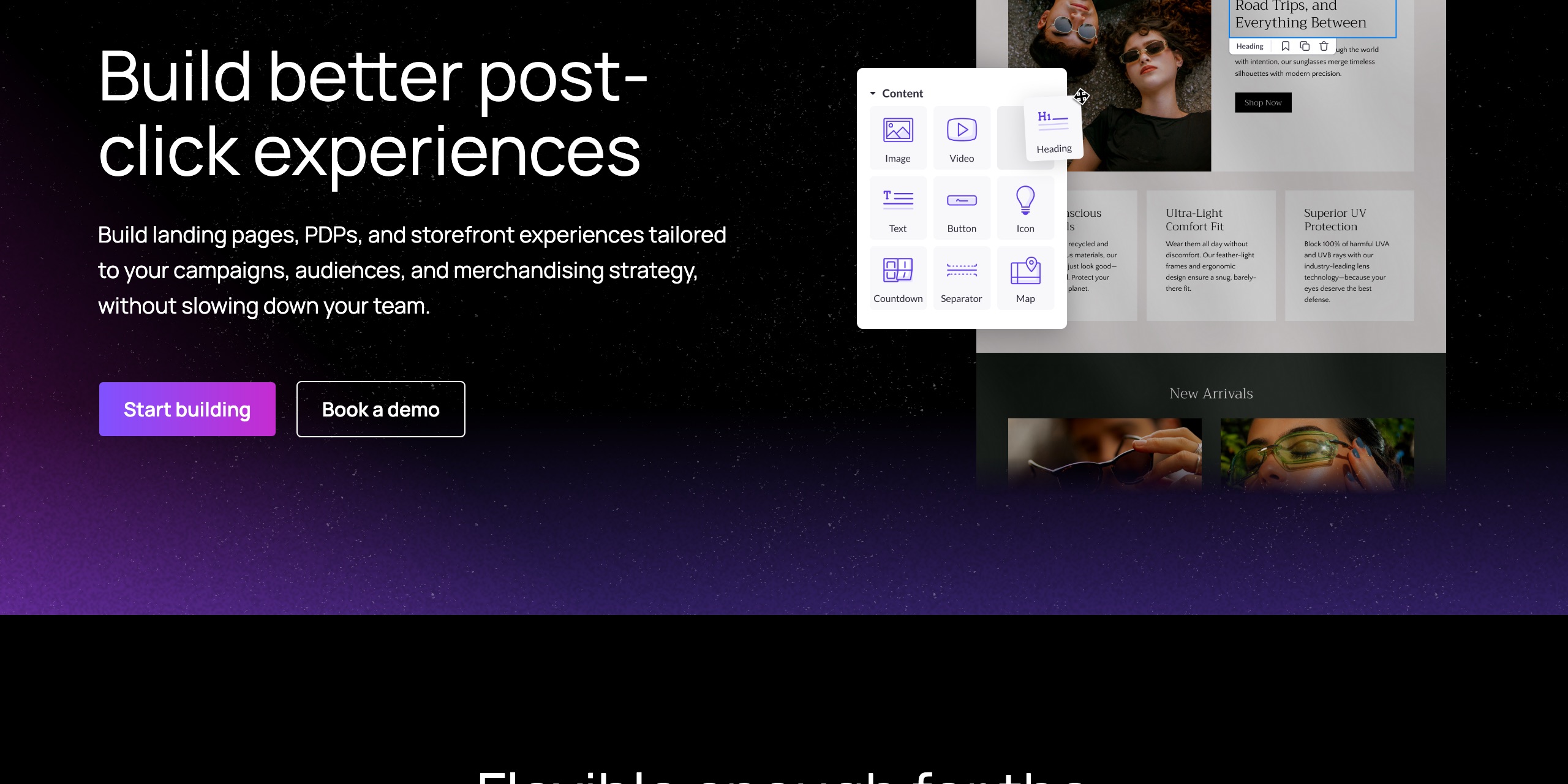
Shogun is a "Shopify Page Builder," and in its own words you "publish experiences back into your storefront theme" — the pages you build render inside your Shopify store and lean on Shogun's own published assets as they load. Both the store and those assets are served from outside the mainland, which sets up three things the table below spells out: a Shopify-served store reaching China from offshore has no in-country host to carry an ICP filing; the built page fetches Shogun's offshore assets across the border, so a slow or blocked path can leave it rendering incompletely rather than merely slowly; and any shopper data your pages collect is handled offshore — a lighter PIPL question that scales with volume.
This is a risk picture to take to counsel, not a verdict — what applies turns on whether you serve the public in China, your entity, and the data your store handles. Our China team can map the Shogun and Shopify path with you →
What Shogun's own documentation says about China
| Fact | Primary source |
|---|---|
| Shogun is a page builder for Shopify stores, and the pages it builds render inside your store's own theme — not on hosting of Shogun's own. Shogun's builder is its "Shopify Page Builder," which it sums up as "Design and launch high-converting pages fast without code." Under the heading Built around Shopify workflows it describes the flow in its own words: "Import Shopify sections into Page Builder or publish experiences back into your storefront theme workflow." So a Shogun page is published into your Shopify storefront, served by Shopify's platform, and draws on Shogun's own published assets as it loads — and both the store and those assets are served from outside mainland China, which is where the China questions begin, not with the builder itself. | Shogun — Shopify Page Builder product page (getshogun.com), retrieved 2026-10-07 |
| Because the built page depends on Shogun's offshore assets loading, reachability in China is a first-order question, not just a speed one. A Shogun page renders inside your Shopify store but fetches Shogun's published assets and scripts from infrastructure outside the mainland. Mainland shoppers pull all of it across the border, so when that cross-border path is slow or unreliable the page can render incompletely — missing sections or broken interactivity — rather than simply painting late. 21YunBox has no first-party China measurement specific to a Shogun store, so this states the direction, not a number; the point is that an offshore-served page gives you neither predictable delivery nor the two licensing-and-data doors below. | Shogun — Shopify Page Builder product page (getshogun.com), retrieved 2026-10-07 |
| A public mainland-China storefront needs an ICP filing, and a Shopify-served store carrying Shogun pages has no in-country host for one. Under State Council Order No. 292 and MIIT Order No. 33, an ICP filing (ICP 备案) attaches to a hosting resource physically inside mainland China and to a mainland legal entity. A standard Shopify store — and the Shogun experiences published into its theme — runs on Shopify's platform with no mainland hosting resource, so there is nothing in that setup for a filing to attach to. That is a licensing-and-location boundary, not a shortcoming of Shogun or Shopify. | State Council Order No. 292 (Measures for the Administration of Internet Information Services), Article 4; MIIT Order No. 33 (ICP filing measures) |
| The shopper data a Shogun storefront collects is handled offshore, so how it crosses the border is a PIPL question — lighter for a promotional page, heavier as volume grows. Checkout details, email and account sign-ups, and the behavioral data Shogun's testing and personalization features read on each visitor are personal information; handling them outside the country is a cross-border transfer under PIPL (Chapter III, Articles 38–43: notice, separate consent, and one permitted transfer mechanism; Article 40, with Cybersecurity Law Article 39 (formerly Article 37), adds in-country storage for a CIIO or large-volume handler). Under the CAC's March 2024 cross-border rules a non-CIIO moving fewer than 100,000 individuals' non-sensitive personal information in a calendar year is exempt from those three mechanisms — so a low-traffic storefront's exposure is lighter, and it rises with mainland shopper volume or once sensitive data is involved. | PIPL Chapter III, Articles 38–43 and Article 40; Cybersecurity Law Article 39 (formerly Article 37); CAC Regulations on Promoting and Regulating Cross-border Data Flows (March 2024) |
Sources verified by the 21YunBox compliance team on 2026-10-07.
For a mainland-China storefront, the deciding question about Shogun is not how polished the page is — it is whether that page can be delivered reliably from inside China, where the store is allowed to be hosted, and where your shoppers’ data ends up. Shogun is a Shopify page builder: it designs the page, but the page publishes into your Shopify store and is served by Shopify’s platform, pulling Shogun’s own published assets as it loads. All of that is served from outside the mainland. So a China-facing Shogun storefront is reachable, yet it leans on a cross-border path to render, has no in-country host to carry an ICP filing, and hands any data it collects to systems offshore. The design is the straightforward part; the delivery path, the hosting licence and the data residency are where the exposure sits.
Shogun in China at a glance
| What decides it | What it means for a mainland-China storefront |
|---|---|
| Where the page runs | Shogun is a Shopify page builder; the experiences you design publish into your Shopify store's theme and render by pulling Shogun's own published assets. Store and assets alike are served from outside mainland China — nothing in the setup sits inside it. |
| Reaching mainland shoppers | Mainland visitors fetch the Shopify page and Shogun's assets from across the border. Because the built page depends on those offshore assets loading, a slow or unstable cross-border path can leave it rendering incompletely — a delivery risk, stated as direction, not a measured number. |
| Serving the public | A storefront shown to mainland visitors from inside China turns on an ICP filing tied to a mainland host. A standard Shopify store has no mainland host, so neither the store nor the Shogun pages in it have in-country footing to file against. |
| Shopper data | Checkout, sign-ups and the behavioral data Shogun's testing and personalization read on each visitor are handled offshore — a cross-border transfer PIPL governs, lighter for a promo page and heavier as volume grows. |
| Is Shogun itself the problem? | No. Shogun is the design tool and Shopify is the host; the risk lives in the cross-border delivery path, the missing in-country licence, and where shopper data is processed — none of which the builder controls. |
Where a Shogun page actually lives
Shogun describes its builder as a “Shopify Page Builder” and sums up the job as “Design and launch high-converting pages fast without code.” Where those pages go is just as plain in its own words: under Built around Shopify workflows, you “Import Shopify sections into Page Builder or publish experiences back into your storefront theme workflow.” That settles it — a Shogun page is not a standalone site Shogun hosts for you. It renders inside your Shopify storefront, served by Shopify’s platform, and pulls Shogun’s own published assets as it loads. Both the store and those assets are served from outside mainland China.
So the China question is not about the editor. Shogun stays your drag-and-drop builder and your testing-and-personalization layer; what changes at the border is the delivery, the hosting and the data handling underneath it. That is why the doors below — dependable in-country delivery, an ICP filing, and lawful data handling — sit with the store, not with the page builder.
Reachable, but the page depends on an offshore path
Shogun is not a blocked app, and a Shopify store is generally reachable from the mainland. But a Shogun page does not render from one place — it assembles in the shopper’s browser from the Shopify-served store and Shogun’s own published assets, and both are fetched from across the border. That makes reachability a first-order question here, not an afterthought: when the cross-border path runs slow or drops parts of the page, the result is not just a late paint but a page that can render incompletely — a section that never appears, an interaction that never wires up. 21YunBox has no first-party China measurement specific to a Shogun storefront, so this page states the direction rather than a number.
The point is not that shoppers cannot reach the page — it is that reaching it from offshore gives you neither dependable delivery nor the licensing and data footing a mainland presence needs. No amount of on-page tuning inside Shogun closes that, because the gap is in where the page is served from, not in how it is built.
No mainland host, so no footing for an ICP filing
A public-facing storefront delivered to mainland visitors from inside China turns on an ICP filing (ICP 备案) under State Council Order No. 292 and MIIT Order No. 33, and that filing must attach to a hosting resource physically located in the mainland. A standard Shopify store runs on Shopify’s platform from outside the mainland, and Shogun experiences publish into that same store — so there is simply no in-country host for the filing to sit on.
That is the limit of “we already built it in Shogun.” Being reachable in China is not the same as being licensed to operate there, and no amount of design work creates the in-country hosting a filing attaches to. The licensing door opens on ICP-filed hosting placed in front of the Shopify store — not on anything inside the builder.
Your shoppers’ data stays offshore
Serve the mainland from an offshore Shopify store and the data your pages collect — checkout details, email and account sign-ups, and the behavioral signals Shogun’s testing and personalization read on each visitor — is handled outside the mainland. Under China’s Personal Information Protection Law that is a cross-border transfer, and the handler — you, not Shogun or Shopify — has to give notice, obtain separate consent, and clear one transfer mechanism: a CAC security assessment, the CAC standard contract, or certification. If you are a critical information infrastructure operator or a large-volume handler, personal information collected in China must be stored in the mainland (PIPL Article 40; Cybersecurity Law Article 39 (formerly Article 37)).
This door is lighter than the first two for a mostly promotional landing page, and under the CAC’s March 2024 cross-border rules a non-CIIO moving fewer than 100,000 individuals’ non-sensitive personal information in a year is exempt from those three mechanisms. It is a risk map, not a verdict: whether you need an ICP filing, in-country delivery, in-country storage, or some mix depends on what you sell, how much personal data you hold, and who your shoppers are — worth settling with counsel before you launch.
Where 21YunBox fits — a compliant overlay, not a migration
You keep designing in Shogun and keep running Shopify. We add the pieces a storefront served from offshore cannot carry on its own: dependable, ICP-filed delivery from inside the mainland, set in front of your existing Shopify store so the page and its Shogun assets resolve in-country instead of across the border — no rebuild, no second codebase, and no move off Shogun or Shopify. Our China team maps your reachability, ICP and data-residency obligations against your entity and your shopper volumes, then stands up the in-country delivery and storage a lawful China presence needs, while your pages keep publishing from Shogun exactly as they do now.
Related reading:
Frequently Asked Questions
Do we have to move off Shogun or Shopify to serve mainland China?
If Shogun isn't blocked, why would our pages break in China?
Can 21YunBox help make our Shogun store work in mainland China?
RELATED TECHNOLOGIES





















ARTICLES RELATED TO SHOGUN
- China Implements Stricter Regulations on Internet Comment Services
- Does reCAPTCHA Work in China? Reachability, Google's Servers & PIPL
- China Cross-Border Data Transfer: What the Regulation Actually Says
- Tips for Businesses Looking to Sell Products in China: How to Start and Where to Start
- What is data privacy?
- Baidu Tieba - build brand reputation and improve search engine optimization in China!
- Why has my app been deleted from Chinese app stores, and how can I fix it?
- 15 Tips on How to Make a Website Load Faster
- Baidu vs Google
- Baidu Wangpan Guide
- How To Create A Little Red Book Brand Account And Store?
- How To Sell Products to China via WeChat?
- How to Publish My Mobile App in China: A Comprehensive Guide
- How to register a .cn domain?
- Trademark registration in China