Does Shopware Work in China? PIPL Cross-Border, ICP Filing & Data Residency
Whether Shopware works for a China store isn't about whether the storefront loads: your customers' PII, orders and behavior are personal information, the managed Shopware Cloud has no mainland-China region (a PIPL cross-border transfer), the storefront needs an ICP filing, and China payment runs through a licensed domestic path. A compliance-first look at the residency, ICP and payment exposure.
Does Shopware work in China?
Whether Shopware works in China is a data-residency question, not a speed one: where your store's customer PII, orders and behavior live, whether the storefront can carry an ICP filing, and how you take China payment are what decide it — not whether the page loads.
A China-facing store's names, shipping addresses, phone numbers, emails, orders and browsing behavior are personal information about people in China. Run on the managed Shopware Cloud — vendor-hosted in the EU with no mainland-China region — that data sits offshore, so operating the store is a PIPL cross-border transfer you perform (notice, a separate consent, a transfer mechanism), the public storefront still needs an ICP filing, and China payment must run through a licensed domestic path. Because Shopware 6 Community Edition is open-source and self-hostable, the lawful lever is to keep store data in-country, ICP-file and deliver the storefront in-country, and route China payment through a licensed domestic path — not to make an offshore storefront reachable (21YunBox is advisory on payment licensing).
This is a risk map, not a verdict — your duties turn on your data volumes and your role, so settle the specifics with counsel. Our China team can map your Shopware exposure →
What Shopware's own documentation says about China
| Fact | Primary source |
|---|---|
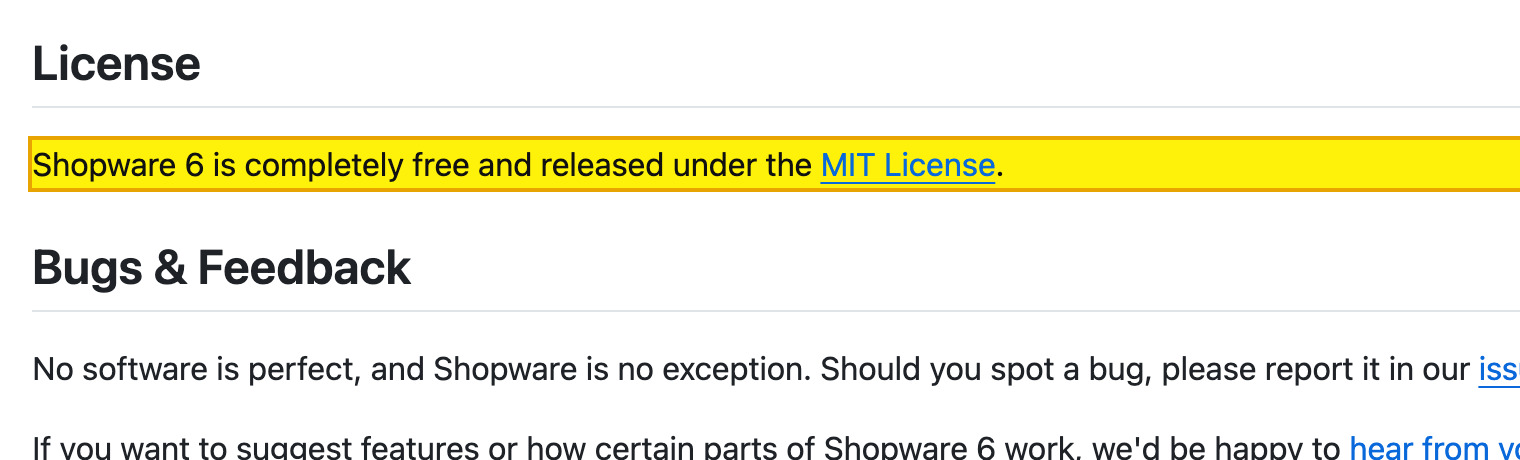
| Shopware 6 Community Edition is open-source and self-hostable. In Shopware's own words it is "Modern open source e-Commerce," an "open headless commerce platform powered by Symfony 7 and Vue.js 3" that "is completely free and released under the MIT License" — so you host it on infrastructure you choose, which lets you keep a China store's customer PII and orders on in-country infrastructure. | Shopware on GitHub — shopware/shopware README, retrieved 2026-10-10 |
| The managed Shopware Cloud is vendor-hosted, with no mainland-China region. Shopware's own pricing FAQ says the Community Edition "is not available in the Shopware Cloud – setup and maintenance are your responsibility," while for Shopware Cloud "we take care of the hosting" — a vendor-run SaaS/PaaS served from the EU, not mainland China, so a China store's data runs offshore unless you self-host in-country. | Shopware — Pricing & editions FAQ, retrieved 2026-10-10 |
| Running a China store on an offshore deployment is a cross-border transfer under PIPL. The customer PII, orders and behavior a China store collects are personal information; transferring or storing them offshore triggers PIPL Articles 38–40 (notice, a separate consent, and a CAC security assessment, standard contract, or certification) plus Article 13/23 consent, and for a CIIO or high-volume handler the in-country storage duty in Cybersecurity Law Article 39 (formerly Article 37). | PIPL Articles 38–40; Cybersecurity Law Article 39 (formerly Article 37), retrieved 2026-10-10 |
| The storefront needs an ICP filing and China payment a licensed domestic path. A China-facing storefront is a public internet service that needs an ICP filing (备案), which a foreign SaaS storefront on a foreign domain cannot carry as-is; and accepting China's mobile wallets runs through licensed non-bank payment a foreign platform cannot provide directly — so lawful China payment routes through a licensed domestic path (21YunBox is advisory on payment licensing). | China ICP filing (备案) requirement; Non-bank Payment & E-Commerce Law, retrieved 2026-10-10 |
Sources verified by the 21YunBox compliance team on 2026-10-10.
For a China-facing store, the question about Shopware is not whether the storefront loads from Shanghai — it is where your customers’ personal information, orders and behavior live, whether that storefront can carry a China ICP filing, and how you take China payment. Shopware comes in two shapes, and the difference decides the answer. Shopware 6 Community Edition is open-source and MIT-licensed — “completely free and released under the MIT License,” in Shopware’s own words — and you host it yourself, so you can run the engine on in-country infrastructure and keep customer PII and orders on the mainland: a genuine data-residency lever. The managed Shopware Cloud (SaaS/PaaS), by contrast, is vendor-hosted in the EU with no mainland-China region, so a China store’s data sits offshore — a PIPL cross-border transfer. Either way, three doors decide it: consumer-PII residency, an ICP-filed storefront, and licensed China payment.
Shopware in China at a glance
| What decides it | In Shopware's own terms — and China's law |
|---|---|
| What it holds | A storefront holds your store's most regulated data: customer personal information (names, shipping addresses, phone numbers, emails and payment details), their orders, and their browsing and behavioral data. For a China-facing store that data describes people in China, and every field is personal information under PIPL — it lives wherever the platform runs. |
| Where it runs | Shopware 6 Community Edition is open-source and self-hostable ("Modern open source e-Commerce," MIT-licensed), so you choose the infrastructure — including in-country. The managed Shopware Cloud (SaaS/PaaS) is vendor-hosted in the EU with no mainland-China region. Run a China store on the offshore cloud and you — the handler — are making a cross-border transfer under PIPL Articles 38–40 (数据出境): notice, a separate consent, and one transfer mechanism. |
| Door one — the ICP-filed storefront | A China-facing storefront is a public internet service, and a public site served into mainland China needs an ICP filing (备案). A foreign SaaS storefront on a foreign domain cannot be ICP-filed as-is, so a compliant China store needs an in-country, ICP-filed delivery path for the storefront — whichever Shopware edition powers it. |
| Door two — payment & residency | Accepting China's dominant mobile wallets runs through licensed domestic non-bank payment, a regulated activity a foreign platform cannot provide directly; China's E-Commerce Law and consumer-PII rules add platform duties. For a critical information infrastructure operator or high-volume handler, personal information collected in the mainland must be stored there — the data-localization duty in Cybersecurity Law Article 39 (formerly Article 37) (the 2025 Cybersecurity Law amendment, in force January 1, 2026, renumbered the data-localization article from 37 to 39, substance unchanged). |
| Reachability is not the axis | Whether the storefront loads from Shanghai was never the question. The lawful shape is to keep customer PII and orders in-country — self-host the open-source Community Edition on in-country infrastructure — obtain the Article 13/23 consent, ICP-file and deliver the storefront in-country, and route China payment through a licensed domestic path. On payment licensing 21YunBox's role is advisory: it holds no China payment license; that sits with a licensed domestic provider and your counsel. |
What you actually hold — customer PII, orders and behavior
A commerce platform is the custodian of your store’s most sensitive data, and Shopware is no exception. Its database holds your customers’ personal information — names, shipping and billing addresses, phone numbers, email addresses and payment details — alongside their orders (what they bought, when, for how much, where it shipped) and their browsing and behavioral data (sessions, carts, wishlists, the Shopping Experiences and Rule Builder events that drive merchandising). For a China-facing store, every one of those records describes a person in China, and under China’s Personal Information Protection Law each is personal information in its own right.
Where that data lives depends entirely on how you deploy Shopware, and here the two editions diverge sharply. Shopware 6 Community Edition is the open-source, MIT-licensed core — “Modern open source e-Commerce,” an “open headless commerce platform powered by Symfony 7 and Vue.js 3,” in Shopware’s own README — and Shopware states it “is completely free and released under the MIT License.” It is not offered on Shopware Cloud; “setup and maintenance are your responsibility,” which is precisely the point: you choose the infrastructure, so you can run the engine and its database on in-country infrastructure and keep customer PII and orders on the mainland. That self-hostability is a genuine data-residency lever.
The managed Shopware Cloud (the vendor’s SaaS and PaaS offerings) is the opposite arrangement: Shopware “take[s] care of the hosting,” and that hosting runs in the vendor’s EU cloud — there is no mainland-China region. Run a China store there and the customer PII, orders and behavior you collect are processed and stored offshore. Reachability is not the distinction that matters; the distinction is that one deployment can keep the data in-country and the other, by default, cannot.
Three doors: cross-border customer data, an ICP-filed storefront, and licensed payment
Door one — the data crosses the border. When a China store runs on an offshore deployment — the managed Shopware Cloud, or any hosting outside the mainland — the customer PII, orders and behavior it collects are processed and stored outside China, and you, the personal-information handler, are making a cross-border transfer under the Personal Information Protection Law. PIPL Articles 38–40 (数据出境) require notice, a separate consent, and one transfer mechanism: a CAC security assessment, the CAC standard contract, or certification; Articles 13 and 23 govern the consent basis. Where your organization is a critical information infrastructure operator or a high-volume handler, personal information collected in the mainland must be stored there — the data-localization duty the Cybersecurity Law now carries in Article 39 (formerly Article 37). E-commerce handlers routinely cross the volume thresholds that put this duty in play.
Door two — the storefront is a public site that needs an ICP filing. A China-facing storefront is not an internal tool; it is a public internet service delivered to people in mainland China, and that carries an ICP filing (备案) duty. A foreign SaaS storefront on a foreign domain and CDN cannot be ICP-filed as-is — so a compliant China store needs an in-country, ICP-filed delivery path for the storefront, regardless of which Shopware edition sits behind it.
Door three — China payment runs through a licensed domestic path. Accepting the mobile wallets that dominate Chinese checkout is a regulated, licensed non-bank payment activity that a foreign commerce platform cannot provide directly; China’s E-Commerce Law and its consumer-PII rules layer further platform obligations on top. Lawful China payment therefore routes through a licensed domestic provider. On this leg 21YunBox is advisory — it holds no China payment license.
This is a risk map, not a verdict: whether you face a residency duty, the cross-border-consent bar, the ICP door, the payment-licensing door, or all of them at once turns on your entity, your customers, the volume of personal information you handle, and how you deploy Shopware — worth settling with counsel before you commit.
Reaching the storefront isn’t the question — a compliant in-country store is
Because the real exposure is where your customers’ data lives and whether the storefront is lawfully filed, the useful question is not how to make an offshore Shopware store answer quickly from Shanghai — it is how to run a China store lawfully. That path has a shape. Keep the customer PII and orders in-country: this is exactly where Shopware’s open-source Community Edition earns its place, because you can self-host the engine and its database on in-country infrastructure and keep the store data on the mainland rather than on an offshore cloud. Obtain the Article 13/23 consent, minimize and pseudonymize what you collect, ICP-file and deliver the storefront in-country, and route China payment through a licensed domestic provider. This is the opposite of a tunnel that ships the data offshore anyway: localizing means the store data stays on a lawful, in-country path.
Be precise about roles. 21YunBox is advisory on the payment-licensing leg — it holds no China payment license and is not a payment institution; the license and the settlement relationship sit with a licensed domestic provider and your counsel. What 21YunBox owns is the mapping, the in-country data and delivery design, and the compliant, ICP-filed delivery of the storefront around the stack you already run. Which arrangement fits your entity, your order volumes and the customer data you keep is a risk to confirm with qualified counsel against what you actually run — treat this page as a risk map, not a verdict, and settle the specifics with counsel.
The lawful path — map, localize, deliver
There is a lawful way to run a Shopware store for customers in mainland China, and it does not depend on making an offshore storefront reachable. It runs on store data kept in-country, a governed transfer for anything that leaves, a storefront that is itself ICP-filed and served in-country, and China payment through a licensed domestic path — in front of the stack you already run, with no rebuild or migration. 21YunBox works on that footing.
Map. We inventory the customer PII, orders and behavioral data your Shopware store holds, where it is processed and stored today (self-hosted, or the managed Shopware Cloud in the vendor’s offshore EU region), whether your storefront is ICP-filed, how you take China payment now, and the consent basis you rely on — so you know exactly what counsel and a licensed payment provider need to confirm.
Localize / govern. We help you keep China-customer PII and orders in-country — self-hosting the open-source Community Edition on in-country infrastructure where that is the right fit — obtain the Article 13/23 consent, minimize and pseudonymize, keep a lawful cross-border basis for anything that still leaves, and route China payment through a licensed domestic path. On payment licensing our role is advisory: 21YunBox holds no China payment license. Localizing means keeping the store data on a lawful, in-country path — never a tunnel that ships the data offshore anyway.
Deliver. The storefront is a public internet service with an ICP filing duty; we deliver it in-country on ICP-filed infrastructure — the 21YunBox Optimizer — so it runs legally and compliantly for your users in China. 21YunBox never uses or suggests circumvention of any kind. 21YunBox is a compliant overlay and partner, advisory on payment licensing, not a competitor to Shopware.
Related reading:
- Cross-border data transfers under PIPL
- China’s Cybersecurity Law — data localization (Article 39, formerly Article 37)
- How to get an ICP filing for China
- China’s Data Export Security Assessment Measures
Frequently Asked Questions
Does Shopware store my Chinese customers' data in China?
Is it illegal to run a Shopware store for mainland China?
Does self-hosting Shopware Community Edition solve the compliance problem?
RELATED TECHNOLOGIES
























ARTICLES RELATED TO SHOPWARE
- China Implements Stricter Regulations on Internet Comment Services
- Does reCAPTCHA Work in China? Reachability, Google's Servers & PIPL
- China Cross-Border Data Transfer: What the Regulation Actually Says
- Tips for Businesses Looking to Sell Products in China: How to Start and Where to Start
- What is data privacy?
- Baidu Tieba - build brand reputation and improve search engine optimization in China!
- Why has my app been deleted from Chinese app stores, and how can I fix it?
- 15 Tips on How to Make a Website Load Faster
- Baidu vs Google
- Baidu Wangpan Guide
- How To Create A Little Red Book Brand Account And Store?
- How To Sell Products to China via WeChat?
- How to Publish My Mobile App in China: A Comprehensive Guide
- How to register a .cn domain?
- Trademark registration in China