Does Grafana Work in China? Telemetry Residency, PIPL & ICP
Grafana Cloud runs in a fixed set of AWS, Azure and GCP regions — none in mainland China — so the logs, metrics and traces it ingests from Chinese users come to rest offshore, a cross-border transfer of personal information under PIPL. Self-managed Grafana lets you keep that telemetry in-country, though the residency, consent and ICP duties stay yours. A compliance-first look at where your observability data is allowed to live.
Does Grafana work in China?
Yes — Grafana loads and ingests from mainland China, but that is the easy half. Grafana Cloud runs in a fixed set of AWS, Azure and GCP regions and not one is in mainland China, so every log, metric and trace you collect there is stored on a Grafana Cloud backend offshore — a cross-border transfer of personal information, not a speed problem.
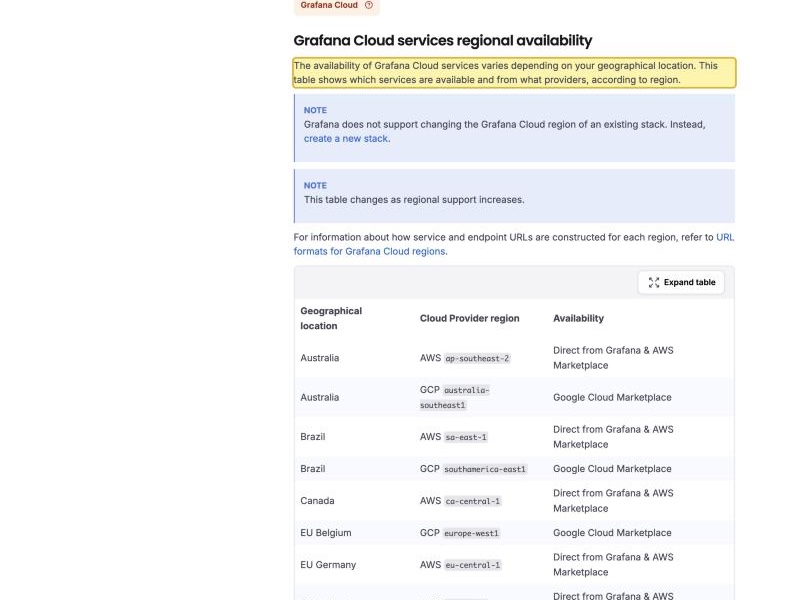
Grafana's own regional-availability docs list its Grafana Cloud regions across the US, Europe, the UK, Japan, Singapore, India, Indonesia, Australia and the Gulf, and state that "Grafana does not support changing the Grafana Cloud region of an existing stack" — none is in mainland China. Observability payloads are rarely anonymous: logs, traces and metrics routinely carry client IPs, user IDs and request contents, and unscrubbed logs can even sweep up sensitive personal information. Gathered from mainland users and sent to an offshore region, that is a cross-border transfer PIPL governs (notice, a separate consent and a transfer mechanism, Articles 38–40), and for a CIIO or large-volume handler it must be stored in China (PIPL Article 40; Cybersecurity Law Article 39 (formerly Article 37)). Self-managed Grafana is the lawful lever — you choose where it runs, in-country included.
This is a risk map, not a verdict — what applies turns on what your telemetry contains, how much is personal, and who your users are. Our China team can map your exposure with you →
What Grafana's own documentation says about China
| Fact | Primary source |
|---|---|
| Grafana Cloud has no mainland-China region. Grafana's own regional-availability documentation lists every Grafana Cloud region — across AWS, Azure and GCP in the United States, Europe, the UK, Japan, Singapore, India, Indonesia, Australia and the Gulf — and states that "The availability of Grafana Cloud services varies depending on your geographical location" and that "Grafana does not support changing the Grafana Cloud region of an existing stack." None sits in mainland China, so the logs, metrics and traces you collect there are stored on a Grafana Cloud backend offshore. | Grafana — Grafana Cloud regional availability (grafana.com), retrieved 2026-10-09 |
| Grafana comes in two forms, and only one is a residency lever. Grafana's data-residency guidance frames the hosted service as a choice "within the regions and configurations Grafana Labs offers" — Grafana Cloud spans "15+ regions across AWS, Azure, and GCP," none in mainland China — while self-hosted Grafana is "Full control (you choose where to deploy)." Running Grafana, Loki, Mimir and Tempo on infrastructure inside the mainland is the lawful way to keep China telemetry in-country. | Grafana — Which Grafana: data residency and compliance (grafana.com), retrieved 2026-10-09 |
| Grafana's default processing location is the United States. Grafana Labs' public sub-processor list marks every entry "USA (Default)," names Amazon (AWS), Google (GCP) and Microsoft (Azure) as its infrastructure and cloud-service sub-processors, and adds that "Additional regions such as EU are available." The default home for Grafana Cloud data is offshore of China; no mainland region appears. | Grafana Labs — List of Subprocessors (grafana.com), retrieved 2026-10-09 |
| Observability payloads trigger PIPL, residency and ICP duties. Because logs, traces and metrics carry client IPs, user IDs and request contents — personal information — shipping them offshore is a cross-border transfer under PIPL (notice, a separate consent and a transfer mechanism, Articles 38–40; a CAC security assessment at volume). A CIIO or large-volume handler must store that data in the mainland (PIPL Article 40; Cybersecurity Law Article 39 (formerly Article 37)), and a public mainland-served dashboard needs an ICP filing (State Council Order No. 292; MIIT Order No. 33). | PIPL Articles 28, 38–40; Cybersecurity Law Article 39 (formerly Article 37); State Council Order No. 292; MIIT Order No. 33 |
Sources verified by the 21YunBox compliance team on 2026-10-09.
For a team serving mainland China, the real question about Grafana is almost never whether a dashboard renders — it usually does. It is where the telemetry behind that dashboard is allowed to come to rest, and Grafana answers that in its own documentation in two different ways. Grafana Cloud, the hosted service, runs in a fixed set of AWS, Azure and GCP regions, and not one of them is in mainland China — so the logs, metrics and traces your agents and SDKs collect inside the mainland are shipped to and stored on a Grafana Cloud backend offshore. Self-managed Grafana — the open-source and Enterprise editions you run yourself — is the mirror image: you decide where it lives, in-country included. Either way, observability payloads routinely carry personal information — client IPs, user IDs, raw request contents — so moving them across the border is something China’s law governs. Reaching Grafana is the delivery half; where the telemetry lands is the exposure.
Grafana in China at a glance
| What decides it | In Grafana's own terms — and China's law |
|---|---|
| Where Grafana Cloud runs | A fixed set of AWS, Azure and GCP regions across the US, Europe, the UK, Japan, Singapore, India, Indonesia, Australia and the Gulf. None is in mainland China, and “Grafana does not support changing the Grafana Cloud region of an existing stack.” |
| Where self-managed Grafana runs | Grafana's data-residency guidance calls self-hosting “Full control (you choose where to deploy)” — so running it on mainland infrastructure is a residency lever you hold. |
| What the telemetry contains | Logs (Loki), traces (Tempo) and metrics (Mimir) routinely carry client IP addresses, user and session IDs, and raw request and response contents. Unscrubbed logs can also sweep up sensitive personal information. |
| Your China users' data on Grafana Cloud | Collected in the mainland and sent to an offshore region, it is a cross-border transfer PIPL governs; a CIIO or large-volume handler also owes an in-country storage duty the hosted service cannot meet. |
| Is it reachable? | Treat reachability as the delivery half, not the question. The exposure is where the telemetry is stored, not whether the dashboard loads. |
Grafana Cloud has no mainland region, so hosted telemetry leaves the country
Grafana Cloud’s regional-availability page lists the regions you can pick — spread across AWS, Azure and GCP in the United States, Europe, the UK, Japan, Singapore, India, Indonesia, Australia and the Gulf — and it is explicit that the choice is made once and locked: “Grafana does not support changing the Grafana Cloud region of an existing stack.” Not one of those regions sits in mainland China. So the agents on your mainland servers, and the browser and mobile SDKs loaded in your mainland users’ apps, gather their telemetry inside China and stream it to whichever offshore region your stack was created in. Connecting to Grafana Cloud was never the hard part; keeping the data it ingests inside the country is.
The data Grafana ingests is personal information
Observability data is not anonymous by nature. A single trace can carry the caller’s IP address, a user or account ID, a session token, and — in error exemplars and captured request or response bodies — whatever the application happened to log. Grafana’s own data-residency guidance treats where that data lands as a regulated choice, defining the stakes plainly: “Data residency means rules about which country or region your data must be stored in.” A mainland visitor’s client IP is already personal information, and under China’s Personal Information Protection Law sending it to an offshore Grafana Cloud region is a cross-border transfer: the handler — you, not Grafana Labs — must give notice, obtain a separate consent for the export, and clear one transfer mechanism, whether the CAC security assessment, the CAC standard contract, or certification (PIPL Articles 38–40). Logs that are not scrubbed can also carry Article 28 sensitive personal information no one meant to export — the exposure widens with the payload, not with the latency.
Self-managed Grafana is a residency lever — but the duties are still yours
Here is where the second form of Grafana matters. Because Grafana OSS and Grafana Enterprise are software you operate, the deployment location is yours to set. Grafana’s data-residency guidance draws exactly that line: the hosted service offers a choice “within the regions and configurations Grafana Labs offers,” while self-hosting is “Full control (you choose where to deploy).” Run Grafana together with Loki, Mimir and Tempo on infrastructure physically in the mainland and the telemetry can stay in-country — which is what a critical information infrastructure operator or a large-volume handler needs, since personal information collected in China must be stored in the mainland (PIPL Article 40; Cybersecurity Law Article 39 (formerly Article 37, renumbered by the 2025 amendment that took effect on January 1, 2026)). Self-hosting answers the residency question; it does not answer the rest. A public, mainland-served dashboard still needs an ICP filing tied to a mainland hosting resource (State Council Order No. 292; MIIT Order No. 33), and the PIPL notice-and-consent duties still attach to whatever personal information your telemetry carries.
This is a risk map, not a verdict: whether you owe a transfer mechanism, a separate consent, in-country storage, an ICP filing, or some combination turns on what your telemetry actually contains, how much of it is personal, your role as handler, and who your users are — worth settling with counsel before you point an agent at any backend.
The lawful path — map, localize, deliver
You do not have to abandon Grafana to run it compliantly for mainland China. There are three moves, and they fit together.
Map. Our China compliance team charts the lawful path for your observability stack — which telemetry carries personal information, whether your data volumes or your role as handler trigger an in-country storage duty, which PIPL transfer mechanism (if any) your exports need, and where an ICP filing attaches. You get the exposure written down before anything is rewired.
Localize. Where the hosted backend cannot lawfully hold mainland telemetry, we stand up a China-legal home for it — self-managed Grafana, Loki, Mimir and Tempo on ICP-filed infrastructure inside the mainland, consented and processed in-country — so the data that must stay in China stays in China, while the dashboards your team already knows stay exactly the same.
Deliver. In front of whatever you run, the 21YunBox Optimizer provides ICP-filed, in-country delivery — no rebuild, no second codebase, no move off Grafana. 21YunBox never uses or suggests circumvention of any kind; the entire point is a lawful, filed, in-country path.
The goal is plain: your observability runs legally and compliantly for your users in China.
Related reading:
- How to get an ICP filing for China
- Cross-border data transfers under PIPL
- China’s Cybersecurity Law and data localization
- China’s data-export security assessment measures