Does KeyCDN Work in China? Delivery, Reachability & Where ICP Really Applies
KeyCDN is a content CDN that serves your static assets from 60+ offshore data centers with no point of presence inside mainland China — so a page that pulls its files at runtime can be dragged or broken there. KeyCDN itself raises no ICP or PIPL issue; that duty sits on your hosting site. A delivery-first look, honestly framed.
Does KeyCDN work in China?
KeyCDN isn't a data-residency problem — it's a delivery one. It serves your static files, not your users' personal data, so by itself it owes no ICP filing and triggers no PIPL transfer. What it cannot give you is an edge inside mainland China, and the ICP duty stays on the site that embeds it.
In its own words KeyCDN is "a high performance content delivery network" spread across "60+ data centers in 40+ countries spread across 6 continents" — its Asian edges are named as Hong Kong, Singapore, Seoul and Tokyo, none of them inside the mainland. So from inside China its assets are frequently slow, throttled or unreachable, and because KeyCDN holds no mainland footing it offers no ICP filing of its own. That obligation — and any cross-border transfer of personal information question — rides on your own hosting site, not on the CDN. The table below is KeyCDN's own wording and the rule each row triggers.
This is a risk map, not a verdict — whether an offshore CDN merely slows your pages or breaks them, and whether your own site is filed and in-country, turns on how your front-end is built and what you collect. Our China team can map your exposure with you →
What KeyCDN's own documentation says about China
| Fact | Primary source |
|---|---|
| KeyCDN is a content CDN — it moves your files, not your users' personal data. In its own words it is "a high performance content delivery network that has been built for the future," and "it only takes a few minutes to start delivering content to your users at a blazing fast speed." What passes through it is static website content, images and files — not personal information — so loading an asset from KeyCDN is not itself a cross-border transfer of personal data, and KeyCDN carries no ICP filing of its own. | KeyCDN homepage (keycdn.com), retrieved 2026-10-07 |
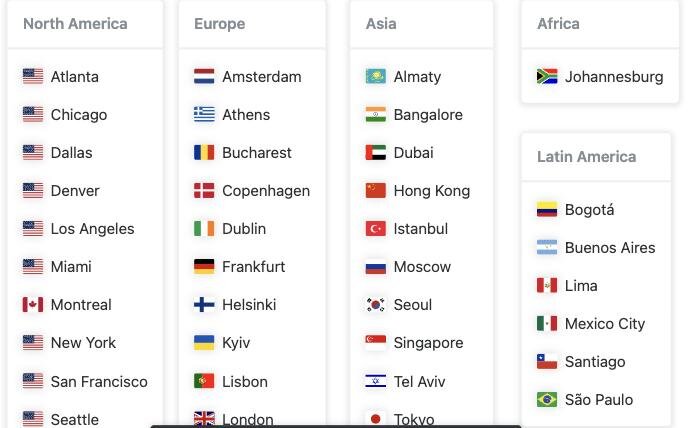
| Every KeyCDN point of presence sits outside mainland China. KeyCDN describes "60+ data centers in 40+ countries spread across 6 continents," and its own location list names its Asian edges as Hong Kong, Singapore, Seoul, Tokyo and Bangalore — not one inside the mainland. The closest, Hong Kong, sits outside the mainland's network border and its ICP regime, so it gives neither in-country delivery nor a filing footing. From inside mainland China, assets served by KeyCDN are therefore frequently slow, throttled or unreachable — a delivery risk, not a clean block. | KeyCDN network page (keycdn.com/network), retrieved 2026-10-07 |
| The ICP filing belongs to the site that embeds KeyCDN, not to the CDN. A public website shown to mainland visitors turns on an ICP filing (ICP 备案) under State Council Order No. 292 and MIIT Order No. 33, bound to hosting physically inside the mainland. A content CDN like KeyCDN carries none of that and offers no mainland footing to file against; the duty rides on your origin site, which still has to be ICP-filed and hosted in-country. | KeyCDN network page (keycdn.com/network), retrieved 2026-10-07; State Council Order No. 292; MIIT Order No. 33 |
| Your users' data is your own site's PIPL question — not KeyCDN's. Because KeyCDN holds none of your users' personal information, it raises no transfer duty itself. But if the site embedding its assets collects personal data from Chinese users, that site's own flows fall under the cross-border transfer and localization rules of the Personal Information Protection Law (PIPL Articles 38–43 and 40; Cybersecurity Law Article 39 (formerly Article 37)). Honest framing matters here: the data duty attaches to your origin, not to the content CDN in front of it. | KeyCDN homepage (keycdn.com), retrieved 2026-10-07; PIPL Articles 38–43 & 40; Cybersecurity Law Article 39 (formerly Article 37) |
Sources verified by the 21YunBox compliance team on 2026-10-07.
For a mainland-China audience, the deciding question about KeyCDN is not how quick it looks on a test run from abroad — it is whether its files reach the screen at all from inside the country, and which layer actually owes the compliance. KeyCDN is a content delivery network: it serves your static website content, images and files, not your users’ personal data, so on its own it triggers no cross-border-data-transfer duty and needs no ICP filing of its own. Its weakness in China is operational, not legal. Every KeyCDN point of presence lives outside mainland China, so a page that reaches for a KeyCDN asset while it loads is leaning on infrastructure that, from inside the mainland, answers slowly or not at all — and an asset that never arrives takes a piece of the page down with it. The licensing question is real too, but it belongs to the next layer in: the site that embeds KeyCDN, which still has to be ICP-filed and hosted in-country.
KeyCDN in China at a glance
| What decides it | In KeyCDN's own terms |
|---|---|
| Where it runs | “60+ data centers in 40+ countries spread across 6 continents” — a global edge whose nearest Asian points of presence (Hong Kong, Singapore, Seoul, Tokyo) all sit outside mainland China. |
| What it serves | KeyCDN calls itself “a high performance content delivery network” for website content, images and files — static assets, not user data, so no personal information passes through KeyCDN. |
| Reachable from the mainland? | Delivered from points of presence across the border, so from inside mainland China KeyCDN assets are frequently slow, throttled or unreachable — a delivery risk, not a clean block. |
| Data residency / PIPL | Not triggered by KeyCDN itself: it holds no personal data. The cross-border-transfer question belongs to whatever your own site collects, elsewhere. |
| ICP filing | None on KeyCDN — a content CDN carries none. The ICP 备案 duty rides on the site that embeds it, which must be filed against in-country hosting. |
A content CDN for your files — a delivery question, not a data one
KeyCDN calls itself “a high performance content delivery network that has been built for the future,” and says “it only takes a few minutes to start delivering content to your users at a blazing fast speed.” Take that at face value and the China question falls into place: the bytes moving through KeyCDN are your own website content, images and files — never your users’ personal information — so fetching one is not a cross-border transfer of personal data and carries no ICP duty on KeyCDN’s side. Casting a plain content CDN as a data-residency problem would be a stretch we are not going to make. The exposure that is actually real is more mundane: will each of those assets load, fast and every time, for a phone or laptop sitting in Beijing or Hangzhou?
Sixty-plus edges — and every one of them offshore
KeyCDN is open about its reach: “60+ data centers in 40+ countries spread across 6 continents.” That is plenty for most of the world, but its own location list places its nearest Asian points of presence in Hong Kong, Singapore, Seoul and Tokyo — and none inside mainland China. The closest, Hong Kong, is the easy one to misread, because it is not the mainland. Hong Kong sits outside the mainland’s network border and outside the ICP regime, so an edge there gives you neither in-country delivery nor a filing footing, and traffic from it into the mainland still crosses the border. What follows is the familiar offshore-CDN pattern from inside China: an asset is quick one moment and stalled or unreachable the next, and which one you get moves with the carrier, the route and the time of day. Because an asset URL is resolved while the page is painting, that instability is injected straight into the render — the slot waiting on that file can hang blank, jump into place long after everything else, or stay empty for good, and a layout that passed every test abroad can reach a Chinese visitor visibly broken. In short, it is a dependency whose reliability you cannot govern, sitting where mainland users cannot count on reaching it.
Where the compliance line actually falls — your hosting site, not KeyCDN
To reach the compliance door honestly, you have to pin it to the right layer. KeyCDN carries no ICP obligation; the public site that embeds its assets carries all of it. A site shown to visitors in the mainland hinges on an ICP filing (ICP 备案) under State Council Order No. 292 and MIIT Order No. 33, tied to hosting that physically sits inside the country — and from the instant that site starts collecting personal information from Chinese users, PIPL’s cross-border-transfer and data-localization rules bind its own data flows (PIPL Articles 38–43 and 40; Cybersecurity Law Article 39 (formerly Article 37)). KeyCDN sits outside all of it. Yet a mainland-facing site that depends on KeyCDN inherits its offshore delivery fragility and keeps, undiminished, every compliance duty that was its own to begin with.
This is a risk map, not a verdict: whether an offshore content CDN just drags your pages or outright breaks them, and whether your own hosting and data posture stands up, comes down to how your front-end is built and what you gather from users — all of it worth settling with counsel and a hard look at what your pages actually fetch.
Where 21YunBox fits — a compliant overlay, not a migration
Your front-end stays exactly as your developers shipped it. What we remove is the cross-border round trip KeyCDN introduces: the assets your pages pull from it are served instead from ICP-filed delivery inside the mainland, placed ahead of your existing origin — no rebuild, no parallel codebase, and no touching the URLs or cache rules your team already depends on. At the same time, our China team checks the layer the CDN never reaches: that the site serving those assets is itself ICP-filed, hosted inside the mainland, and sound under PIPL for whatever user data it does collect. Not a byte of what you ship changes; all that changes is the side of the border your assets answer from.
Related reading: