Does BootstrapCDN Work in China? Reachability, Reliability & Where ICP Really Applies
BootstrapCDN serves Bootstrap's open-source CSS and JS from a public offshore CDN — Bootstrap's own docs load it via jsDelivr — with no presence inside mainland China, so a site that fetches those assets at runtime can be slowed or broken there. The CDN itself raises no ICP or PIPL issue; that duty sits on your hosting site. A delivery-first look, honestly framed.
Does BootstrapCDN work in China?
Whether BootstrapCDN works in mainland China is a delivery and reliability question, not a data-privacy one. It serves open-source framework code, not your users' data, so the CDN itself raises no PIPL or ICP duty — the risk is whether those files actually arrive.
Bootstrap's own getting-started docs hand you the framework from a public CDN: under the heading "CDN links" the compiled CSS and JS load from jsDelivr (cdn.jsdelivr.net/npm/bootstrap@5.3.8/…), a worldwide edge with no point of presence inside mainland China. From inside the mainland an offshore CDN like that is frequently slow, throttled or unreachable, and because a stylesheet or script fetched at load time can block rendering, a stalled Bootstrap file does not just slow your page — it can break its layout or behavior. The compliance line sits one step away, on the site that embeds those assets, which still needs an ICP filing to serve the mainland. The table below maps each point.
This is a delivery and risk picture, not a legal verdict — your ICP and data position depend on what your own site serves and collects. Our China team can map the in-country delivery and ICP path with you →
What Bootstrapcdn's own documentation says about China
| Fact | Primary source |
|---|---|
In Bootstrap's own getting-started docs, under the heading "CDN links," the framework's compiled CSS and JavaScript load from jsDelivr — https://cdn.jsdelivr.net/npm/bootstrap@5.3.8/dist/css/bootstrap.min.css and https://cdn.jsdelivr.net/npm/bootstrap@5.3.8/dist/js/bootstrap.bundle.min.js. jsDelivr is a public, worldwide CDN and these are open-source package files — code, not your users' data. Its public edge runs from points of presence outside mainland China, so from inside the mainland these assets can load slowly, be throttled, or fail to arrive (an inference from how offshore public CDNs serve the mainland, not a 21YunBox measurement). | Bootstrap Docs — Get started / CDN links, retrieved 2026-10-07 |
| A public-facing website shown to mainland-China visitors from inside the mainland requires an ICP filing (ICP 备案) under the State Council's Order No. 292 and MIIT's Order No. 33, tied to a hosting resource inside the mainland. That duty falls on your site, the one embedding Bootstrap — an open-source asset CDN carries no ICP filing of its own, and reaching China from an offshore CDN is not the same as being cleared to operate there. | PRC Regulations on Telecommunications (State Council Order No. 292); Administrative Measures for the Filing of Non-operational Internet Information Services (MIIT Order No. 33) |
| Loading Bootstrap from a CDN is not itself a cross-border transfer of personal information: the files are public code, and no personal data of your users passes through the CDN. China's Personal Information Protection Law governs the transfer and storage of personal information — so the PIPL and data-residency questions belong to your own site's user-data flows (its forms, logins, analytics and storage), not to fetching a public stylesheet or script. Forcing a data-residency story onto an open-source CDN would be inaccurate. | PIPL Chapter III, Articles 38–43 and Article 40; Cybersecurity Law Article 39 (formerly Article 37) |
Sources verified by the 21YunBox compliance team on 2026-10-07.
For a China-facing site, the useful question about BootstrapCDN is not a legal one but a practical one: do the Bootstrap files actually show up? BootstrapCDN is simply the practice of pulling Bootstrap’s compiled CSS and JavaScript from a public content delivery network rather than bundling them into your own build. Those files are open-source framework code — not your users’ data — so loading them is neither a cross-border transfer of personal information nor something that carries an ICP filing of its own. The real exposure is delivery: the code comes from an offshore edge with no presence inside mainland China, and a page that fetches it at request time depends on infrastructure that is often slow or unreachable from the mainland. When a Bootstrap stylesheet or script stalls, the page waiting on it stalls too. The one compliance thread here runs through the site that embeds Bootstrap — it still has to be ICP-filed and served from inside the country.
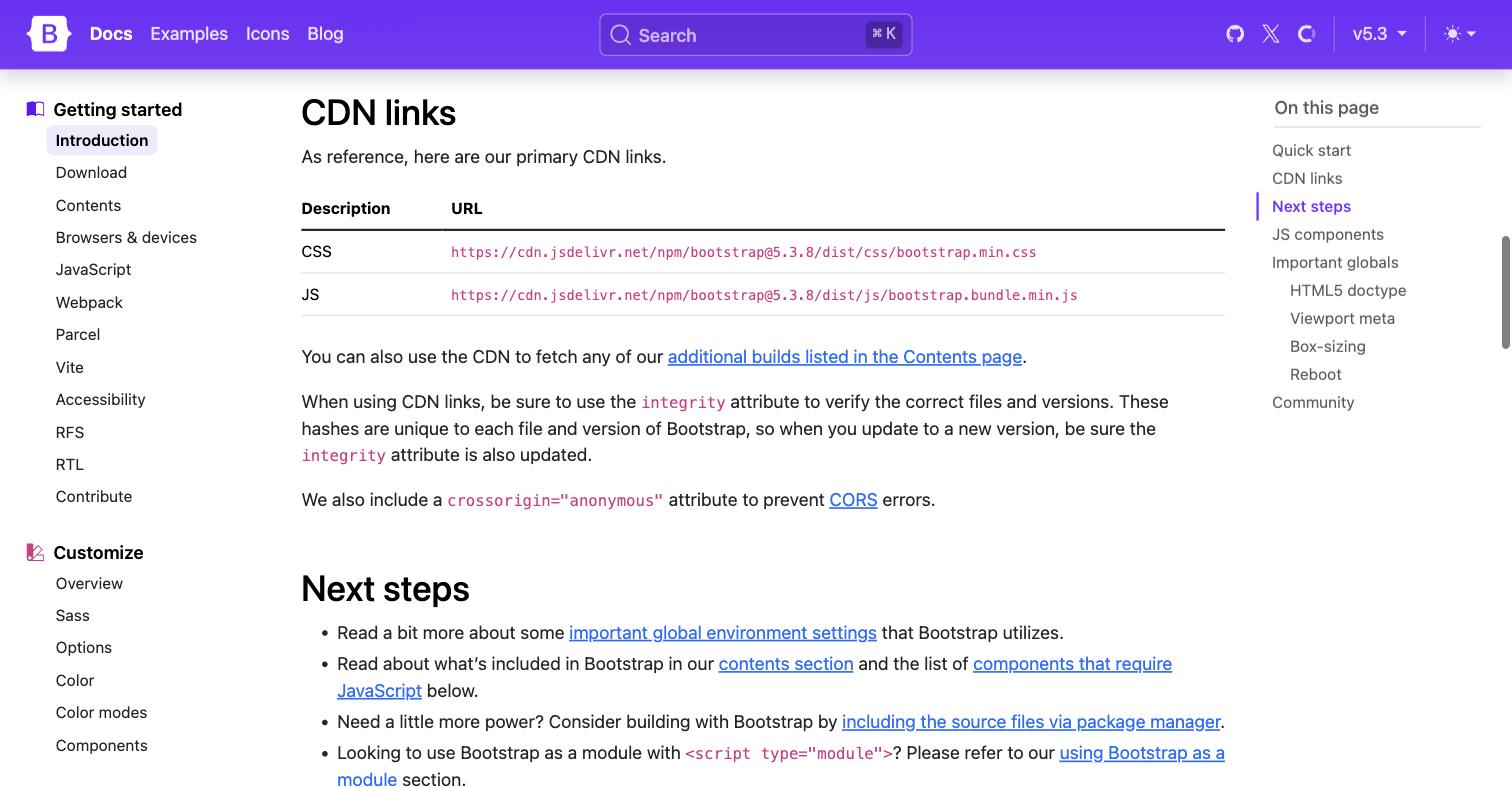
https://cdn.jsdelivr.net/npm/bootstrap@5.3.8/dist/css/bootstrap.min.css and the JavaScript from https://cdn.jsdelivr.net/npm/bootstrap@5.3.8/dist/js/bootstrap.bundle.min.js — jsDelivr's worldwide edge, with no point of presence inside mainland China. Source: getbootstrap.com/docs/5.3/getting-started/introductionBootstrapCDN in China at a glance
| What decides it | What it means in China |
|---|---|
| Where it runs | Bootstrap's own “CDN links” serve from jsDelivr (cdn.jsdelivr.net), a public worldwide CDN — a global edge with no point of presence inside mainland China. |
| What it serves | Bootstrap's compiled CSS and JavaScript — open-source, public package files. Code, not user data, so no personal information passes through the CDN. |
| Reachable from the mainland? | Served from points of presence outside the country, so from inside mainland China it is frequently slow, throttled or unreachable — a delivery risk, not a clean block. |
| Data residency / PIPL | Not triggered by BootstrapCDN itself: it holds no personal data. The cross-border-transfer question belongs to whatever your own site does with user data, elsewhere. |
| ICP filing | Not on BootstrapCDN — an open-source asset CDN carries none. The ICP duty sits on the site that embeds it, which must be filed and hosted in-country. |
A CDN for open-source framework code — a delivery question, not a data one
Bootstrap’s getting-started docs point you straight at a public CDN: the “CDN links” section loads the compiled CSS and JavaScript from jsDelivr. That shapes how you should judge BootstrapCDN in China. It moves open-source code, not personal information, so there is no cross-border transfer of personal data to clear and no ICP filing attached to the CDN. Claiming otherwise — bolting a data-residency story onto a public code CDN — would not be honest. The question that actually bites is whether those files can be fetched, quickly and every time, from inside the mainland.
Served from an offshore edge with no mainland-China presence
Whether you load Bootstrap from the jsDelivr endpoint its docs now recommend or from the bootstrapcdn.com service, the files arrive from a public CDN that serves the mainland from across the border — a worldwide edge with no point of presence inside the country. The result is the familiar one for any offshore CDN: from inside China it is frequently slow, throttled or simply unreachable, and the outcome shifts with the network, the route and the hour. We put no number on that here — there is no first-party measurement for this specific asset, so it stays a qualitative risk. The mechanism is what makes it bite: a <link> or <script> that pulls Bootstrap at load time hands that variability straight to your visitors, and because a stylesheet blocks rendering and the behavior of your components depends on the script, a stalled fetch is not a quiet background slowdown. It can leave the page rendering unstyled, shifting as late styles land, or missing the interactive pieces Bootstrap’s JavaScript drives. It is a dependency you do not control, sitting on the wrong side of the border.
The compliance line falls on your site, not on BootstrapCDN
Reaching the compliance door here means being precise about where it is. BootstrapCDN needs no ICP filing — but the public site that embeds it does. A website shown to mainland visitors turns on an ICP filing (ICP 备案) under State Council Order No. 292 and MIIT Order No. 33, tied to a hosting resource physically inside the mainland; and if that site collects personal information from Chinese users, the cross-border transfer and data-residency rules of the Personal Information Protection Law apply to that site’s own data flows (PIPL Articles 38–43 and 40; Cybersecurity Law Article 39 (formerly Article 37)). BootstrapCDN sits inside none of that — yet a mainland site that quietly depends on it inherits the CDN’s delivery weakness while still owing every one of its own compliance duties.
This is a delivery and risk map, not a verdict: whether an unreliable offshore CDN merely slows your site or breaks it, and whether your own hosting and data position is sound, depends on how your front-end is built and what you collect — worth settling with counsel and a look at your real dependencies.
Where 21YunBox fits — a compliant overlay, not a migration
You do not touch your markup or swap out Bootstrap. What we remove is the offshore round trip: the same bootstrap.min.css and bootstrap.bundle.min.js your pages reference are delivered from ICP-filed infrastructure inside the mainland, placed in front of the origin you already run — no rebuild, no forked codebase, and no new framework for your team to learn. Alongside that, our China team looks at the piece a public CDN can never cover for you: whether the site serving those files is itself ICP-filed, hosted in-country, and sound on PIPL for the user data it collects. Your <link> and <script> tags can stay exactly as Bootstrap’s docs wrote them; what changes is where the bytes come from.
Related reading:
Frequently Asked Questions
Is BootstrapCDN blocked in China?
Make Your Site Work inside the Great Firewall of China
Enter your information, and our staff will assist you in getting a 21YunBox account for China.
