Does AWS Global Accelerator Work in China? Routing vs. the ICP Door
AWS Global Accelerator is a routing layer over the AWS global network — not in-country hosting, and not offered in AWS's China (Beijing/Ningxia) partition. A public mainland site still needs an ICP filing an accelerator can't carry. A compliance-first look at the routing, ICP and cross-border questions.
Does AWS Global Accelerator work in China?
Whether AWS Global Accelerator can serve your application inside mainland China is a licensing question, not a routing one. Global Accelerator makes the path to your AWS endpoints faster and more deterministic — it does not make those endpoints a lawful, in-country presence.
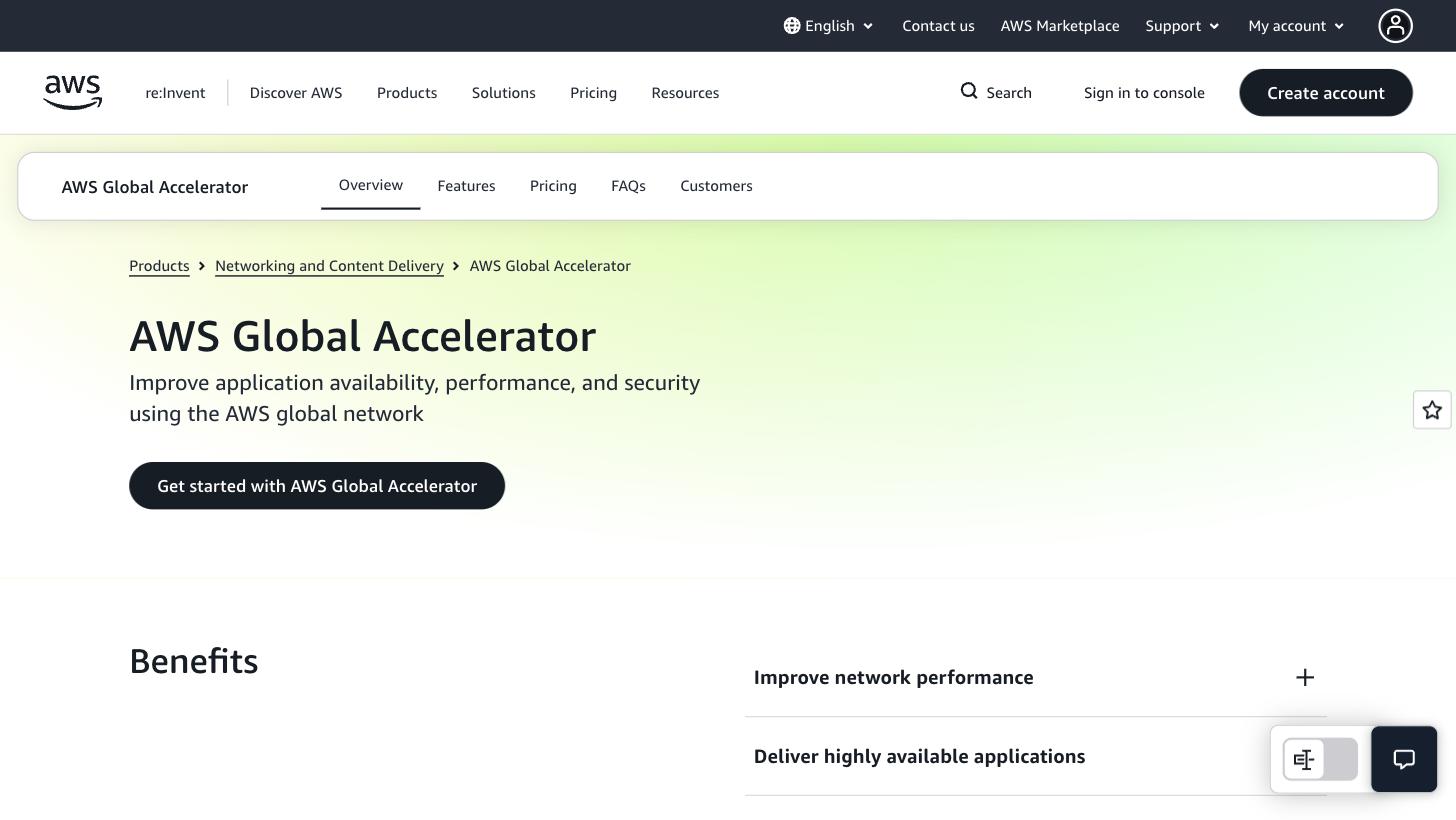
In AWS's own words, Global Accelerator improves applications "using the AWS global network": it onboards "user traffic at one of the Global Accelerator edge locations" and lets users "access your application endpoints through static IP addresses." Those endpoints run in AWS Regions — and Global Accelerator is not among the services AWS offers in its mainland-China partition (the Beijing and Ningxia Regions operated by Sinnet and NWCD, on separate credentials). So it can speed traffic toward endpoints outside the mainland, but it cannot place an ICP-filed serving endpoint inside it — and a public site shown to users in China needs that filing, which only a licensed in-country account can hold. The table below is AWS's own wording, the door each fact opens, and the compliant in-country path.
This is a risk picture, not a verdict — what you need turns on whether you serve the public in China, your entity, and whether the app behind the accelerator carries personal data. Our China team can map the in-country path with you →
Compliance snapshot
- ! Routes traffic to your AWS endpoints over the AWS network — it accelerates delivery, it isn't in-country hosting
- ✕ Not offered in the AWS China (Beijing/Ningxia) partition — AWS's own service list, Feb 2026
- ✕ A public site served to the mainland still needs an ICP filing Global Accelerator can't carry
- ! Lawful in-country serving means a separate AWS China account (Sinnet/NWCD) + a Chinese entity
- ✓ A compliant path exists: ICP-filed, in-country delivery alongside your AWS stack
What AWS Global Accelerator's documentation says, and what we measured from inside China
| Fact | Primary source |
|---|---|
| In AWS's own words, Global Accelerator is a routing layer, not hosting. It improves applications "using the AWS global network": it onboards "user traffic at one of the Global Accelerator edge locations," and users "access your application endpoints through static IP addresses to enjoy deterministic routing independent of DNS." Those endpoints are servers you run in AWS Regions — Global Accelerator speeds the trip to them; it does not itself hold your content or give it a location inside mainland China. | Amazon Web Services — AWS Global Accelerator product page, retrieved 2026-10-07 |
| Global Accelerator is not offered in the AWS China partition. AWS's own "Amazon Services by Region" table (services offered in the Beijing and Ningxia Regions, last updated 2026-02-28) lists dozens of services — Global Accelerator is not among them. Those China Regions are a separate partition operated by Beijing Sinnet (Beijing) and NWCD (Ningxia); they require "a separate set of account credentials unique to China services," and "customers with existing Amazon Web Services credentials will not be able to access resources in the China Regions, and vice versa." [Inference: because the partitions are isolated and Global Accelerator is not offered inside the China one, it cannot run there or route to endpoints in the mainland-China Regions.] | Amazon Web Services China — Amazon Services by Region (regional-product-services), last updated 2026-02-28, retrieved 2026-10-07 |
| Serving a public site into the mainland turns on an ICP filing — the door Global Accelerator can't open. By AWS China's own ICP guidance, "the domains without ICP recordal or ICP license shall not provide Internet information service," under Article 4 of State Council Decree 292 (with MIIT Order 33 administering the filing). The filing is made through the in-country operator — ICP recordal "through NWCD" (Ningxia) or "through Sinnet" (Beijing) — and is submitted to the authority "corresponding to the business license address," so it presupposes a Chinese business license and a licensed mainland account. A global-network accelerator carries none of that. How ICP filing works → | Amazon Web Services China — ICP Recordal (amazonaws.cn/en/support/icp); State Council Decree 292, Article 4; MIIT Order 33 — retrieved 2026-10-07 |
| If the application behind Global Accelerator handles personal data, where its endpoints sit is a second, separate question. Global Accelerator does not process your users' personal information — it routes to the endpoints that do. Where those endpoints store personal information collected in China outside the mainland, that is a cross-border transfer under PIPL (Chapter III, Articles 38–43: notice, separate consent, and one permitted transfer mechanism), and a CIIO or large-volume handler must additionally store it inside mainland China (CSL Article 39 (formerly Article 37); PIPL Article 40). This applies only where personal data is involved. | PIPL Chapter III, Articles 38–43 and Article 40; Cybersecurity Law Article 39 (formerly Article 37) |
| AWS's Global Accelerator product page is reachable from inside mainland China on both paths we measured: 3 of 3 page loads completed from a datacenter probe (Alibaba Cloud cn-zhangjiakou) on 2026-08-28 — median time to first byte 965ms, median largest-contentful-paint 7,512ms — and 3 of 3 again from a Beijing residential broadband line on 2026-08-30 (median first byte 673ms, median paint 2,164ms). This measures the reachability of AWS's marketing page, not the service — and reachability is the delivery half, not the legal half. | 21YunBox — China delivery measurement, measured from inside mainland China (datacenter probe and Beijing residential broadband) |
Sources verified by the 21YunBox compliance team on 2026-10-07.
Whether AWS Global Accelerator “works” in mainland China is a licensing question before it is a routing one. Global Accelerator makes the path to your AWS endpoints faster and more predictable — but it is a routing layer, not a place your application gets hosted, and it is not among the services AWS offers inside its separate mainland-China partition. A public-facing site shown to users in China still turns on an ICP filing that an accelerator cannot hold. AWS states each of these points in its own words.
AWS Global Accelerator in China at a glance
| What decides it | In AWS's own terms |
|---|---|
| What it actually is | A routing layer over the AWS global network. Global Accelerator improves applications “using the AWS global network”; it onboards “user traffic at one of the Global Accelerator edge locations,” and users “access your application endpoints through static IP addresses to enjoy deterministic routing independent of DNS.” It speeds the trip to endpoints you run — it is not hosting. |
| Offered in China? | No. AWS's own “Amazon Services by Region” table for the Beijing and Ningxia Regions (last updated February 28, 2026) does not list Global Accelerator. |
| A separate partition | Those China Regions require “a separate set of account credentials unique to China services,” and “customers with existing Amazon Web Services credentials will not be able to access resources in the China Regions, and vice versa.” |
| Serving the public | A domain “without ICP recordal or ICP license shall not provide Internet information service” — recordal made “through Sinnet” (Beijing) or “through NWCD” (Ningxia). |
| If personal data rides behind it | Global Accelerator routes; the endpoints behind it process the data. Where those endpoints store China-collected personal information offshore, that is a cross-border transfer PIPL governs. |
What Global Accelerator actually is — routing, not in-country hosting
Read AWS’s description closely. Global Accelerator improves applications “using the AWS global network”; it onboards “user traffic at one of the Global Accelerator edge locations,” and users “access your application endpoints through static IP addresses to enjoy deterministic routing independent of DNS.” The thing being accelerated is the path to endpoints you already run in AWS Regions. The service does not hold your content, and it does not give that content a location inside mainland China; it makes the route to wherever your endpoints live faster and more deterministic.
That distinction carries the whole question. A quicker, steadier trip to a server outside the mainland is a delivery improvement — not a lawful in-country presence. Everything below follows from keeping those two apart.
Door one — Global Accelerator isn’t offered in the AWS China partition
AWS does run two regions inside the mainland — Beijing and Ningxia — but they are a separate partition, operated by its Chinese partners Sinnet and NWCD, and you reach them only with “a separate set of account credentials unique to China services.” AWS is explicit that “customers with existing Amazon Web Services credentials will not be able to access resources in the China Regions, and vice versa.” And on AWS’s own “Amazon Services by Region” table for Beijing and Ningxia — last updated February 28, 2026 — Global Accelerator is not among the services offered there.
[Inference, not an AWS statement: because the two partitions are isolated and Global Accelerator is not offered inside the China one, it cannot run there or route to endpoints in the mainland-China Regions.] So the accelerator you run on your global account does not extend into China, and it is not a way to reach endpoints hosted in the Beijing or Ningxia Regions either.
Door two — the ICP filing an accelerator can’t carry
Wherever Global Accelerator does speed delivery toward your endpoints, serving a public-facing site to users in the mainland still turns on something it never provides: an ICP filing. In AWS China’s own ICP guidance, “the domains without ICP recordal or ICP license shall not provide Internet information service” (State Council Decree 292, Article 4; MIIT Order 33 administers the filing), and recordal is made through the in-country operator — “through Sinnet” for Beijing or “through NWCD” for Ningxia. That presupposes a Chinese business license and a licensed mainland account to hold the filing, and a global-network routing service carries none of it.
Being on Global Accelerator, then, settles nothing about the mainland. The in-country door is still a Chinese entity, a China-only account, and an ICP filing — the same two-door structure AWS lays out in full for its China Regions (see Does AWS work in China?).
If personal data rides behind the accelerator — the second question
Global Accelerator does not process your users’ personal information; it routes to the endpoints that do. So where those endpoints store personal information collected in China outside the mainland, the compliance question moves to the data itself. Under China’s Personal Information Protection Law, that offshore storage is a cross-border transfer: the handler — you, not AWS — must give notice, obtain separate consent, and satisfy one transfer mechanism, namely a CAC security assessment, the CAC standard contract, or certification (PIPL Articles 38–43). For a CIIO or a large-volume handler, personal information collected in China must additionally be stored in the mainland (Cybersecurity Law Article 39 (formerly Article 37); PIPL Article 40) — which an endpoint outside China cannot do. This applies only where personal data is in play.
None of this is a verdict that Global Accelerator is “blocked” or “illegal.” It is a risk map: which parts bind you depends on whether you serve the public in China, your entity, the personal data the application behind the accelerator carries, and your role under Chinese law — worth settling with counsel before your China delivery depends on it.
Reachable is not the same as lawful to serve
Reachability and compliance are different halves of this question, and it helps to keep them apart. AWS’s own Global Accelerator product page is reachable from inside mainland China on both paths we measured: 3 of 3 page loads completed from a datacenter probe (Alibaba Cloud cn-zhangjiakou) on August 28, 2026 — median time to first byte 965ms, median largest-contentful-paint 7,512ms — and 3 of 3 again from a Beijing residential broadband line on August 30, 2026 (median first byte 673ms, median paint 2,164ms). That measures the reachability of AWS’s marketing page, not the service — and reachability is the delivery half of the question, never the legal half.
Where 21YunBox fits — a compliant overlay, not a migration
You keep running AWS and Global Accelerator exactly as you do today. We add the piece a routing service structurally can’t: compliant, ICP-filed delivery from inside the mainland, placed in front of the endpoints your accelerator already fronts — no rebuild, no second codebase, and no move off your global AWS stack. Our China team maps which door applies, assesses your PIPL cross-border and data-residency exposure for your entity and data volumes, and stands up the durable, in-country delivery a lawful China presence requires.
Related reading:
- Does AWS work in China? ICP, data residency and the two doors
- How to get an ICP filing for China
- Cross-border data transfers under PIPL
Frequently Asked Questions
Can AWS Global Accelerator make my site load faster from inside China?
It can speed the path to your AWS endpoints — Global Accelerator onboards traffic at its edge locations and carries it over the AWS global network to your application endpoints, by static IP. But those endpoints live in AWS Regions, and Global Accelerator is not offered in the AWS China (Beijing/Ningxia) partition, so it cannot place a filed, in-country serving endpoint in the mainland. Faster routing toward servers outside China is a delivery improvement, not lawful in-country serving.
Is it against the law to serve mainland China through Global Accelerator?
Treat it as a risk to assess with counsel, not a blanket yes or no. Two things follow from serving the mainland this way: a public website shown to users in China needs an ICP filing, and AWS's own rule is that a domain without one "shall not provide Internet information service" — a filing a global-network accelerator cannot carry. And if the application behind Global Accelerator stores China users' personal information abroad, that is a cross-border transfer PIPL governs. Whether a data-localization duty also applies turns on your role (for example, whether you are a CIIO) and your data volumes.
Can 21YunBox help serve a Global-Accelerator-backed application in China?
Yes. Our China team can map the in-country path — the ICP filing and the licensed mainland delivery a public China presence requires — and assess any PIPL cross-border exposure for the application your accelerator fronts, on top of the AWS stack you already run. Get in touch to work through your specific setup.