
Does Cloudinary work in China?
Cloudinary is a capable global media platform — but whether it "works in China" is a compliance question, and most of it isn't Cloudinary's to answer. The ICP filing belongs to your public mainland site, not to the media service; and if your China users' uploaded media (a face is personal information) is stored offshore, PIPL's cross-border rules are in play.
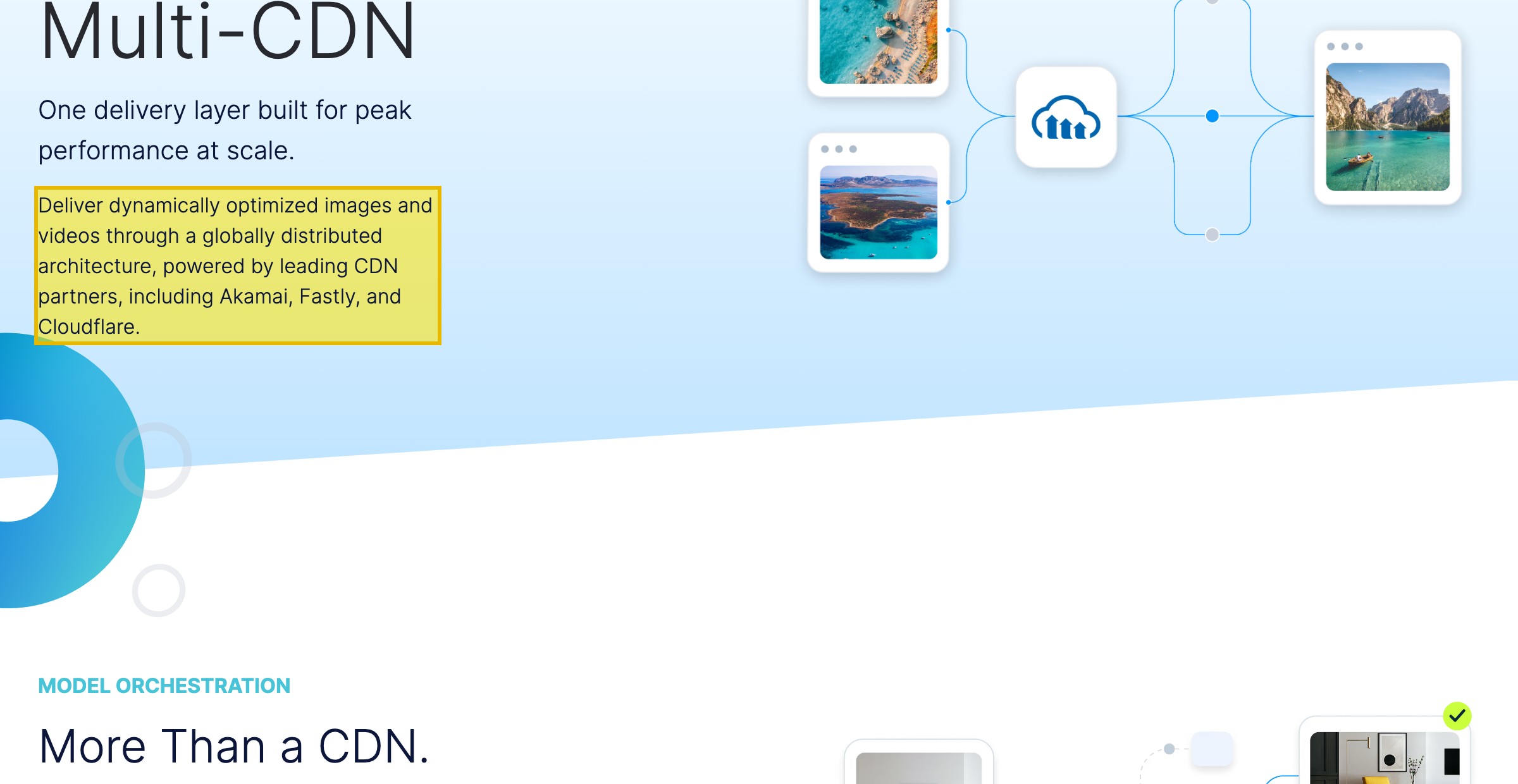
Cloudinary's media runs on a "globally distributed architecture, powered by leading CDN partners, including Akamai, Fastly, and Cloudflare" — none in the mainland — and it offers China delivery only as a separate tier: "China CDN is an advanced solution and available for our Enterprise customers only," where even "Akamai requires a valid ICP license." On the filing, Cloudinary hands the question back to you: customers "might need to procure an Internet Content Provider (ICP) license," and "Whether that requirement pertains to you is a legal question so consult with your legal team." It is equally candid that uploaded media "can contain Personal Information," stored "in the European Union, the United States, the United Kingdom, Singapore, and Israel" — so serving China users from there is a cross-border transfer PIPL governs, while the ICP filing for a public mainland site is yours to hold. The table below pairs Cloudinary's own words with the rule each one triggers.
This is a risk map, not a verdict — which gates bite turns on your entity, your data volumes and whose media you handle. Our China team can map your exposure with you →
What actually decides whether Cloudinary works for you in mainland China
| Fact | Primary source |
|---|---|
| Cloudinary's delivery network is global by design, with no mainland-China region. Cloudinary describes its media delivery as a "globally distributed architecture, powered by leading CDN partners, including Akamai, Fastly, and Cloudflare." For a standard account, mainland visitors are served from those offshore networks — which makes reachability inside China a delivery question, entirely separate from the legal one. | Cloudinary — Multi-CDN Delivery for Images and Video (cloudinary.com), retrieved 2026-10-07 |
| Reaching mainland China is a separate, Enterprise-only capability — not the default. Cloudinary's own China-delivery primer says "China CDN is an advanced solution and available for our Enterprise customers only," delivered because Cloudinary "has partnered with China CDNs Akamai and ChinaCache." Its plain framing of the problem: "For audiences in China, delivery must be through a local CDN." A standard Cloudinary account, in other words, serves the mainland only from offshore. | Cloudinary — "A Primer: Content Delivery Through a China CDN Partnered With Cloudinary" (cloudinary.com), published 2020-06-09, retrieved 2026-10-07 |
| Cloudinary hands the ICP question to your lawyers — because the filing is yours, not its. The same primer tells customers "At the outset, you might need to procure an Internet Content Provider (ICP) license," that "Akamai requires a valid ICP license," and that "Whether that requirement pertains to you is a legal question so consult with your legal team." An ICP filing attaches to the public mainland site that embeds your media (State Council Order No. 292; MIIT Order No. 33) — a media service cannot hold it for you. | Cloudinary — "A Primer: Content Delivery Through a China CDN" (cloudinary.com), published 2020-06-09, retrieved 2026-10-07; State Council Order No. 292; MIIT Order No. 33 |
| Uploaded media can be personal information — and Cloudinary stores it offshore. Cloudinary's privacy policy states "This Uploaded Content can contain Personal Information" and that Cloudinary "acts as a processor of personal data contained in Uploaded Content," held "in the European Union, the United States, the United Kingdom, Singapore, and Israel" — none in the mainland. Uploading China users' photos or video (a face is personal information) to those regions is a cross-border transfer under PIPL (notice, separate consent and a transfer mechanism, Articles 38–43); for a CIIO or large-volume handler, in-country storage can also apply (PIPL Article 40; Cybersecurity Law Article 39 (formerly Article 37)). | Cloudinary Privacy Policy (cloudinary.com), last updated 2026-09-15, retrieved 2026-10-07; PIPL Articles 38–43 & 40; Cybersecurity Law Article 39 (formerly Article 37) |
Sources verified by the 21YunBox compliance team on 2026-10-07.
Cloudinary is a strong way to manage and deliver images and video, and nothing here argues against keeping it. But “which media host should we use for China” is the wrong first question. The decision that actually governs a mainland audience is not which network is quickest — it is where the legal duties land. Two of them do, and neither is really Cloudinary’s to carry: the ICP filing that a public mainland site requires, and the cross-border rules that attach the moment your China users’ uploaded media — which can hold faces and other personal information — is stored offshore. Speed matters, but it is the easy half. This page weighs Cloudinary, and any alternative, on the half that decides whether you may operate at all.
Cloudinary in China at a glance
| What decides it | In Cloudinary's own words — and China's own law |
|---|---|
| What Cloudinary is | A global media platform. Cloudinary delivers through a “globally distributed architecture, powered by leading CDN partners, including Akamai, Fastly, and Cloudflare” — excellent as a global origin, and global by design. |
| A mainland-China region? | None in the standard product. Cloudinary offers China delivery only as an add-on: “China CDN is an advanced solution and available for our Enterprise customers only,” via partners it names as “Akamai and ChinaCache.” |
| Who owes the ICP filing | Your public mainland site, not the media service. Cloudinary itself says “you might need to procure an Internet Content Provider (ICP) license” and to “consult with your legal team” (State Council Order No. 292; MIIT Order No. 33). |
| Uploaded media as personal data | “This Uploaded Content can contain Personal Information,” stored by Cloudinary “in the European Union, the United States, the United Kingdom, Singapore, and Israel.” Sending China users' media there is a cross-border transfer PIPL governs. |
| The working design | Keep Cloudinary as your media origin; add an ICP-filed, in-country entry in front of the site that embeds it. An overlay, not a migration — no rebuild, no second media pipeline. |
The delivery gate: offshore media, mainland audience
A media CDN’s whole job is to put your images and video physically near the viewer. Cloudinary does that worldwide, from the partner networks it names — Akamai, Fastly and Cloudflare. What that same description quietly tells you is where the network is not: there is no node inside mainland China in the standard product. Cloudinary is candid about the consequence — “For audiences in China, delivery must be through a local CDN” — and it packages that local delivery as a separate, Enterprise-tier capability rather than something every account gets. So for a typical setup, every image a mainland visitor loads is fetched from the far side of the border, with all the inconsistency that crossing brings. This is the reachability half of the question. It is real, it is worth measuring on your own site, and it carries no legal weight on its own.
The ICP gate sits on your site, not on Cloudinary
Here is the part teams most often get backwards. The ICP filing (备案) is not a feature you buy from a media host; it is a filing that attaches to the public website shown to mainland visitors. Cloudinary says so in its own guidance, handing the question straight back to you: “At the outset, you might need to procure an Internet Content Provider (ICP) license,” and “Whether that requirement pertains to you is a legal question so consult with your legal team.” Even Cloudinary’s own China route makes the point — “Akamai requires a valid ICP license” before it will carry your assets. Under State Council Order No. 292 and MIIT Order No. 33, that filing binds to a mainland hosting resource and a mainland legal entity. Swapping Cloudinary for another media host changes none of this, because the duty never belonged to the media host in the first place — it belongs to the site embedding the media.
The data gate: whose faces are in the media
The third gate is the one a media service makes uniquely sharp. Images and video are rarely neutral bytes — they are frequently pictures of people, and a face is personal information. Cloudinary states plainly that “This Uploaded Content can contain Personal Information,” and that it “acts as a processor of personal data contained in Uploaded Content,” stored “in the European Union, the United States, the United Kingdom, Singapore, and Israel.” None of those is mainland China. So the moment you upload your China users’ photos or video to Cloudinary, you have moved their personal information across the border — a cross-border transfer that the Personal Information Protection Law governs through notice, separate consent and a lawful transfer mechanism (Articles 38–43). If your organization is a critical information infrastructure operator or handles large volumes, in-country storage may be required outright (PIPL Article 40; Cybersecurity Law Article 39 (formerly Article 37)). Cloudinary’s own safeguards are built for Western regimes — it certifies under the EU-US Data Privacy Framework and warns that “The laws of these territories may differ from the laws of the jurisdiction in which you live or conduct your business” — and none of them speaks to PIPL.
This is a risk map, not a verdict: which gates bite, and how hard, depends on your entity, your data volumes and whose media you handle — worth settling with counsel before you commit to any media host.
Where 21YunBox fits — a compliant overlay, not a migration
You keep Cloudinary as your global media origin — same uploads, same transformations, same delivery everywhere outside the mainland. What 21YunBox adds is the one piece a media CDN structurally cannot: ICP-filed delivery from inside the mainland, placed in front of the public site that embeds your media, so mainland visitors are served from inside China — no rebuild, no second media pipeline, and no move off Cloudinary. Our China team maps which duties apply to your entity and your users’ media, handles the ICP filing on the site that owes it, and works through the PIPL cross-border questions your uploaded content raises, while Cloudinary stays your source of truth for media everywhere else.
Related reading:
