What is Alipay and how to get started
Alipay, also known as 支付宝 / Zhifubao, is China's leading online payment service by both the number of users and total transaction volume.
What does a foreign company need to accept Alipay in China?
Accepting Alipay is a licensing and entity question before it is an integration one. No foreign company holds the payment license itself — you either route payments through a China-licensed acquirer across the border, or you stand up a mainland entity and get verified as a domestic merchant.
Alipay sits behind the People's Bank of China payment-licensing regime, so acceptance always runs through a licensed payment institution. Two doors follow. An offshore merchant can take Alipay through its cross-border overseas-acquiring route: mainland shoppers pay in RMB, Alipay settles to the merchant or its acquirer in foreign currency, and you sign on as a "Secondary Merchant" under a licensed overseas acquirer — no mainland entity of your own, but you inherit that acquirer's license, scope and terms. Domestic acceptance — settling onshore in RMB — instead needs a China-registered entity, a business license and real-name merchant verification, and the payment rules require domestic transactions to be processed inside China. Either way, the customer and payment data you collect from Chinese users is personal information the PIPL governs. The guide below covers the sign-up mechanics; the facts here are the gates that decide which door is even open to you.
Treat this as a risk map to work through with counsel, not a yes/no — which door fits turns on your entity, your settlement currency and whose data you handle. Our China team can map which Alipay route fits you →
What a foreign business must clear to accept Alipay
| Fact | Primary source |
|---|---|
| There is a genuine cross-border route for offshore merchants — but it runs through a licensed acquirer, not a direct Alipay contract. In Alipay's own merchant rules an "Overseas Acquirer" is one of the "acquirers or banks which have entered into an agreement with Alipay" to "provide cross-border payment service to Secondary Merchants," and a "Secondary Merchant" is "an overseas merchant who does not directly enter into an agreement with Alipay" but "obtains access to Alipay Services through its Overseas Acquirer." "Overseas" means "all countries and regions outside of PRC," and such an acquirer must "have obtained all necessary corporate registration, regulatory approval or licenses required to operate its business." Under this overseas-acquiring model mainland shoppers pay "in RMB currency" and "Alipay settles funds to overseas merchant or acquirer in foreign currency." | Alipay / Antom (Ant Group) — Management Rules for Overseas Acquirers, retrieved 2026-10-07 |
| The payment institution behind acceptance must hold a People's Bank of China license — and a domestic one must be a China-incorporated company, which a foreign merchant is not. China's Regulations on the Supervision and Administration of Non-bank Payment Institutions (State Council Decree No. 768, effective May 1, 2024) define these institutions as "entities established within China, other than banking financial institutions, that have obtained a payment business permit," and require that "providing payment services for domestic transactions shall complete transaction processing" inside China. A foreign company does not hold that permit, so accepting Alipay means relying on a licensed institution — a cross-border acquirer from offshore, or licensed onshore channels reached through a China entity. | State Council of the PRC — Regulations on the Supervision and Administration of Non-bank Payment Institutions (Decree No. 768, effective 2024-05-01); text via China Justice Observer and gov.cn, retrieved 2026-10-07 |
| Taking Alipay as a domestic merchant means being verified like one — a China business license and real-name checks, not an email sign-up. Alipay's merchant onboarding turns on a business-registration document: a merchant must "specify the Certificate No. of Business Registration (a required field)" and provide the registration document, and "the review result may take up to 1 business day" before the account is activated. On the mainland (Zhifubao) side this is a China-registered entity verified by its business license, a company bank account and the legal representative's identity — the real-name merchant verification a licensed onshore channel applies, consistent with the onshore-processing rule above. | Alipay / Antom (Ant Group) — Merchant onboarding documentation, retrieved 2026-10-07 |
| The customer and payment data you handle through Alipay is regulated personal information — and moving it offshore is a cross-border transfer. Payment flows capture personal information, and financial-account data is treated as sensitive personal information under the PIPL, carrying a higher bar of notice and separate consent. Where a setup sends Chinese users' personal information out of the mainland — the cross-border acquiring route can route and settle data abroad — the PIPL's cross-border transfer rules apply (a CAC security assessment, standard contract or certification, Articles 38–43). For a critical-information-infrastructure operator or a high-volume handler, that personal information must be stored in China (Cybersecurity Law Article 39 (formerly Article 37); PIPL Article 40), with a security assessment required before any export. | Personal Information Protection Law (PIPL) Articles 38–43 & 40 (China Law Translate); Cybersecurity Law Article 39 (formerly Article 37) (2025 amendment, effective 2026-01-01, renumbered from the 2016 Article 37), retrieved 2026-10-07 |
Sources verified by the 21YunBox compliance team on 2026-10-07.
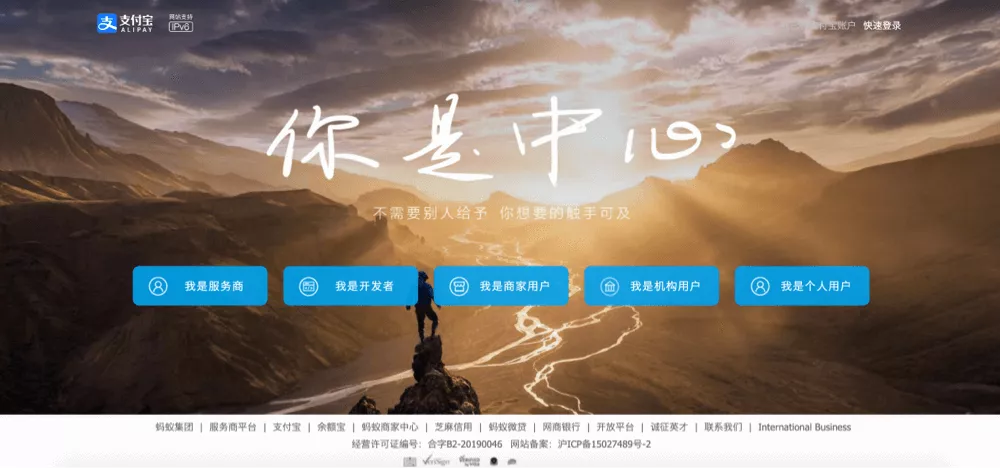
About Alipay
Alipay, also known as 支付宝 / Zhifubao, is China’s leading online payment service by both the Alipay, also known as 支付宝, is China’s leading online payment service by both the number of users and total transaction volume. It has a 55.32% share of the third-party payment market in mainland China, more than 1.3 billion annual active users as of June 2020, processed $17 trillion worth of transactions in mainland China over a year, and continues to grow.
Established in 2004 by Alibaba Group, Alipay later re-branded its parent company as Ant Financial Services Group in 2015. It overtook PayPal as the world’s largest mobile (digital) payment platform in 2013 and now accounts for half of China’s non-bank online payment market.
How To Get Started On Alipay
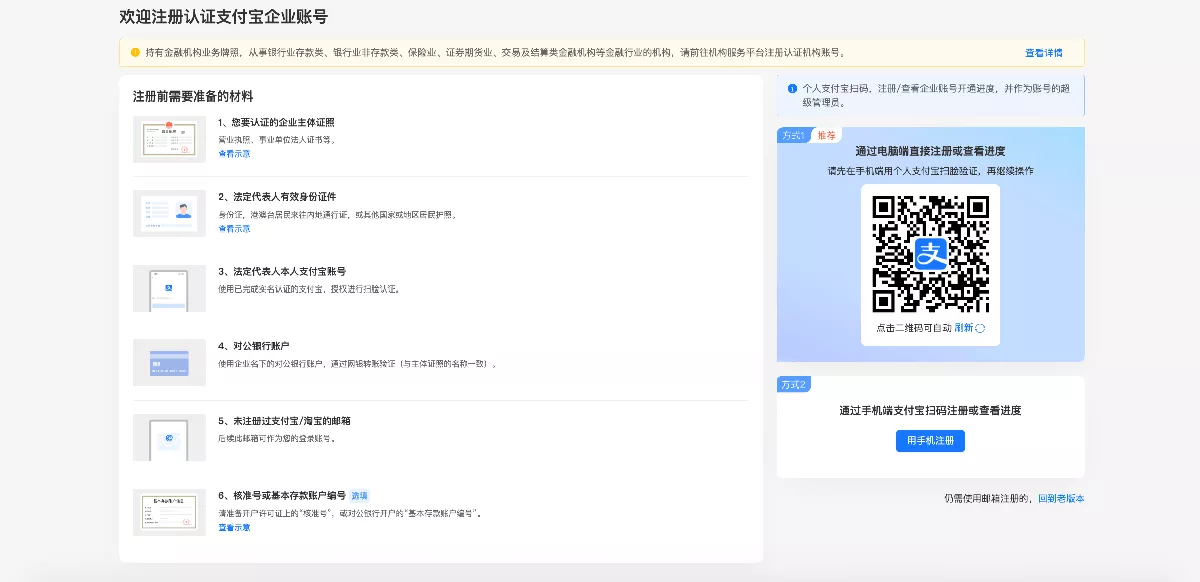
China-registered companies
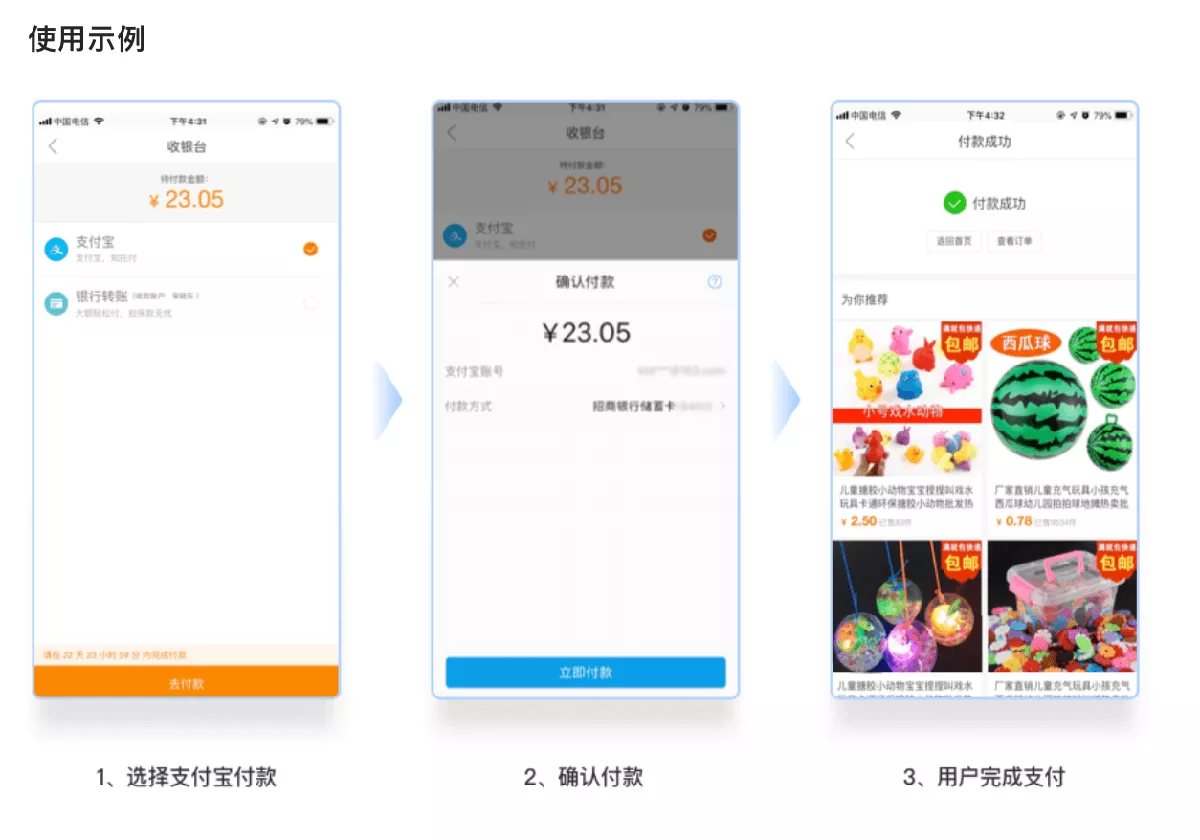
Step 1. Create a business account with an email address on the domestic version of Alipay, Zhifubao, or register with your personal Alipay / Zhifubao account.
Step 2. Verify account with a business license number, business bank account information, ID card, and Alipay account of the company’s legal entity.
Foreign businesses
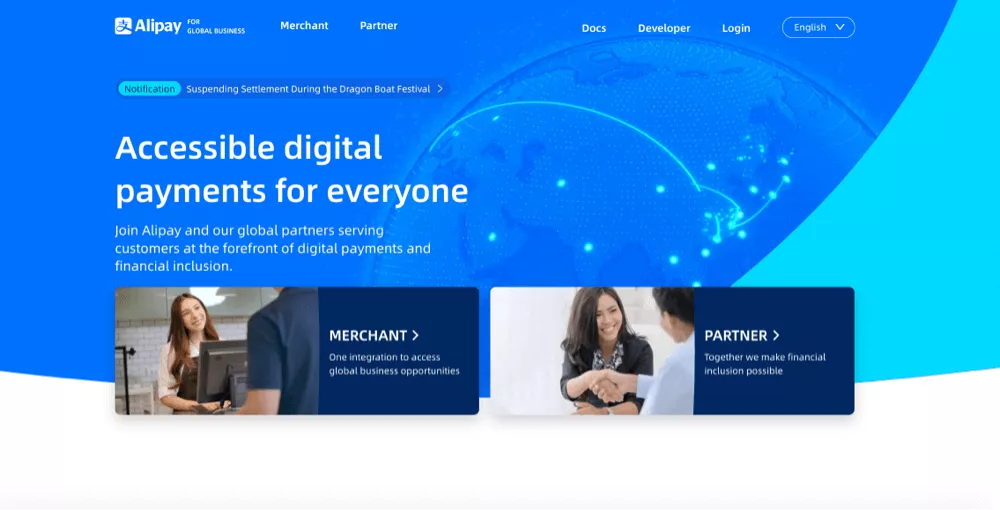
Step 1. Create an account with an email address on the international version of Alipay, Alipay Global.
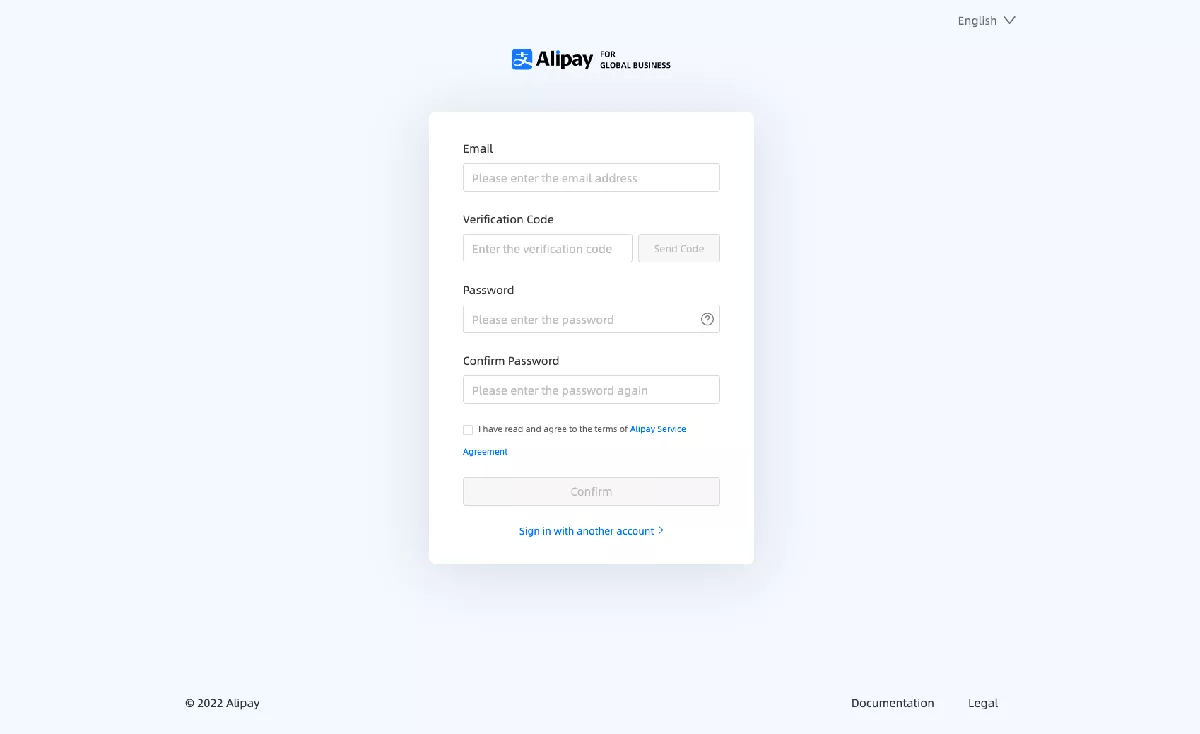
Step 2. Submit your company information for verification, which usually takes 5-7 business days.
Cost To Use Alipay
It is free of charge to transfer from one Alipay account to another Alipay account, regardless of personal or business account.
The transaction fee of receiving payment on websites and mobile apps is 0.6% for general industries and 1% for gaming related industries.
The transaction fee of withdrawing from Alipay to the business bank account is 0.015% of each transaction if you want to receive it on the same day you request to withdraw money; the transaction fee is waived if you are okay to receive it the next working day.
Business Requirements To Use Alipay
QR code payment for offline stores requires:
Business license of a legally registered company. Basic information of your offline store, including industry, store name, address, outdoor and interior photos. Contact person and contact information.
Online Payment for online stores requires:
Business license of a legally registered company. An independent e-commerce website, either PC or mobile, with a payment link or a mobile app introduction page in the Apple Store/Android Market. Contact person and contact information.
Do not have a Chinese entity, Chinese phone number or Chinese ID? We can help!
If you do not have a Chinese entity, Chinese ID, or Chinese phone number, which is essential to get started on Alipay, 21YunBox is here to help.
We can provide the necessary supporting documents to use Alipay and walk you through the process. Meanwhile, we will also bring your company, product, and service into full compliance with Chinese law.
Contact us now to learn more about our solutions for doing business in China legitimately!
RELATED COMPANIES


ARTICLES RELATED TO ALIPAY
PARENT COMPANY
Alibaba Group
OWN BY THE SAME PARENT COMPANY
CATEGORIES
PaymentsWESTERN EQUIVALENTS
- Paypal
- Venmo
Ready to Accelerate Your Site in China Legitimately?
Join 21YunBox and the 5,000+ developers and enterprises to use modern deployment technology
Get StartedLaunch Your Site in China with Confidence