Does Fortinet Work in China? Data Residency, ICP & Cross-Border Rules
Fortinet's FortiGate firewalls and self-managed FortiManager and FortiAnalyzer are appliances or VMs you run on your own infrastructure, so your network traffic records, logs and threat telemetry can rest in-country — the lawful lever. The FortiCloud SaaS family (FortiGate Cloud, FortiManager and FortiAnalyzer Cloud, FortiSASE) has no mainland-China region, so that security data rests offshore: a PIPL cross-border transfer. A compliance-first look at where your network's record is allowed to rest.
Does Fortinet work in China?
Yes — Fortinet runs in China, and because FortiGate, FortiManager and FortiAnalyzer are appliances you run on your own infrastructure, the real question is a residency one: where the network traffic records, logs and threat telemetry they concentrate are allowed to rest.
Run on-premises in the mainland, that security data stays in-country — the lawful lever, and a genuine one, since the appliance is Fortinet's primary form factor. The FortiCloud SaaS family (FortiGate Cloud, FortiManager and FortiAnalyzer Cloud, FortiSASE) is hosted in a fixed region set with no mainland-China option, so logs and analytics sent there rest offshore: a cross-border transfer under PIPL, and for a CIIO or high-volume handler a data-localization duty an offshore service cannot meet. The irony a security team feels first: the firewall you deploy to watch the network also holds the most complete record of it.
What Fortinet's own documentation says about China
| Fact | Primary source |
|---|---|
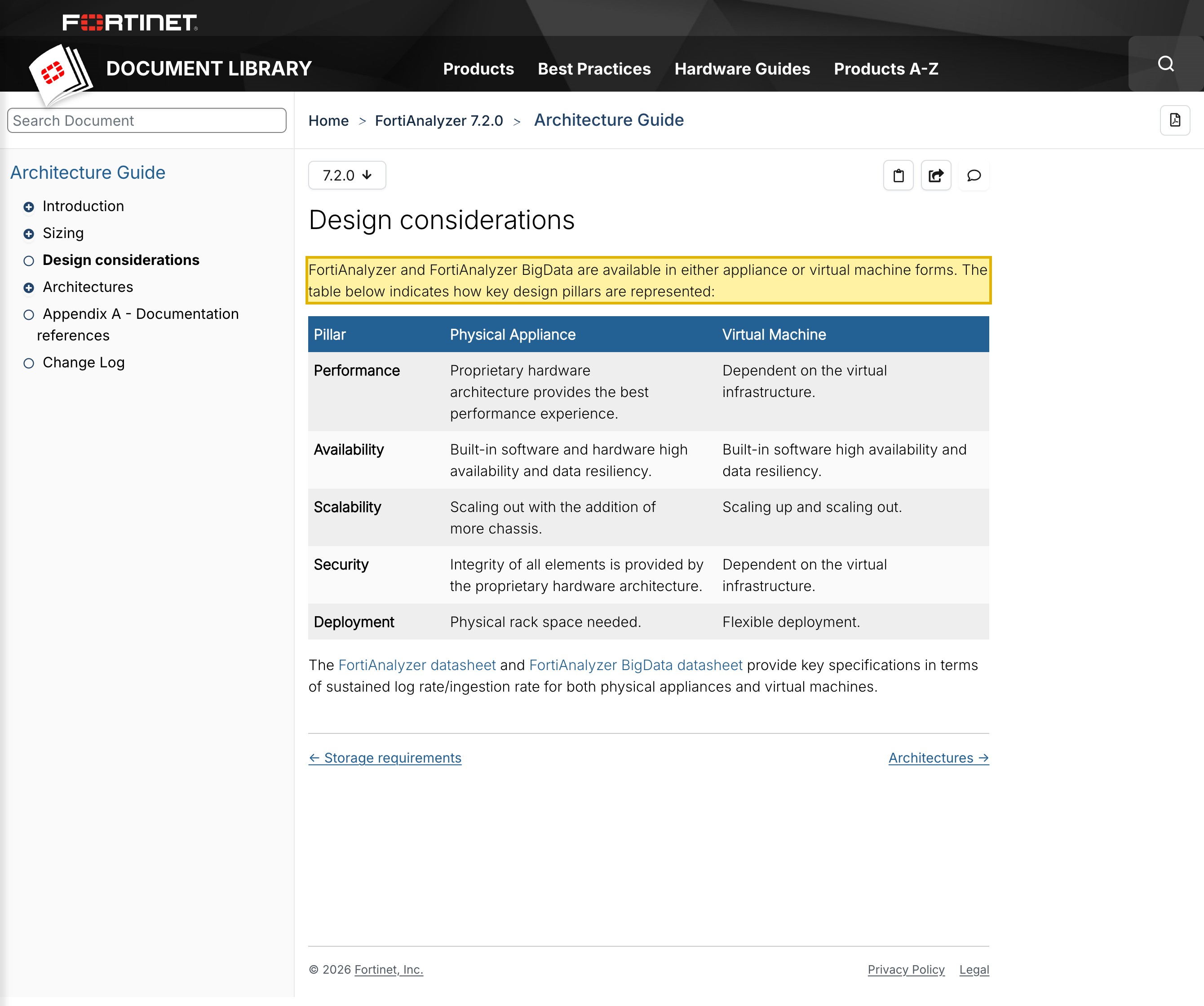
| Fortinet's FortiAnalyzer architecture guide states that "FortiAnalyzer and FortiAnalyzer BigData are available in either appliance or virtual machine forms" — a self-managed logging and analytics tier you run on your own infrastructure, mainland soil included. | Fortinet Documentation Library — FortiAnalyzer 7.2 Architecture Guide, Design considerations (retrieved 2026-10-14) |
| The FortiGate Cloud administration guide lists its hosted locations as "the Global (Canada), U.S., Japan, and Europe (Germany) regions" — no mainland-China region, so logs and analytics sent to the SaaS tier rest offshore. | Fortinet Documentation Library — FortiGate Cloud 24.3 Administration Guide (retrieved 2026-10-14) |
| Firewall logs, traffic records and telemetry generated in the mainland and held in an offshore FortiCloud service are a cross-border transfer under the Personal Information Protection Law — notice, a separate consent for sensitive data, and a transfer mechanism (Articles 38–40). | Personal Information Protection Law of the PRC, Articles 38–40 (retrieved 2026-10-14) |
| A critical information infrastructure operator or high-volume handler must store personal information and important data collected in the mainland inside the mainland (PIPL Article 40; Cybersecurity Law Article 39 (formerly Article 37)) — a duty an offshore logging and analytics cloud structurally cannot meet. | Cybersecurity Law of the PRC, Article 39 (formerly Article 37); PIPL Article 40 (retrieved 2026-10-14) |
Sources verified by the 21YunBox compliance team on 2026-10-14.
For a security or network team serving mainland China, the question about Fortinet was never whether a FortiGate powers on or whether its console is reachable across the border — the appliance sits at your network edge and runs wherever you rack it. Fortinet is where your network’s most complete record is made: a FortiGate next-generation firewall inspects and logs the traffic crossing it, FortiAnalyzer concentrates those logs into analytics and long-term reporting, and FortiManager holds the configuration and policy for the whole fleet. Taken together, that is a running description of who talks to what across your estate — among the most sensitive operational data you keep. So the real question is a residency one: where is that record allowed to come to rest? Run on your own infrastructure, FortiGate, FortiManager and FortiAnalyzer are appliances or virtual machines, so the logs and analytics rest wherever you deploy them — mainland soil included, which is the lawful lever. The FortiCloud SaaS family — FortiGate Cloud, FortiManager Cloud and FortiAnalyzer Cloud, and the FortiSASE service — is hosted in a fixed set of regions, none in mainland China, so point logging or management at it and that record rests offshore. The irony a security buyer feels first: the firewall you deploy to watch the network also becomes the place its complete record lives.
Fortinet in China at a glance
| What decides it | In Fortinet's own terms — and China's law |
|---|---|
| Where the security data physically rests | FortiGate, FortiManager and FortiAnalyzer are appliances or virtual machines — Fortinet's architecture guide states FortiAnalyzer is "available in either appliance or virtual machine forms" — so they rest wherever you deploy them, mainland soil included. The FortiCloud SaaS family is the other shape: FortiGate Cloud is hosted only in "the Global (Canada), U.S., Japan, and Europe (Germany) regions," and FortiManager Cloud and FortiAnalyzer Cloud are provisioned into a short, offshore region list — none in mainland China. |
| What it ingests, and why residency bites | A FortiGate logs the traffic crossing it — source and destination addresses, the users behind sessions, the sites and applications they reach — and FortiAnalyzer turns that into retained analytics and reports. Where those users are in China, the addresses, account names and activity records are personal information under PIPL; where sessions touch Article 28 sensitive categories — health, financial or government-ID services — the logs can expose it. A complete, searchable record of who talks to what across your estate is, on its own, among the most sensitive operational data you hold. |
| Your mainland data in the cloud | Firewall logs and analytics generated in China and sent to an offshore FortiCloud service are a cross-border transfer PIPL governs: notice, a separate consent where sensitive personal information is involved, and one transfer mechanism (PIPL Articles 38–40). The handler on the hook is you, the operator — not Fortinet. |
| In-country storage duty | A critical information infrastructure operator or high-volume handler owes an in-country storage duty an offshore service cannot meet: personal information and important data collected in the mainland must stay in the mainland (PIPL Article 40; Cybersecurity Law Article 39 (formerly Article 37)) — the 2025 Cybersecurity Law amendment, in force January 1, 2026, renumbered the data-localization article from 37 to 39, substance unchanged. Network-security logs for critical infrastructure sit squarely inside that duty. |
| Is it reachable? | Treat reachability as the delivery half, not the question — the appliances run at your edge in-country and the SaaS portals are reachable across the border. The lawful lever is to run the data layer in-country: FortiGate plus self-managed, on-premises FortiAnalyzer and FortiManager on mainland infrastructure, or a licensed sovereign equivalent. Any China-facing surface in front of them — an admin console, a reporting portal — needs an ICP filing tied to a mainland hosting resource (State Council Order No. 292; MIIT Order No. 33). |
Where the data actually rests
Fortinet’s primary form factor is the appliance, and that is the heart of the lever. FortiGate next-generation firewalls are hardware or virtual units you deploy at your own edge; FortiManager is the on-premises management plane that holds configuration and policy for the fleet; and FortiAnalyzer is the logging and analytics tier, which Fortinet’s architecture guide describes plainly — “FortiAnalyzer and FortiAnalyzer BigData are available in either appliance or virtual machine forms,” with datasheet specifications given “for both physical appliances and virtual machines.” Run all three on mainland-China infrastructure and the traffic records, the analytics built from them and the management plane never leave the mainland. That is a genuine lever, not a theoretical one: unlike tools sold only as a hosted service, the on-premises appliance is what Fortinet ships first.
The FortiCloud SaaS family is the other shape, and it is where residency turns. FortiGate Cloud — Fortinet’s hosted management, analytics and log-retention service — lists its locations as “the Global (Canada), U.S., Japan, and Europe (Germany) regions.” FortiManager Cloud and FortiAnalyzer Cloud are provisioned into a region chosen at setup from a short, all-offshore list, and the cloud-delivered FortiSASE service runs from a global set of points of presence. None of these places logging, analytics or management in mainland China. Send your China firewall’s logs to any of them and that record comes to rest abroad; under the Personal Information Protection Law, moving the China personal information inside it out of the country is a cross-border transfer, and the responsible handler is you.
One honest caveat keeps the on-premises lever from being a blanket “done.” Even an all-appliance deployment exchanges threat intelligence with FortiGuard, and sample or telemetry submission is a configurable outbound flow. It is narrow and controllable, but it is still an outbound path you scope, minimize and consent — the lever closes the bulk residency question, not every last byte, and that distinction is exactly what a reachability test cannot see.
What it ingests is personal information
Fortinet earns this scrutiny because of what a firewall platform concentrates. It does not hold a slice of your data; it holds a structured record of your network’s behavior — the sessions crossing the edge, the addresses on each end, the identities tied to them through single sign-on, and the sites and applications reached. FortiAnalyzer retains and indexes that into long-term analytics and reports. Taken together it is a precise, searchable description of who communicates with what across your whole estate, and concentrating it offshore is a security and trade-secret concern before it is anything else.
It becomes a data-protection one the moment the users are in China. Log records name accounts, source addresses and activity — personal information under PIPL once they describe identifiable people — and where the sessions touch Article 28 sensitive categories, such as health, financial or government-ID services, the logs can carry it. That is the irony a security team feels sharply: the firewall you deployed to protect the network becomes, if its logs and analytics report to an offshore cloud, an outbound cross-border path for the most complete record of that network.
That is why residency here is not merely good practice. For a critical information infrastructure operator — and the network-security layer is often exactly that — and for a handler whose volumes cross the regulators’ thresholds, personal information and important data collected in the mainland must be stored in the mainland (PIPL Article 40; Cybersecurity Law Article 39 (formerly Article 37)). An offshore logging and analytics cloud structurally cannot satisfy that duty — the data is, by definition, in the wrong country. And where an export is permitted at all, crossing a volume or sensitivity threshold can trigger a CAC-led data-export security assessment before any of it lawfully leaves.
Why a reachability check misses this
Ask only whether a FortiGate works or whether its cloud portal loads from Shanghai and you have answered the wrong question. Both are true, and neither tells you where your network’s record is allowed to live. The compliance exposure is not the firewall; it is a deployment choice that parks the mainland’s traffic logs, analytics and management plane outside the mainland. Reachability is the delivery half of the problem — real, but downstream. Residency is the half that decides whether the deployment is lawful, and it is the half an offshore SaaS region list cannot satisfy no matter how fast it responds.
The lawful path — map, localize, deliver
You do not have to drop Fortinet to run it lawfully for mainland China. 21YunBox is a compliant overlay, not a migration — and, for a stack you already run, a partner that sits alongside your appliances, not a competitor to them. There are three moves, and they fit together.
Map. Our China compliance team reads your PIPL cross-border, data-residency and data-localization (CII) obligations against your actual entity, your log and analytics volumes, and whose personal information the firewall sees — the session records, the identities, the retained reports — so the exposure is written down before anything moves.
Localize. Because the risk is where the data rests, we run the firewall data layer in-country — FortiGate with self-managed, on-premises FortiAnalyzer and FortiManager on mainland infrastructure, or a licensed in-country or sovereign-cloud equivalent — so the traffic records, analytics and management China requires to stay on mainland soil do, and the residual FortiGuard telemetry is scoped and minimized. Localize means a lawful in-country deployment, never routing mainland logs back to an offshore service; only the minimized, lawfully transferable subset ever crosses.
Deliver. For any China-facing surface in front of the platform — the admin console, the reporting portal, the self-service page your mainland operators hit — the 21YunBox Optimizer provides ICP-filed, in-country delivery, in front of the stack you already run. No rebuild, no second codebase. 21YunBox never uses or suggests circumvention of any kind; the entire point is a lawful, filed, in-country path.
This is a risk map, not a verdict. Whether you owe in-country storage, a transfer mechanism, a separate consent, an ICP filing, or some combination turns on your entity, your data volumes, how much of the traffic you see is personal or sensitive, and who your users are — settle the specifics with counsel before you decide where a single log record lives. The goal is plain: your Fortinet deployment runs legally and compliantly for your users in China.
Related reading:
- How to get an ICP filing for China
- Cross-border data transfers under PIPL
- China’s Cybersecurity Law and data localization
- China’s data-export security assessment measures