Does Snapchat Work in China? Blocked Access, Snap Pixel & PIPL
Snapchat is effectively unreachable for ordinary users in mainland China, and no delivery setup can unblock a third-party app. The real exposure is on your own site: embedded Snap Pixel and widgets fail for mainland visitors and send their data offshore under PIPL. An honest, compliance-first look.
Does Snapchat work in China?
No. For ordinary users inside mainland China, Snapchat is effectively unreachable — it isn't carried by mainland app channels and its site is subject to network interference — so no hosting or delivery setup can "unblock" a third-party consumer app, and there is no mainland Snapchat to ICP-file or host in-country.
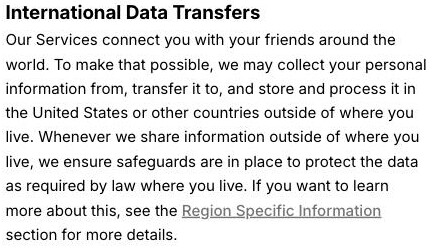
Independent censorship monitoring (GreatFire) reports access to www.snapchat.com from the mainland as unreliable on its most recent tests (late September 2026), which matches the long-settled reality that Snapchat does not operate as a consumer service there. The exposure you can actually act on starts when you embed Snap on a mainland-facing site: the Snap Pixel and widgets load from Snap's offshore domains, so for Chinese visitors those third-party calls stall or fail and drag the page — and Snap's own policy says it may "collect your personal information from, transfer it to, and store and process it in the United States or other countries outside of where you live," which for your Chinese visitors is a cross-border transfer of personal information PIPL governs. The table below pairs what decides it with Snap's own words and what the record shows.
This is a risk map, not a verdict — what applies turns on whether you embed Snap, what its pixel collects, and who your users are. Our China team can map your exposure with you →
What Snapchat's own documentation says about China
| Fact | Primary source |
|---|---|
Ordinary mainland users can't reach Snapchat without circumvention. Snapchat is not distributed through mainland app channels, and independent censorship monitoring by GreatFire reports access to www.snapchat.com from inside mainland China as unreliable, with interference on its most recent conclusive tests (last tested late September 2026). That reading is a small, automated sample and a live figure rather than a legal finding — but it matches the long-documented reality that Snapchat has never operated as a consumer service in the mainland. No delivery arrangement can "unblock" it. | GreatFire Analyzer — www.snapchat.com (en.greatfire.org), retrieved 2026-10-07 |
| If you embed Snap, your visitors' data leaves the mainland by Snap's own design. Snap's privacy policy states, under "International Data Transfers," that Snap "may collect your personal information from, transfer it to, and store and process it in the United States or other countries outside of where you live." When a mainland-facing page runs the Snap Pixel or Snapchat widgets, that sends your Chinese visitors' identifiers offshore — a cross-border transfer of personal information under PIPL (notice, separate consent and an approved transfer mechanism, Articles 38–43). | Snap Inc. Privacy Policy — International Data Transfers (values.snap.com), retrieved 2026-10-07; PIPL Articles 38–43 |
| Snap's business tools collect from your site, not just from the app. Snap's policy describes using "information collected on an advertiser's website to show you more relevant ads" — reporting your visitors' actions back to Snap is exactly what the Snap Pixel is for. On a mainland-facing site that is two problems at once: a third-party request that resolves from Snap's offshore domains (so it is slow or fails for mainland visitors), and an export of visitor data that China's cross-border rules treat as personal information. | Snap Inc. Privacy Policy (values.snap.com), retrieved 2026-10-07 |
| Snapchat itself can't be made compliant — your own site can. There is no mainland Snapchat presence to host in-country or to attach an ICP filing to (State Council Order No. 292; MIIT Order No. 33), so no setup "unblocks" it. What is within your control is your own property: a mainland-facing site can drop or replace the blocked Snap embeds and serve from ICP-filed, in-country infrastructure — removing both the failed request and the offshore data path in one move. | 21YunBox compliance team, 2026-10-07; State Council Order No. 292; MIIT Order No. 33 |
Sources verified by the 21YunBox compliance team on 2026-10-07.
For a mainland-China audience, the honest first answer about Snapchat isn’t about speed — it’s that ordinary users there can’t open it at all. Snapchat isn’t carried by mainland app channels, and independent monitoring finds its site unreliable from inside the mainland, so no hosting or delivery setup can “unblock” a third-party consumer app. What is worth deciding is the exposure Snapchat creates on your own site: the Snap Pixel and widgets you embed load from Snap’s offshore domains and fail for Chinese visitors, and they send those visitors’ data out of the country — which is where China’s personal-information rules come in.
Snapchat in China at a glance
| What decides it | In Snap's own terms — and what's observed |
|---|---|
| Can mainland users reach it? | Not without circumvention. Snapchat isn't offered through mainland app channels, and independent monitoring (GreatFire) reports access to www.snapchat.com from inside the mainland as unreliable and interfered with. |
| A channel to Chinese consumers? | Practically no — the audience that would see your Snaps isn't inside the mainland. Reaching Chinese consumers means meeting them on China's domestic platforms. |
| Snap embeds on your own site | The Snap Pixel and widgets load from Snap's offshore domains, so for mainland visitors those third-party requests stall or fail — and a blocking script can hold up the rest of the page. |
| Where Snap takes the data | Snap's policy: it "may collect your personal information from, transfer it to, and store and process it in the United States or other countries outside of where you live." For your Chinese visitors that's a cross-border transfer under PIPL. |
| Your ICP footing | Snapchat itself can't be ICP-filed or hosted in-country. Your own site can — once the blocked embeds are removed or replaced and it's served from inside the mainland. |
Blocked at the door — a reachability problem, not a slow paint
Snapchat’s problem in mainland China isn’t latency; it’s access. The app isn’t offered through mainland app stores, and independent censorship monitoring by GreatFire reports access to www.snapchat.com from inside the mainland as unreliable, with interference on its most recent conclusive tests in late September 2026. That is a small, automated sample and a live reading, not a legal ruling — but it matches the long-settled reality that Snapchat has never operated as a consumer service in the mainland. The practical consequence is simple: you can’t reach your mainland audience on Snapchat, and because there is no mainland Snapchat to host in-country or file against, no delivery arrangement can change that. Reaching Chinese consumers means meeting them on China’s domestic platforms.
Embed Snap on a mainland-facing site, and two things break
The exposure you can actually act on starts the moment your own site carries Snap. The Snap Pixel, the “Login with Snapchat” button, embedded Snaps — all of them load from Snap’s own domains, which sit outside the mainland and inherit the same unreliable access. For a visitor in Shanghai those third-party requests stall or fail, and a blocking script in the page head can hold up everything behind it, so a tool meant to measure your marketing quietly drags the page it lives on.
The second break is about data. The Snap Pixel exists to report what your visitors do back to Snap, and Snap’s privacy policy is explicit about where that goes: it “may collect your personal information from, transfer it to, and store and process it in the United States or other countries outside of where you live.” Run that on a page served to people in China and you are exporting their personal information — a cross-border transfer that PIPL governs, with its own duties of notice, separate consent and an approved transfer mechanism (Articles 38–43). The identifiers are small; the obligation is not.
Your own site is the part you can fix
None of this makes Snapchat compliant — it can’t be, because there’s nothing of Snapchat’s to file or localize. But your site is yours. A mainland-facing page can drop the Snap Pixel and widgets it doesn’t need, replace the ones it does with alternatives that resolve in-country, and be served from ICP-filed infrastructure inside the mainland. That removes the broken request and the offshore data path together, and it’s entirely within your control.
This is a risk map, not a verdict: whether Snap’s embeds touch regulated personal data, and how much, depends on what your pixel collects and who your visitors are — worth settling with counsel before you rely on it.
Where 21YunBox fits — a compliant overlay, not a migration
We’ll be straight about the limit: 21YunBox cannot unblock Snapchat, and no one honestly can — it’s a third-party consumer app we don’t operate. What we do is make your own property work in China. Our China team finds the blocked Snap embeds that stall your mainland-facing pages, helps you remove or replace them, assesses the PIPL exposure of any visitor data they export, and puts compliant, ICP-filed delivery from inside the mainland in front of the origin you already run — no rebuild, no second codebase, no move off your stack. Snapchat stays where it is; your China presence stops depending on it.
Related reading: