Does JFrog Artifactory Work in China? Data Residency, ICP & Cross-Border Rules
JFrog Artifactory is your binary artifact repository — build artifacts that can embed licensed code, secrets and build provenance, plus contributor metadata. On JFrog Cloud (SaaS) that store sits offshore: a PIPL cross-border and data-localization question, not a reachability one. Artifactory is self-hostable (Self-Managed / on-prem), so you can run it on in-country infrastructure and keep the artifacts resident.
Does JFrog Artifactory work in China?
The real question is not whether developers can reach JFrog Artifactory from Shanghai — it is that the repository, its embedded secrets and build provenance, and the control plane that holds them live wherever the server runs. Artifactory is a concentrated store of IP: build artifacts that can embed licensed/proprietary code, pipeline secrets and signing material, plus any contributor metadata. On JFrog Cloud (SaaS) that store sits on offshore public-cloud regions, with no mainland-China region in JFrog's published materials.
Held offshore, contributor identities and any personal data in commits or build metadata are a PIPL cross-border transfer (Articles 38–40); for a CIIO or high-volume handler, the Cybersecurity Law's data-localization rule (Article 39 (formerly Article 37)) is in play. A self-hosted runner only executes jobs — it does not move the store in-country.
Because Artifactory ships a Self-Managed / on-prem edition, there is a genuine fix: run it on in-country infrastructure so the artifacts, secrets and findings stay resident. 21YunBox is a partner to the platform you already run — we never use or suggest circumvention. Treat the specifics as a risk to confirm with counsel.
What JFrog Artifactory's own documentation says about China
| Fact | Primary source |
|---|---|
| JFrog documents a self-managed edition you install on your own infrastructure. JFrog's Self-Managed Pro / Pro X Start Guide states: “This guide will cover setting up a self-managed Artifactory and Xray with all the steps in one place.” That self-managed edition is the residency lever — run on in-country infrastructure, the artifacts and secrets stay resident. | JFrog — Self-Managed Pro / Pro X Start Guide (jfrog.com/help), retrieved 2026-10-12 |
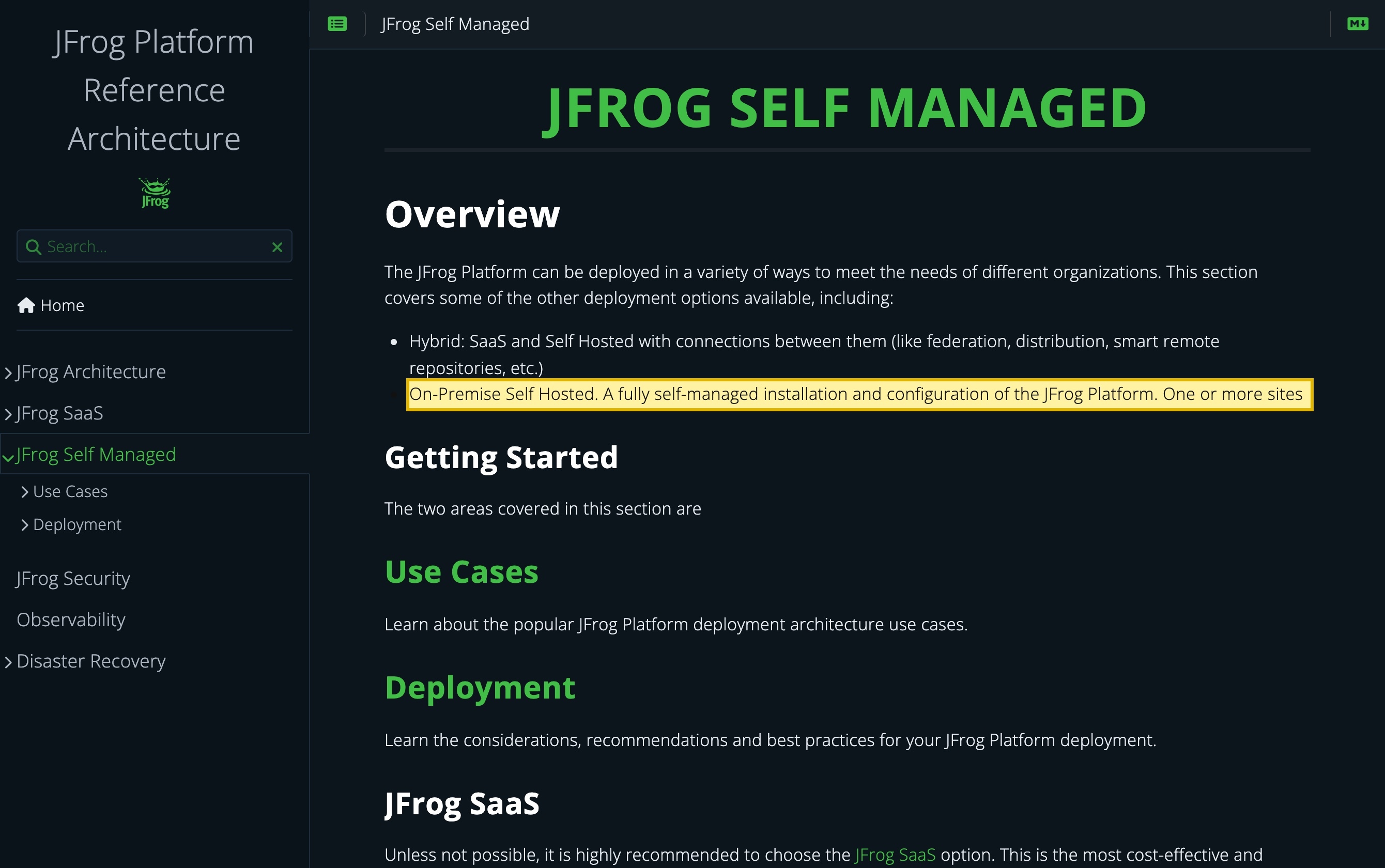
| JFrog's own reference architecture frames SaaS as the default and self-managed as the on-prem alternative. The JFrog Platform Reference Architecture describes the self-managed option as “A fully self-managed installation and configuration of the JFrog Platform,” with deployment targets including a private datacenter, and advises “Unless not possible, it is highly recommended to choose the JFrog SaaS option.” JFrog Cloud (SaaS) runs on offshore public-cloud regions; JFrog's published materials name no mainland-China region (confirm current regions with JFrog). | JFrog Platform Reference Architecture — Self-Managed (jfrog.com), retrieved 2026-10-12 |
| Contributor and commit data held offshore is a PIPL cross-border transfer. Holding personal information — contributor identities, and any personal data in commits, issues or build metadata — on infrastructure outside the mainland triggers PIPL Articles 38–40: notice, a separate consent for the transfer, and one mechanism (a CAC security assessment, the CAC standard contract, or certification). | Cross-border data transfers under PIPL — 21YunBox compliance reference, retrieved 2026-10-12 |
| CIIOs and high-volume handlers face an in-country storage duty. The Cybersecurity Law requires personal information and important data collected and generated in China by critical information infrastructure operators to be stored within the territory, with a security assessment before any export — Article 39 (formerly Article 37), as renumbered by the 2025 amendment in force 2026-01-01. | China's Cybersecurity Law and data localization — 21YunBox compliance reference, retrieved 2026-10-12 |
Sources verified by the 21YunBox compliance team on 2026-10-12.
For a mainland-China operation, the deciding question about JFrog Artifactory is not whether a developer in Shanghai can load the web UI — it is where the binaries, secrets and build records Artifactory holds are allowed to live, and on what legal basis they got there. Artifactory is your binary artifact repository: the single store for the build outputs, container images, packages and release bundles that can embed licensed and proprietary code, pipeline secrets, signing material and build provenance — a concentrated slice of your intellectual property — alongside whatever contributor metadata rides along in the pipeline. Run that store offshore and the concentrated IP sits outside the mainland; which turns residency and cross-border transfer, not load time, into the thing that decides whether the setup is defensible.
Does JFrog Artifactory work in China? At a glance
| What decides it | What it means for mainland China |
|---|---|
| What Artifactory holds | Build artifacts, container images and release bundles that can embed licensed/proprietary code, pipeline secrets, signing material and build provenance — a concentrated store of your IP, plus any contributor metadata in the pipeline. |
| Where the control plane runs | On JFrog Cloud (SaaS) the repository, metadata and control plane run on JFrog's offshore public-cloud regions. JFrog's published materials name no mainland-China region (confirm current regions with JFrog). |
| Data residency | For a CIIO or large-volume handler, personal information and important data collected in China must be stored in the mainland (Cybersecurity Law Article 39 (formerly Article 37)) — a duty offshore infrastructure cannot meet. |
| Cross-border transfer | Contributor identities and any personal data in commits, issues or build metadata, held offshore, are a PIPL cross-border transfer (Articles 38–40): notice, a separate consent, and one transfer mechanism. |
| A self-hosted runner is not enough | A build agent or runner only executes jobs. Making a developer's connection or the UI reachable does not move the repository, secrets or provenance in-country — the store still lives wherever the server runs. |
| The residency lever | Artifactory ships a Self-Managed / on-prem edition. Run it on in-country infrastructure and the artifacts, secrets and findings stay resident — the one move that actually answers the residency question. |
Door one — Artifactory is a concentrated store of your IP, and residency follows where it runs
Start with what the repository holds, because that is what China’s law answers to. Artifactory is not a cache of public packages; it is the authoritative store for your build outputs — container images, language packages, release bundles and the metadata around them. Those artifacts routinely embed licensed and proprietary code, baked-in pipeline secrets and credentials, signing keys and the build provenance that records exactly how your software was assembled. That is a concentrated slice of your intellectual property sitting in one place.
Run that store on JFrog Cloud (SaaS) and it lives on JFrog’s offshore public-cloud regions; by JFrog’s published materials there is no mainland-China region (something to confirm with JFrog directly rather than assume). If you are a critical information infrastructure operator, or you handle personal information at volume, personal information and important data collected and generated in China must be stored in the mainland, with a security assessment before any export — the Cybersecurity Law data-localization rule, Article 39 (formerly Article 37) as renumbered by the 2025 amendment in force 2026-01-01. Offshore infrastructure has no mainland footing to satisfy that.
Door two — contributor identities and commit data are personal information
The second door is PIPL. Artifactory and the pipeline around it carry more than binaries: usernames and email addresses on who pushed, built and promoted a release, access logs, and any personal data that finds its way into commit messages, issue references or build metadata. Under the Personal Information Protection Law, holding that data on infrastructure outside the mainland is a cross-border transfer (Articles 38–40): the handler must give notice, obtain a separate consent for the transfer, and clear one mechanism — a CAC security assessment, the CAC standard contract, or certification. Minimizing the personal data that enters commits and build metadata in the first place is part of the fix, but it does not move the store on its own.
Why a reachability check misses this
A “can my developers reach it from Shanghai” test answers the wrong question. Connectivity tuning, or standing up a self-hosted build runner inside the mainland, changes how a job reaches the server — it does not change where the repository, the secrets vault, the artifact store and the build provenance actually live. A runner executes jobs; it is not the control plane. So a setup can look perfectly healthy from inside China while every artifact, secret and provenance record still sits offshore, and every contributor record with it. The residency and cross-border questions above are invisible to a reachability probe precisely because the binaries keep resolving — which is why the move that matters is moving the store, not making the offshore store reachable. We publish no first-party measurement of Artifactory connectivity from inside China, so we put no figures here; it is something we would measure against your actual instance rather than assert.
This is a risk map, not a verdict: whether you need in-country storage, a transfer mechanism, a reworked consent flow, an ICP filing for any public-facing developer portal, or some combination depends on what your artifacts and pipeline carry, how much, and who your contributors are — worth settling with counsel before you build.
The lever — map, localize, deliver
Because Artifactory ships a Self-Managed / on-prem edition, there is a genuine in-country path, and 21YunBox never uses or suggests circumvention of any kind.
- Map — inventory what your Artifactory holds (artifacts, container images, embedded secrets, signing material, build provenance, contributor metadata), where the server and control plane run today, the residency basis, and whether the concentrated IP and personal data implicate the in-country storage duty.
- Localize / govern — run the Self-Managed edition on in-country infrastructure so the artifacts, secrets and build records stay resident; minimize the personal data that enters commits and build metadata; and govern the control plane rather than merely exposing it.
- Deliver — put compliant, in-country developer access in front of the self-managed instance you already run, so your teams reach it reliably without moving the store back across the border.
Making the offshore server merely reachable is not the answer — the artifacts, secrets, provenance and contributor records are still offshore, and a self-hosted runner does not change that. Running the self-managed edition in-country is.
Where 21YunBox fits — a compliant overlay, not a migration
You keep running JFrog Artifactory. We add the piece an offshore artifact store cannot provide on its own: a lawful, in-country home for the self-managed deployment so your binaries, secrets and build provenance stay resident where the law requires, with compliant ICP-filed delivery for the developer access and any public-facing portal in front of it — placed around your existing setup, with no rebuild, no second codebase, and no migration off Artifactory. As a partner to the platform you already run, our China team maps your PIPL cross-border, consent and data-residency obligations against your entity and your pipeline, then stands up the in-country deployment and delivery a defensible China presence needs. We never use or suggest circumvention of any kind.
Related reading:
- Cross-border data transfers under PIPL
- China’s Cybersecurity Law and data localization
- How to get an ICP filing for China


