Does GitHub Copilot Work in China? Reachability, Your Code Crossing the Border & Corporate Data Policy
GitHub Copilot is an in-IDE code assistant for developers, not a public-facing generative-AI service — so the China question is not a consumer block or a CAC content filing. Your developers reach Copilot cross-border (GitHub operates the model outside the mainland, and connectivity can be uneven), and to generate a completion your proprietary source code and context are sent to that offshore model — an intellectual-property, confidentiality, and, where the code carries personal information, a PIPL cross-border-data and corporate-data-governance question. A compliance-first look at reachability, code crossing the border, data residency, and where 21YunBox helps: advisory plus in-country delivery of your China-facing apps — not a domestic Copilot.
Does GitHub Copilot work in China?
GitHub Copilot is an in-IDE code assistant for developers, not a public-facing generative-AI service — so the honest answer is not a simple “blocked” and not a CAC content filing. Your developers can generally use Copilot in the mainland: GitHub operates the model outside China and the editor reaches it over the cross-border link, so there is no in-country region and connectivity can be uneven.
The question that carries weight is what crosses the border. To generate a completion, Copilot sends the code context around your cursor to that offshore model — your proprietary source code and context leaving the mainland (intellectual property and confidentiality first) and, where the code carries personal information, a PIPL cross-border transfer. If the code or data is “important data” or you run critical information infrastructure, the Cybersecurity Law's data-localization rule (Article 39) and your corporate policy come in. The CAC generative-AI content filing generally does not apply to an internal developer tool.
21YunBox's role here is lighter and advisory — we help you assess the data-governance and residency exposure and set guardrails with your counsel, and we deliver your China-facing apps in-country on ICP-filed infrastructure. We do not run a domestic Copilot, and we never use or suggest circumvention. Treat the specifics as a risk to confirm with counsel.
What GitHub Copilot's own documentation says about China
| Fact | Primary source |
|---|---|
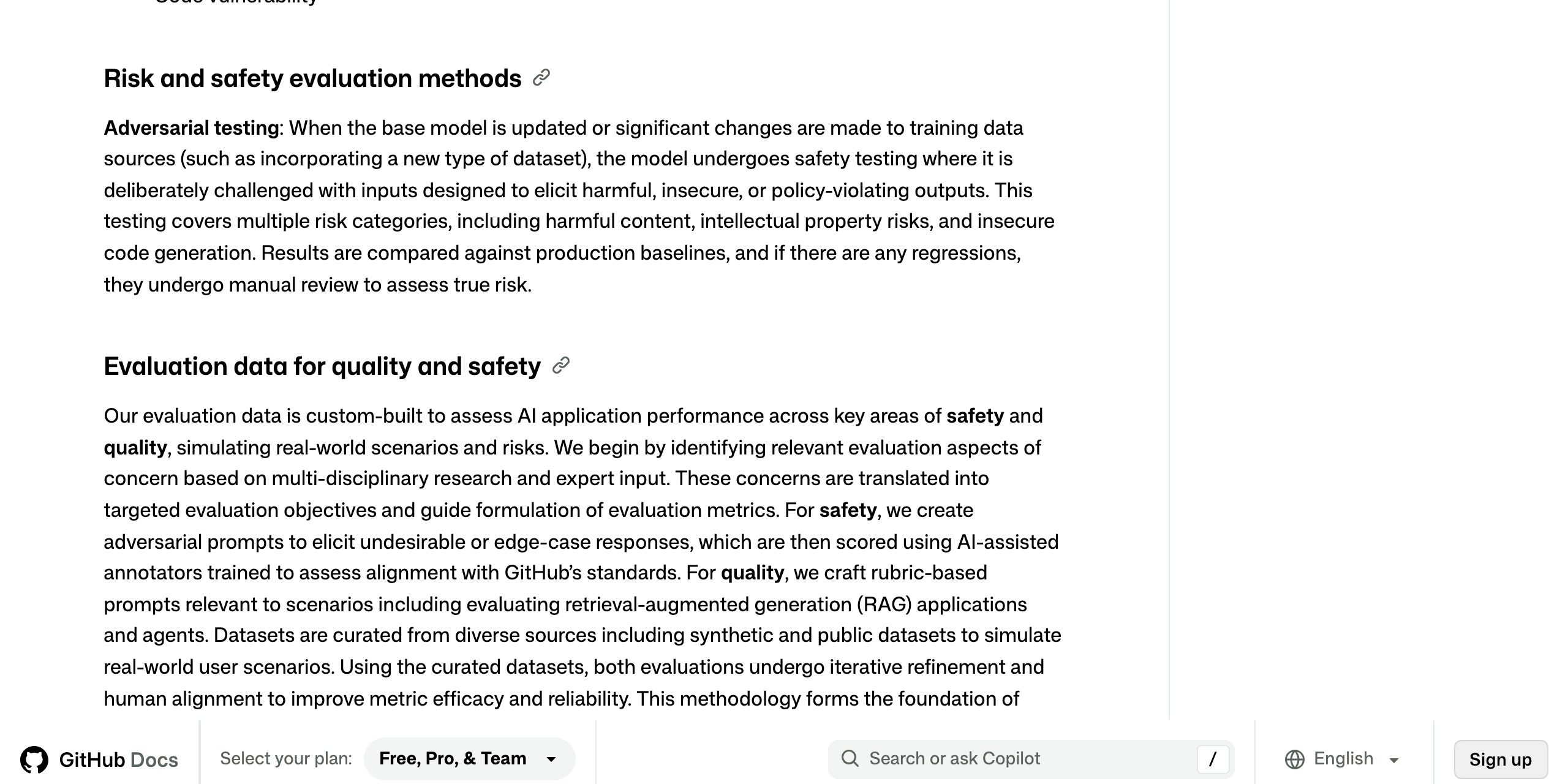
| To complete your code, Copilot sends your code context to its model. GitHub's documentation states: “Code context — including edit history, surrounding code, and cursor position — is structured and scoped before reaching the language model.” GitHub operates that model outside mainland China, so for a China-based developer the code context leaves the country to produce a suggestion. | GitHub Docs, “Responsible use of GitHub Copilot code completion” (docs.github.com), retrieved 2026-10-08 |
| The generative-AI content filing governs services “to the public,” so it generally does not fit an internal dev tool. China's Interim Measures for the Management of Generative AI Services (生成式人工智能服务管理暂行办法, CAC Order No. 15) apply to using generative AI “to provide services for generating text, images, audio, video, and other content to the public within the territory of the People's Republic of China” (Article 2). Copilot used by your own engineers inside their IDE is not a public content service. | Interim Measures for the Management of Generative AI Services, CAC Order No. 15, Art. 2 (cac.gov.cn), retrieved 2026-10-08 |
| Code that carries personal information is a PIPL cross-border transfer when sent offshore. Sending a Chinese developer's code, logs, or test data containing personal information to a model hosted outside the mainland triggers PIPL Articles 38–40: notice, a separate consent, and one transfer mechanism — a CAC security assessment, the CAC standard contract, or certification. | Personal Information Protection Law of the PRC, Articles 38–40 (cac.gov.cn), retrieved 2026-10-08 |
| “Important data” and critical-infrastructure operators face an in-country storage duty. The Cybersecurity Law requires personal information and important data collected and generated in-country by critical information infrastructure operators to be stored within the territory, with a security assessment before any export — Article 39 as renumbered by the 2025 amendment in force 2026-01-01 (the rule formerly numbered Article 37). | Cybersecurity Law of the PRC, Article 39 (2025 amendment, in force 2026-01-01), published by the NPC via cac.gov.cn, retrieved 2026-10-08 |
Sources verified by the 21YunBox compliance team on 2026-10-08.
For a mainland-China audience, the first thing to settle about GitHub Copilot is what kind of tool it is. Copilot is an in-IDE code assistant for your own software developers — it completes code and answers coding questions inside their editor. It is not a public-facing generative-AI service that you offer to users in China. That one distinction changes the whole question. The point is not whether a consumer chatbot is blocked, and it is not whether you need a content filing to put a “generate” button in front of the Chinese public. Your developers can generally use Copilot in the mainland; GitHub operates the model outside China, and the editor reaches it over the cross-border link.
So the real decision moves to a different axis — and it is not milliseconds. Two things actually matter. The first is reachability: because there is no in-country Copilot region, availability runs over the cross-border link to GitHub’s offshore service, and that connectivity can be uneven. The second, and the one that carries real weight, is what crosses the border: to produce a completion, Copilot sends the code context around your cursor to that offshore model. For a company, that is proprietary source code and context leaving the mainland — an intellectual-property and confidentiality question first, and, where the code carries personal information, a cross-border-data question under China’s law as well. To be unambiguous: Copilot is reached directly, so there is nothing to “get around,” and 21YunBox neither provides nor suggests circumvention of any kind. The productive questions are about code leaving the country and your corporate policy.
GitHub Copilot in China at a glance
| What decides it | In GitHub's own terms — and China's law |
|---|---|
| What it is | An in-IDE code assistant — code completion and chat — for software developers, built on large language models that GitHub operates outside mainland China. It is a developer-productivity tool used inside your engineers' editors, not a public-facing generative-AI service you offer to users in China. |
| Can your developers use it in the mainland? | Generally yes. Copilot is reached over the cross-border link to GitHub's offshore service; there is no in-country Copilot region, so availability depends on that link and can be uneven. This is a reachability and operations question, not a consumer-service block. This page publishes no first-party China latency figure — speed is not the deciding axis. |
| Your source code crossing the border | To produce a completion, Copilot sends the code context around your cursor to the model GitHub runs offshore. For a company that is proprietary source code and context leaving the mainland — an intellectual-property and confidentiality question before it is a compliance one, and one your corporate data-governance policy should address. |
| When the code carries personal information | Code, logs, and test data can embed names, credentials, or customer records. Sending that to an offshore model is a cross-border transfer of personal information under PIPL (Articles 38–40): notice, a separate consent, and one transfer mechanism. If it is “important data,” or you operate critical information infrastructure, the Cybersecurity Law's data-localization rule (Article 39) is in play. |
| Does the generative-AI content filing apply? | Generally no. The CAC Interim Measures for the Management of Generative AI Services govern services that generate content “to the public” within China (Article 2). An internal developer tool used by your own engineers is not that, so the filing that gates a consumer chatbot does not apply here. Embedding Copilot's output into a public-facing generative feature for Chinese users would be a separate downstream question. |
| Where 21YunBox fits | A lighter, advisory role. We help you assess the data-governance and residency exposure of what your developers send offshore, and we deliver your China-facing apps and sites in-country on ICP-filed infrastructure. We do not run a “domestic Copilot,” and we never use or suggest circumvention. Confirm the specifics with counsel. |
Reachability: your developers reach Copilot cross-border
GitHub and the Copilot backend are operated outside the mainland and reached over the cross-border link; there is no in-country Copilot region. In practice developers can use it, but that cross-border path means connectivity can be uneven, and that is an availability and operations question — not a content-service block to route around. For that reason this page publishes no first-party China latency figure for Copilot: speed is the wrong axis for a developer tool whose compliance weight sits elsewhere, and we do not cite a performance number without method, sample, and date. And to be unambiguous — Copilot is reached directly, so there is nothing to circumvent, and 21YunBox neither provides nor suggests circumvention of any kind. The question that actually matters is what your editor sends out of the country.
Why the generative-AI content filing generally does not apply
It is tempting to reach for China’s Interim Measures for the Management of Generative AI Services (生成式人工智能服务管理暂行办法, Cyberspace Administration of China Order No. 15) the moment “generative AI” and “China” appear in the same sentence. But read what they govern. The Measures apply to the use of generative AI “to provide services for generating text, images, audio, video, and other content to the public within the territory of the People’s Republic of China” (Article 2). GitHub Copilot is an internal developer-productivity tool: it writes code suggestions for your own engineers inside their IDE. It is not a public-facing content service you offer to users in China, so the filing that gates a consumer chatbot generally does not apply to it.
The honest caveat is about what you build with it, not about the tool. If you take Copilot-generated output and embed it into a public-facing “generate” feature aimed at Chinese users, that downstream feature is a different service, and the generative-AI gate may well apply to it. Whether and how the Measures touch anything you actually ship is a risk to confirm with counsel against the real product — not something to assume from the word “Copilot.”
The real gate: your source code crossing the border
This is where a China-facing company should spend its attention. To generate a completion, Copilot sends the code context around your cursor to a model GitHub operates offshore — in GitHub’s own words, “code context — including edit history, surrounding code, and cursor position — is structured and scoped before reaching the language model.” For a company that is proprietary source code and context leaving the mainland, and the first question it raises is intellectual property and confidentiality: your own code-handling and corporate data-governance policy decides what repositories, files, and secrets are allowed anywhere near an offshore assistant.
Underneath that sits China’s law. Code is rarely just logic — it carries comments, configuration, logs, fixtures, and test data, which can embed names, contact details, credentials, or customer records. When such content is sent from a developer in China to a model hosted outside the mainland, that is a cross-border transfer of personal information under China’s Personal Information Protection Law. PIPL puts the duty on the handler — you: Articles 38–40 require notice, a separate consent, and one transfer mechanism (a CAC security assessment, the CAC standard contract, or certification). And if the code or data is “important data,” or your organization operates critical information infrastructure, the Cybersecurity Law adds a data-localization duty — Article 39 (as renumbered by the 2025 amendment in force January 1, 2026; the rule formerly numbered Article 37) requires personal information and important data collected and generated in-country by such operators to be stored in-country, with a security assessment before any export. None of this turns on how fast a completion streams back; it turns on whether the code had a lawful basis to leave the country at all, which is a risk to confirm with counsel.
Where 21YunBox fits — advisory, and delivery (not a domestic Copilot)
Here the honest answer is narrower than it is for a consumer AI feature, and it is worth being plain about it. For an in-IDE developer tool, 21YunBox does not stand up a “domestic Copilot,” and we are not a way to localize Copilot itself — that tool is GitHub’s, operated offshore. Our role here is lighter and advisory, and it has two parts.
First, we help you assess the exposure: what code and context your developers are sending offshore, whether any of it carries personal or important data, and how that maps to PIPL, the Cybersecurity Law, and your own corporate data-governance policy — so you and your counsel can set the guardrails (which repositories are in scope, what must never leave, what consent and records are needed). Second, where you run China-facing apps and sites, we deliver those in-country, compliantly, on ICP-filed infrastructure — the 21YunBox Optimizer — in front of the app you already run, with no rebuild and no re-platform. The China-facing property that your team ships still carries an ICP filing (备案) duty and needs compliant, in-country delivery like any other, and that part we own outright.
What we do not do is pretend to run Copilot inside China, and what no one should do is route a developer tool around anything. For this tool the honest answer is reachability plus code crossing the border plus corporate policy — and our value is the advice on that exposure, together with delivering your China-facing properties in-country.
Related reading:
- Cross-border data transfers under PIPL
- China’s Cybersecurity Law (data localization, Article 39)
- How to get an ICP filing for China