Does Oracle Cloud work in China?
Not on its own. Oracle Cloud Infrastructure runs no region inside mainland China — its own list stops at Japan, South Korea and Singapore — so a China-facing app on OCI is served entirely offshore, with no footing for an ICP filing and your users' data resting outside the mainland. "We're on Oracle Cloud" does not carry across the border.
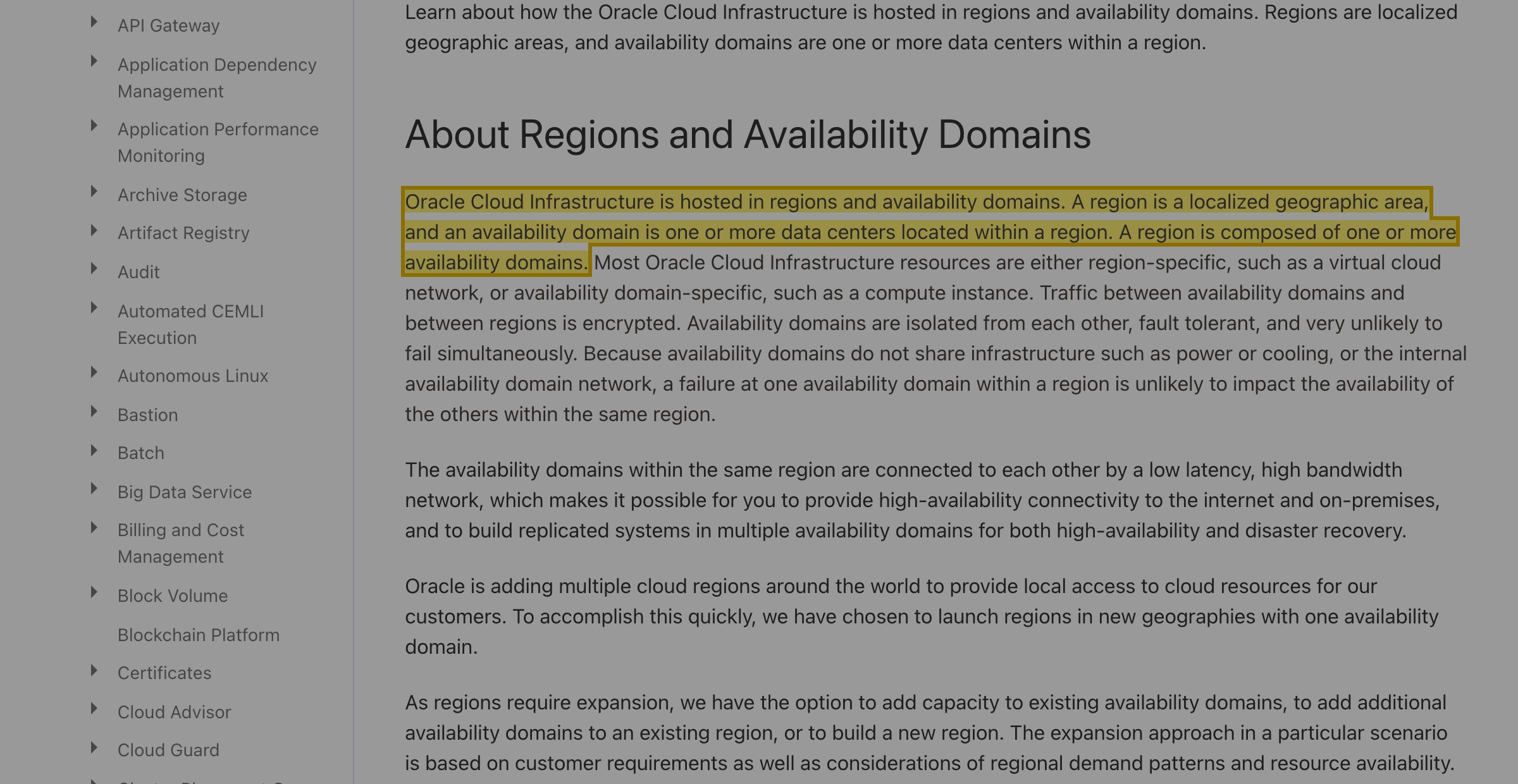
Oracle's own documentation states that "a region is a localized geographic area" and that "most Oracle Cloud Infrastructure resources are either region-specific … or availability domain-specific" — your resources live in the region you pick, and none of Oracle's regions is in the mainland. Serve China from an offshore OCI region and a public site cannot hold an ICP filing (State Council Order 292; MIIT Order 33), while your Chinese users' personal information becomes a cross-border transfer PIPL governs. The table below is Oracle's own wording and the rule each line triggers.
This is a risk map, not a ruling — whether you owe an ICP filing, in-country storage, or both turns on your entity, your data and who your users are. Our China team can map your exposure and the filing path with you →
What actually decides whether Oracle Cloud works for you in mainland China
| Fact | Primary source |
|---|---|
| On Oracle Cloud, your resources live in the region you choose. In Oracle's own words, "a region is a localized geographic area, and an availability domain is one or more data centers located within a region," and "most Oracle Cloud Infrastructure resources are either region-specific, such as a virtual cloud network, or availability domain-specific, such as a compute instance." Where you deploy is where your site and its data sit. | Oracle — Regions and Availability Domains (docs.oracle.com), retrieved 2026-10-07 |
| None of those regions is in mainland China. Across Asia Pacific, Oracle's own region list names Tokyo and Osaka (Japan), Seoul and Chuncheon (South Korea), Singapore, Mumbai and Hyderabad (India), Sydney and Melbourne (Australia), Batam (Indonesia) and Kulai (Malaysia) — not one inside the mainland, the nearest sitting in Japan, South Korea and Singapore. Unlike some hyperscalers that run a separate, partner-operated China partition, no mainland-China region appears on Oracle's list at all. | Oracle — Regions and Availability Domains (docs.oracle.com), retrieved 2026-10-07 |
| A public site served from offshore OCI has nothing to ICP-file against. A website shown to mainland visitors needs an ICP filing (备案) bound to a hosting resource physically inside the mainland, under State Council Order No. 292 and MIIT Order No. 33. Because OCI has no mainland region, there is no in-country resource for the filing to attach to — the licensing gap is settled by geography, before performance is ever discussed. | State Council Order No. 292; MIIT Order No. 33; Oracle region list (docs.oracle.com), retrieved 2026-10-07 |
| Chinese users' personal data in an offshore OCI region is a cross-border transfer. With no mainland region, personal information you collect from Chinese users comes to rest in Japan, South Korea, Singapore or wherever else you deploy — outside the mainland. That is a cross-border transfer under PIPL (notice, separate consent and one transfer mechanism, Articles 38–43), and for a critical information infrastructure operator or large-volume handler the data must be stored in China (PIPL Article 40; Cybersecurity Law Article 39 (formerly Article 37)) — which an offshore region cannot do. | PIPL Articles 38–43 & 40; Cybersecurity Law Article 39 (formerly Article 37); Oracle region list (docs.oracle.com), retrieved 2026-10-07 |
Sources verified by the 21YunBox compliance team on 2026-10-07.
For a mainland-China audience, the first question about Oracle Cloud Infrastructure is not how quickly it paints a page — it is whether you are cleared to operate from it inside China at all. Oracle answers the part that matters most in its own documentation: its published cloud regions stop short of the mainland. OCI runs regions across the Americas, Europe, the Middle East, Africa and Asia Pacific, but the nearest ones to China sit in Japan, South Korea and Singapore — every one of them offshore. So a China-facing app on OCI is reachable yet hosted entirely outside the mainland, which leaves it with no footing for the ICP filing a public China site requires and turns any personal data you keep for Chinese users into a transfer China’s law regulates. Oracle Cloud is a strong place to build and run your application; this is about the one layer it was never designed to hold.
Oracle Cloud in China at a glance
| What decides it | In Oracle's own terms |
|---|---|
| Where it runs | OCI runs from regions, each a group of availability domains: “a region is a localized geographic area,” and “most Oracle Cloud Infrastructure resources are either region-specific … or availability domain-specific.” Your site and data live in the region you select. |
| A mainland-China region? | No. Oracle's own list has none inside the mainland; the nearest are Tokyo and Osaka (Japan), Seoul and Chuncheon (South Korea), and Singapore — all offshore. No separate partner-run China partition appears in the list either. |
| Serving the public in China | A site shown to mainland visitors needs an ICP filing tied to a licensed mainland hosting resource (State Council Order 292; MIIT Order 33). With no mainland region, OCI gives you nothing to file against. |
| Your China users' data | Personal data you store for Chinese users rests in an offshore OCI region — a cross-border transfer PIPL governs, plus an in-country storage duty for CIIOs and large-volume handlers that an offshore region cannot meet. |
| Reachable vs. compliant | Even where an offshore OCI region is reachable from the mainland, reachability settles nothing legal: it grants no ICP filing and no in-country residency. The compliance exposure is what decides whether you may use it. |
Oracle’s map stops offshore — and so does your ICP path
Oracle’s own regions documentation sets out where OCI can run, and the Asia-Pacific list is explicit: Tokyo and Osaka in Japan, Seoul and Chuncheon in South Korea, Singapore, Mumbai and Hyderabad in India, Sydney and Melbourne in Australia, Batam in Indonesia and Kulai in Malaysia. Not one is inside mainland China — and, unlike some hyperscalers that reach the mainland through a separate, partner-operated partition, no mainland-China region appears on Oracle’s list at all. The nearest footholds, in Japan, South Korea and Singapore, are all outside it.
That geography settles the licensing question before performance ever enters the room. A public-facing website delivered to mainland visitors turns on an ICP filing (备案) under State Council Order No. 292 and MIIT Order No. 33, and that filing must attach to a hosting resource that physically sits in the mainland. OCI has no such resource, so there is simply nothing on Oracle Cloud to file against. This is where “we already run on Oracle Cloud” runs out: reaching China is not the same as being cleared to operate there, and no amount of stack tuning conjures the mainland footing a filing needs.
Your China users’ data lives wherever the region does — and that’s offshore
Oracle is unambiguous that your resources follow the region you pick: “most Oracle Cloud Infrastructure resources are either region-specific … or availability domain-specific.” Deploy to any OCI region and your data comes to rest there. Because none of those regions is inside the mainland, the personal information you collect from Chinese users lands in Japan, South Korea, Singapore or wherever else you deploy — outside China.
Under China’s Personal Information Protection Law that is a cross-border transfer, and the obligation is yours as the handler, not Oracle’s: you must give notice, obtain separate consent, and clear one transfer mechanism — a CAC security assessment, the CAC standard contract, or certification (Articles 38–43). If you are a critical information infrastructure operator or a large-volume handler, personal information gathered in China must be stored inside the mainland (PIPL Article 40; Cybersecurity Law Article 39 (formerly Article 37)) — a residency duty no offshore OCI region can satisfy.
Reachable is not the same as compliant
It is worth keeping the two halves of the question apart. OCI’s offshore regions are not the headline blocking story some foreign services are; the obstacle here is not mainly whether packets arrive. The obstacle is that arriving packets decide nothing legal: an offshore region confers no ICP filing, and it keeps your users’ data outside the mainland. Those are compliance facts, and no routing or caching choice turns an offshore region into a mainland one. This is exactly where tuning the stack reaches its limit — the gap is a licensing-and-residency gap, not a speed one.
This is a risk map rather than a ruling: whether you need an ICP filing, in-country storage, or both turns on what you serve, how much personal data you hold, and who your users are — worth settling with counsel before you build.
Where 21YunBox fits — a compliant overlay, not a migration
You keep building and running on Oracle Cloud exactly as you do today — same tenancy, same regions, same origin. 21YunBox adds the one layer OCI’s map does not reach: compliant, ICP-filed delivery from inside the mainland, placed in front of your existing Oracle Cloud origin — no rebuild, no second codebase, and no move off OCI. Our China team works out which obligations apply to your entity and your data volumes, handles the ICP filing, and stands up the in-country entry that serves your mainland audience while Oracle Cloud stays your source of truth.
Related reading:
