Does Ruby on Rails Work in China? Data Residency, ICP & Cross-Border Rules
Ruby on Rails is open-source software you run on your own servers, so the framework is not the China blocker — it runs the same in Beijing as anywhere. The real questions are where you deploy it (ICP, MLPS) and where its database and the personal data it collects rest under PIPL and residency law.
Does Ruby on Rails work in China?
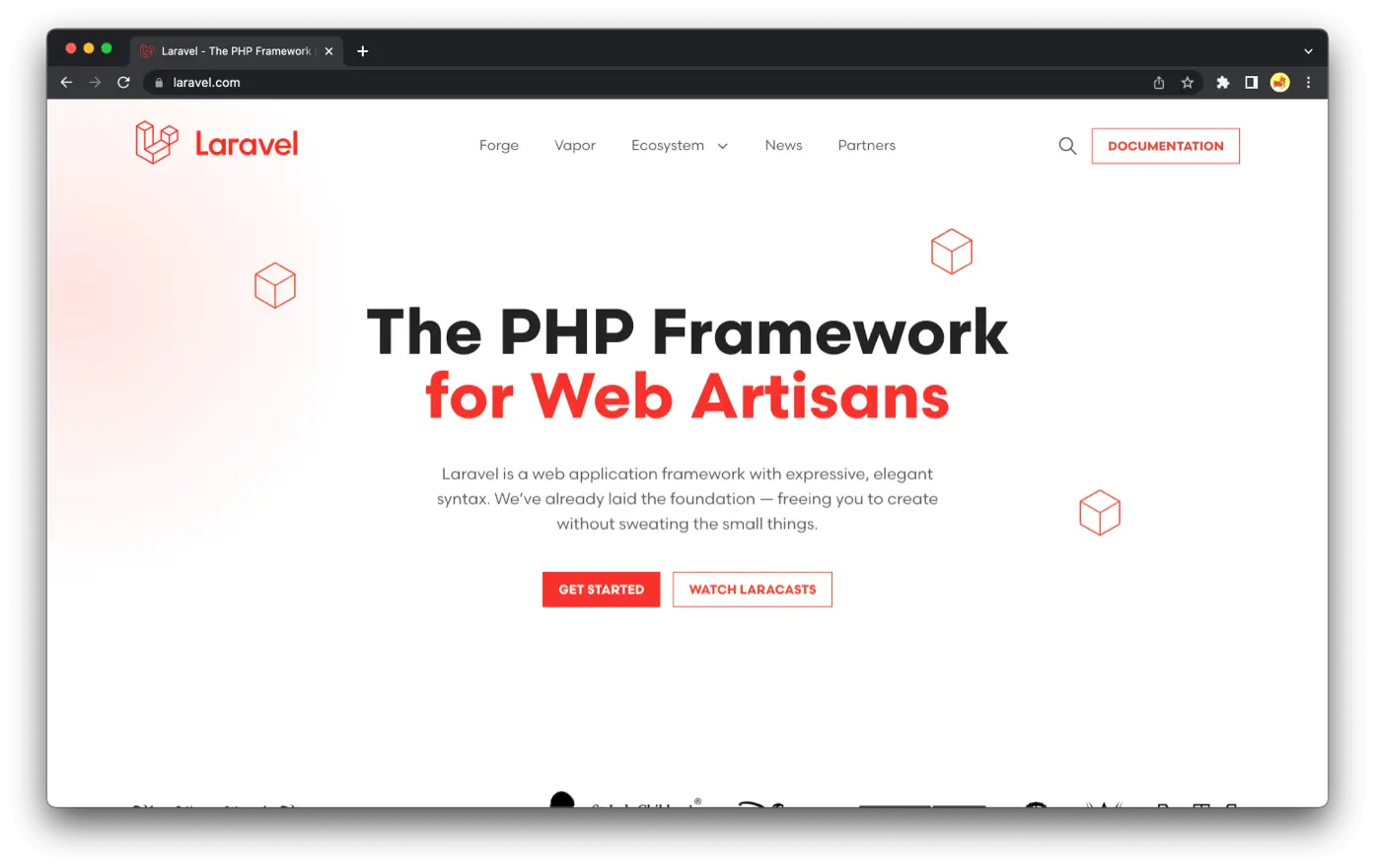
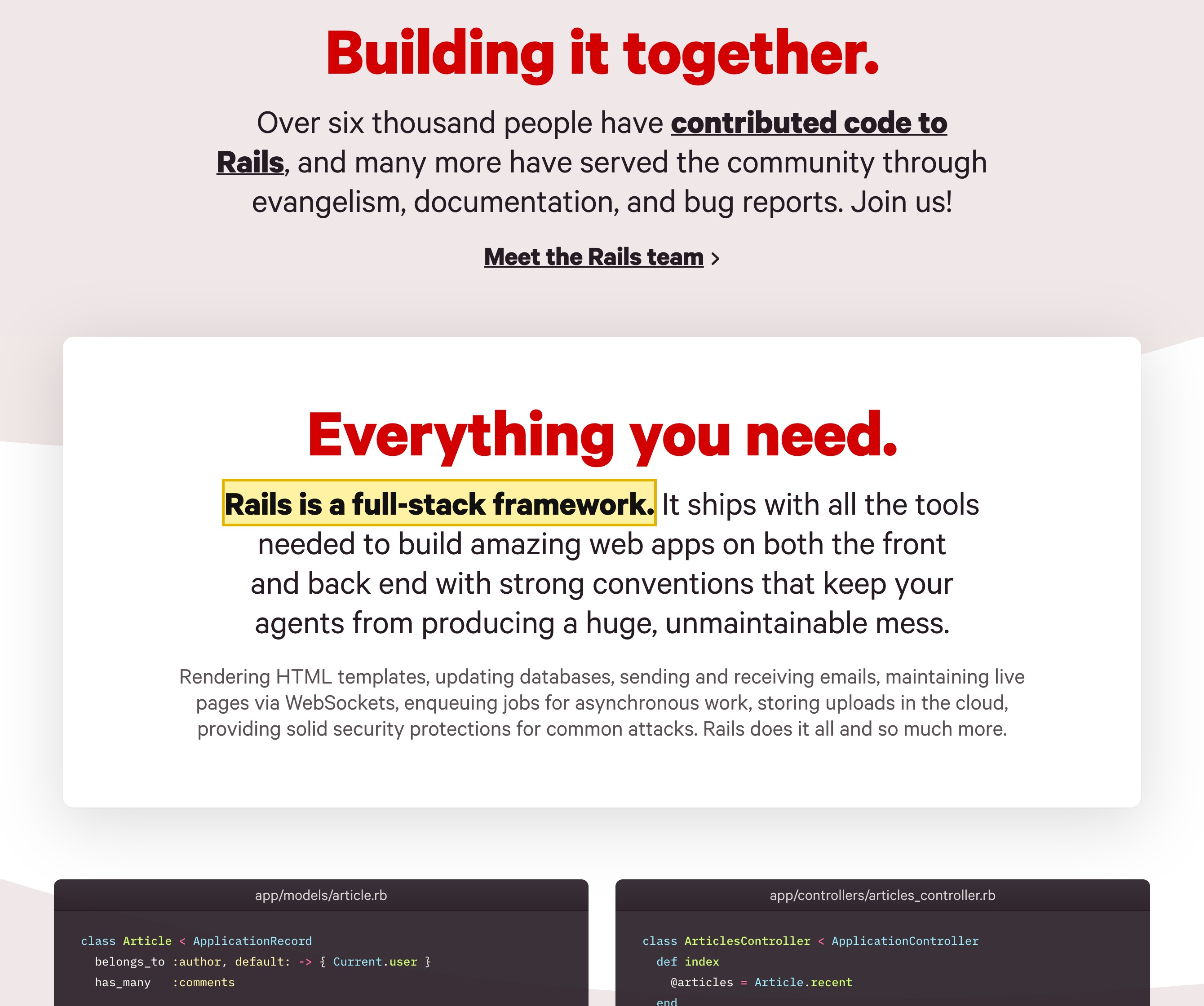
Whether Ruby on Rails works in China is a deployment-and-data question, not a reachability one. Rails is open-source software you run on your own servers — by its own homepage, "Rails is a full-stack framework" — so it runs the same inside mainland China as anywhere, and the framework itself is never the blocker.
What carries the compliance weight is what you build and deploy with it. If mainland users hit your Rails app, its host owes an ICP filing (备案) and the system owes MLPS (等级保护) duties as the operator. The app's database holds the personal information it collects from China users, so a backend wired to an offshore database is a cross-border transfer of personal information that PIPL governs — notice, separate consent, and a transfer mechanism, and for a CIIO or large-volume handler, in-country storage under the Cybersecurity Law. Even your gem installs resolve from an offshore registry. The table below is Rails' own wording and the rules your deployment triggers.
This is a risk picture, not a verdict — your obligations turn on where you deploy and the data you handle. Our China team can map your Rails deployment and data exposure with you →
What Ruby on Rails's own documentation says about China
| Fact | Primary source |
|---|---|
| In Rails' own words, "Rails is a full-stack framework" — open-source software distributed under an MIT license (per the project's GitHub repository) that you embed in your own codebase and run wherever you deploy it. There is no hosted "Rails" service and no in-country region to select, so the framework runs identically on a mainland server or an offshore one; the framework never sets your residency posture — your deployment and database do. | Ruby on Rails — official homepage; rails/rails GitHub repository (MIT license), retrieved 2026-10-14 |
| A Rails app resolves its libraries as gems from an offshore package registry — RubyGems.org, which describes itself as "a community-run service overseen by Ruby Central" and whose stated purpose is to "Find, install, and publish RubyGems." Every build or deploy that fetches or updates dependencies reaches that offshore host, so the supply chain your China deployment depends on crosses the border at install time — a residency and supply-chain concern that rides along with the runtime and is invisible to a page-load check. | RubyGems.org — official site, retrieved 2026-10-14 |
| The personal information a Rails app collects from users in China — accounts, profiles, and records in its database — is governed by China's Personal Information Protection Law. A backend wired to an offshore database, or one that sends China users' personal information abroad, performs a cross-border transfer (数据出境): PIPL puts the duty on the handler — you, not the framework — to give notice, obtain separate consent, and satisfy one transfer mechanism (a CAC security assessment, the CAC standard contract, or certification). | PIPL, Articles 38–40 (cross-border transfer of personal information) |
| Where the server runs is a legal fact, not a framework property. A Rails app serving mainland users must sit on a hosting resource that carries an ICP filing (备案), and the system owes MLPS (等级保护) obligations as the operator. For a CIIO or large-volume handler, personal information collected in China must be stored inside the mainland under the Cybersecurity Law Article 39 (formerly Article 37; renumbered by the 2025 amendment in force January 1, 2026, substance unchanged) — so an offshore VM that mainland users hit is the real exposure. | Cybersecurity Law, Article 39 (formerly Article 37); ICP filing requirement |
Sources verified by the 21YunBox compliance team on 2026-10-14.
For a mainland-China audience, the first thing to settle about Ruby on Rails is that the question is not whether it loads, and not really about Rails at all. Rails is an open-source, full-stack web framework — you add it to your own codebase and run it on your own servers, where it behaves the same in a Beijing data centre as in a Frankfurt one. There is no “Rails region” to choose and no hosted Rails service that holds your data. So “does Ruby on Rails work in China” resolves into three different questions, and every one of them is about your deployment rather than the framework: where the server runs, what its database holds, and where its outbound dependencies reach. The compliance event lives in those answers — not in the round-trip time, and not in the framework itself.
Ruby on Rails in China at a glance
| What decides it | In Rails' own terms — and China's law |
|---|---|
| Where the framework runs | Rails is open-source code, distributed under an MIT license, that you embed in your own application and run wherever you deploy it. There is no hosted "Rails" service with a region to select — so the framework itself is residency-neutral and runs the same on a mainland server as anywhere. What is not neutral is your deployment: where the server sits, what its database holds, and which offshore services it reaches. |
| Where the server runs | If your Rails app serves mainland users, its host owes an ICP filing (备案) on a mainland hosting resource, and the system owes MLPS (等级保护) obligations as the operator. An offshore VM that mainland users hit is the real exposure — and that is a deployment choice, not a property of the framework. |
| What the database holds, and why it is personal information | A Rails app's database holds the accounts, profiles, and records it collects from your users — personal information, and sensitive personal information under PIPL Article 28 where government IDs, financial, or health data appear. The framework's conventions shape that data, but the data itself is what the law reaches. |
| Data crossing the border to an offshore database | A backend wired to an offshore database, or one that sends China users' personal information abroad, performs a cross-border transfer under the Personal Information Protection Law (Articles 38–40): notice, a separate consent, and one transfer mechanism — a CAC security assessment, the CAC standard contract, or certification. For a CIIO or large-volume handler, that data must instead stay in the mainland. |
| Outbound dependencies | A Rails app resolves its libraries as gems from an offshore registry, and crash/analytics telemetry and third-party APIs it calls can route offshore at build or run time. A supply-chain and residency concern rides along with the runtime — invisible to a page-load check. |
| Reachability is not the axis | That Rails installs and the page renders says nothing about whether the deployment and its data were allowed to sit where they sit. The decision turns on where the deployment and data come to rest and on what legal basis — not on speed. This page publishes no first-party latency figure; speed is the wrong axis. |
The framework runs where you run it — so your deployment sets the posture
Start with where Rails runs, because the whole question rests on it. Rails is a framework you add to your own codebase: its homepage calls it, in plain words, a “full-stack framework,” and the project ships under an MIT license. There is no hosted Rails to connect to and no in-country region to select — the framework executes inside whatever application you deploy, which can just as easily sit on a mainland server as anywhere else. In that sense Rails is reachable and usable from China in a way a blocked consumer service is not, and it can run entirely in-country.
What that also means is that Rails never sets your residency posture — your deployment does. The framework gives you models, controllers, and an ORM; it does not decide which machine runs the app or which database stores the rows. Point the app at an offshore host and an offshore database and the personal information follows them offshore; put the app and its database on compliant in-country infrastructure and the data stays. So the compliance question is not answered by looking at Rails. It is answered by looking at where your app is deployed, what its database holds, and where its outbound calls go.
Where the server runs — ICP filing and MLPS
The first deployment question is the plainest: where does the server physically run? If your Rails app serves users in mainland China, the host it runs on owes an ICP filing (备案) on a mainland hosting resource — a prerequisite for lawfully serving a site or application to the public there — and, as the operator of a networked system inside China, you carry graded cyber-security protection (MLPS, 等级保护) obligations as well. None of that is a property of Rails; a Django or Spring Boot app in the same position owes exactly the same duties. The exposure teams overlook is the offshore VM: an app that mainland users reach from a server abroad is not merely slow, it is a deployment that sidesteps the filing regime — and that is a choice about hosting, which you can change, not a limitation of the framework.
What the database holds — PIPL and data residency
The second question is about the database behind the app, because that is where the regulated material actually sits. A Rails app’s database holds the accounts, profiles, orders, messages, and records it collects — personal information governed by China’s Personal Information Protection Law. The moment that database lives offshore, or the app forwards China users’ personal information to a service abroad, you have a cross-border transfer (数据出境). PIPL puts the duty on the handler — you, not the framework: Articles 38–40 require notice, a separate consent, and one transfer mechanism (a CAC security assessment, the CAC standard contract, or certification), and Article 28 adds heightened duties where the data is sensitive — government IDs, financial, health, biometric, or minors’ information.
Exposure scales with volume and role, not merely with using the tool: under the CAC’s March 2024 cross-border rules, a non-CIIO transferring fewer than 100,000 individuals’ non-sensitive personal information in a calendar year is exempt from the security assessment, standard contract, and certification. But for a handler that operates critical information infrastructure or moves personal information at scale, the Cybersecurity Law adds a hard data-localization duty — Article 39 (formerly Article 37; renumbered by the 2025 amendment in force January 1, 2026, substance unchanged) requires personal information and important data collected and generated in-country by such operators to be stored in-country, with a security assessment before any export. Rails will happily write to a database in Virginia or in Shanghai; which one you choose is the compliance decision, and it is yours.
Outbound dependencies — gems, telemetry, and third-party APIs
The third question is the one a quick check never sees: what does the app reach out to? A Rails app resolves its libraries as gems from an offshore package registry — RubyGems.org, which describes itself as “a community-run service overseen by Ruby Central” — so every build or deploy that fetches or updates dependencies crosses the border at install time. Layer on crash reporters, analytics, and the third-party APIs your controllers call, and a Rails deployment can be quietly sending request data, error payloads, and user identifiers to a scatter of offshore endpoints. None of that shows up when you confirm the homepage renders. It is a supply-chain and residency concern that rides along with the runtime, and it belongs in the same map as the server and the database.
Why a reachability check misses this
A reachability or latency test pings an endpoint and reports whether it answers and how fast. For a backend framework that test answers the wrong question. That bundle install succeeds and the page paints tells you the code runs; it tells you nothing about whether the server was allowed to serve mainland users without an ICP filing, whether the database that holds China users’ personal information may lawfully sit where it sits, or whether the dependencies and APIs the app reaches route offshore. Those are deployment and legal facts, not network facts — and they are exactly the half a pure speed-or-reachability view cannot supply. It is the half we lead with.
The lawful path — map, localize, deliver
For an open-source framework, 21YunBox’s role is focused, and we will say so plainly: there is no “domestic Rails” to sell you — the framework is already yours to run, including in-country. Our value is in three moves.
First, we map the exposure: where your Rails app is actually deployed, what its database holds, which personal or sensitive information it collects from China users, where that data and your gems, telemetry, and third-party calls come to rest, and how all of it lands against PIPL’s cross-border rules, Article 28, and the Cybersecurity Law — so you and your counsel can set the guardrails. Second, we help you localize what cannot lawfully sit offshore: run your Rails app in-country, keep China users’ personal information resident in a mainland database, and bring the outbound dependencies your deployment needs onto in-country footing. This is a China-legal alternative, never a route around any control. Third, we deliver the China-facing surface your users hit — the app and API edge — over ICP-filed, MLPS-appropriate in-country infrastructure (the 21YunBox Optimizer), in front of the stack you already run, with no rebuild and no second codebase.
21YunBox is a compliant overlay, not a migration, and a partner to the tools you use, not a competitor to them. 21YunBox never uses or suggests circumvention of any kind. The result is a Ruby on Rails deployment that runs legally and compliantly for your users in China.
Related reading:
- China’s Personal Information Protection Law (PIPL)
- Cross-border data transfers under PIPL
- How to get an ICP filing for China
- China’s Cybersecurity Law (data localization, Article 39)