Does Laravel Work in China? Data Residency, ICP & Cross-Border Rules
Laravel runs fine in mainland China — it is open-source PHP software you host, not the residency problem. The real questions are legal: the deployment owes an ICP filing and MLPS, the app's database and the personal information it holds fall under PIPL, and an offshore database is a cross-border transfer.
Does Laravel work in China?
Yes — Laravel itself runs fine in mainland China; it is open-source PHP software you host, not a service with a region, so "does it work" is really a question about where your app is deployed and where its data lives, not about speed or reachability.
Laravel is residency-neutral code — the compliance exposure lives in the PHP application you build on it and the database behind it. If mainland users hit your app, its host owes an ICP filing (备案) and the system owes MLPS (等级保护) duties as the operator; the personal information your app collects from China users is governed by PIPL, and an app wired to an offshore database is a cross-border transfer you must have a lawful basis for. For a CIIO or large-volume handler, that China data must stay in the mainland under the Cybersecurity Law, Article 39 (formerly Article 37).
The lawful path is to run the Laravel app in-country on ICP-filed, MLPS-appropriate infrastructure with China user data kept resident. 21YunBox stands up that in-country footing and delivers your China-facing surface in front of the app you already run — no rebuild, no re-platform.
What Laravel's own documentation says about China
| Fact | Primary source |
|---|---|
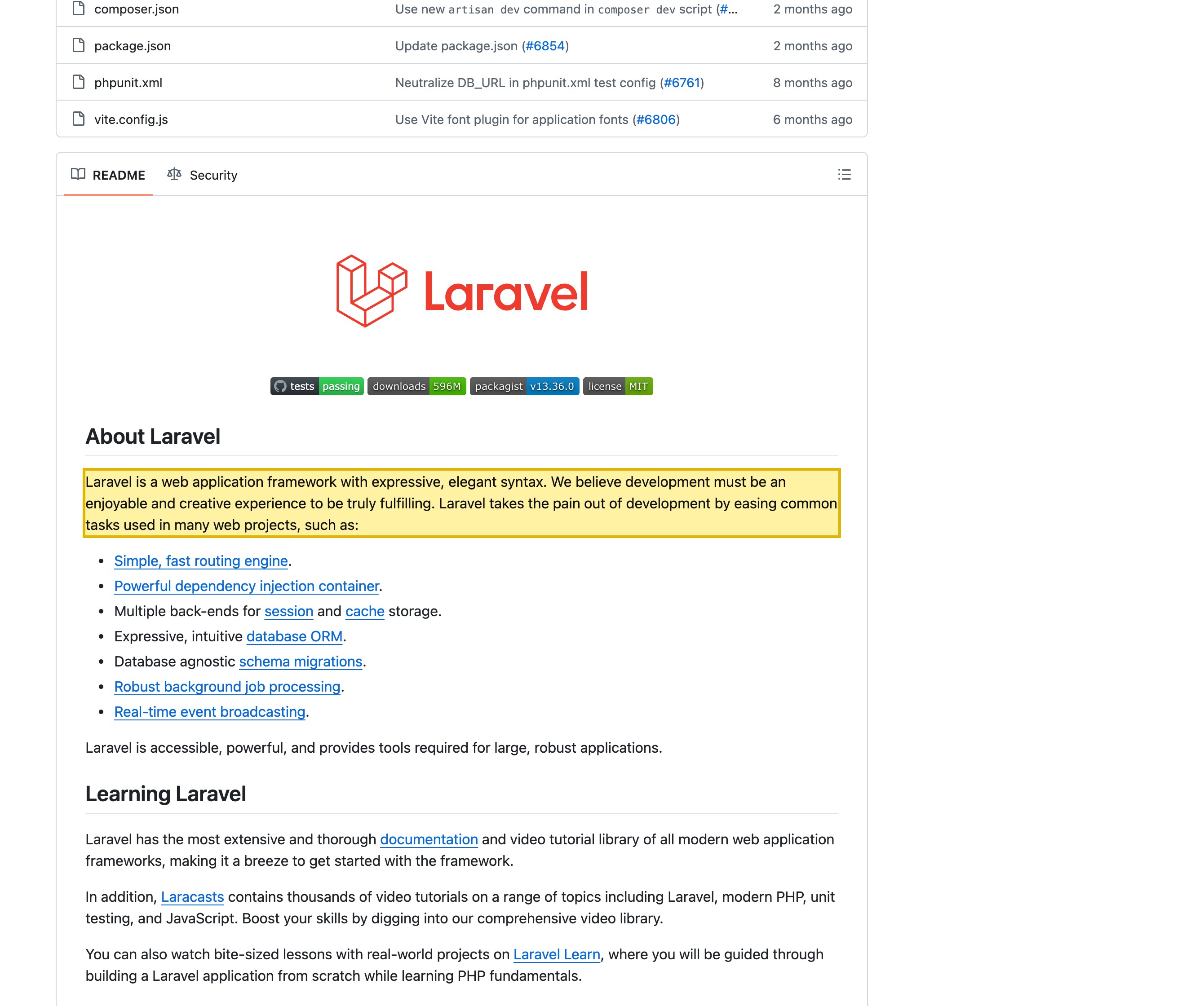
| In Laravel's own words: "Laravel is a web application framework with expressive, elegant syntax." It is open-source code you install and run on your own server — there is no hosted "Laravel" service and no in-country region to select, so where the app runs and where its database sits is your deployment choice. | Laravel — "About Laravel," project README, github.com/laravel/laravel (retrieved 2026-10-14) |
| Laravel's documentation states that "almost every modern web application interacts with a database," and that Laravel "makes interacting with databases extremely simple across a variety of supported databases." That database — which you choose and host — is where your app keeps the personal information it collects from China users. | Laravel Documentation — Database, laravel.com/docs (retrieved 2026-10-14) |
| Personal information collected from mainland users and written to an offshore database or API is a cross-border transfer under China's Personal Information Protection Law. The duty sits on the handler — you: separate notice and consent, plus a lawful transfer mechanism (a CAC security assessment, the CAC standard contract, or certification). | China Personal Information Protection Law (PIPL), Articles 38–40 (retrieved 2026-10-14) |
| Where the operator runs critical information infrastructure or handles large volumes of personal information, data collected and generated in China must be stored in the mainland, with a security assessment before any export — China's Cybersecurity Law, Article 39 (formerly Article 37; renumbered by the 2025 amendment in force January 1, 2026, substance unchanged). | China Cybersecurity Law, Article 39 (formerly Article 37) (retrieved 2026-10-14) |
Sources verified by the 21YunBox compliance team on 2026-10-14.
For a mainland-China audience, the first thing to settle about Laravel is that the question is not whether it works — it does — and it is not really about Laravel at all. Laravel is an open-source PHP web application framework: you install it on your own server and run it wherever you deploy, whether that server sits in Beijing or Frankfurt. By itself the framework is residency-neutral — it stores nothing offshore and phones nothing home for your data. What holds the data is the application you build on top of it and the database behind that application. So “does Laravel work in China” resolves into three different questions — where your app runs, what data it processes, and what it reaches out to — and every one of them is decided by your deployment, not by the framework.
That is the half a reachability check cannot reach. A test that confirms composer install succeeded and the home page rendered has told you nothing about whether the server, the database, and the personal information flowing through them were allowed to sit where they sit. The compliance axis is residency and legal basis — where the deployment and its data come to rest, and under what law — not speed and not “can it load.”
Laravel in China at a glance
| What decides it | In Laravel's own terms — and China's law |
|---|---|
| Where it actually runs | Laravel is open-source code you deploy on your own server; there is no "Laravel region" to select. If your app serves mainland users, its host owes an ICP filing (备案) on a mainland hosting resource, and the system owes MLPS (等级保护) duties as the operator. The real exposure is an offshore server that mainland users reach — a deployment choice, not a property of the framework. |
| What data it holds, and why it is personal information | A Laravel app keeps what it collects from China users — names, contact details, accounts, orders — in the database you configure and host. That is personal information, and sensitive personal information under PIPL Article 28 where government IDs, financial, or health data appear. The framework defines the shape of that data; you choose where the database lives. |
| Data crossing the border | A Laravel app wired to an offshore database, cache, or API sends mainland users' personal information abroad. Under the Personal Information Protection Law that is a cross-border transfer (Articles 38–40): notice, a separate consent, and one transfer mechanism — a CAC security assessment, the CAC standard contract, or certification. |
| Data-localization duty | For a critical-information-infrastructure operator or a large-volume handler, personal information and important data collected and generated in-country must be stored in the mainland under the Cybersecurity Law, Article 39 (formerly Article 37), with a security assessment before any export. |
| Reachability is not the axis | That a Composer install succeeds and the page renders says nothing about whether the deployment and its data were allowed to sit where they sit. The decision turns on residency and legal basis, not latency. This page publishes no first-party speed figure; speed is the wrong axis. |
The framework runs where you run it — so the deployment decides
Start with where the app runs, because the whole question rests on it. Laravel is a framework you add to your own codebase — its README opens by calling it “a web application framework with expressive, elegant syntax,” and it ships as open-source code you install with a package manager. There is no hosted Laravel to connect to and no in-country region to pick; the framework executes inside whatever application you deploy, which can just as easily sit on a mainland server as anywhere else. In that sense Laravel is usable from China in a way a blocked consumer service is not, and it can run entirely in-country.
What that also means is that Laravel never sets your compliance posture — your deployment does. The moment your app serves mainland users, its hosting resource owes an ICP filing (备案), and the system owes MLPS (等级保护) obligations as the operator. An offshore virtual machine that mainland users hit is the real exposure, and it is a choice about where you deploy, not something the framework imposes or prevents. So the compliance question is not answered by looking at Laravel; it is answered by looking at where the app is hosted and who reaches it.
The app’s data is what PIPL governs
A Laravel request is not neutral text. The application collects what your users submit and stores it in the database you wire up — and Laravel’s own documentation notes that “almost every modern web application interacts with a database,” and that Laravel “makes interacting with databases extremely simple across a variety of supported databases.” That database is where the personal information lives: names, contacts, accounts, order history, support records.
The moment a user in China submits that data and your app writes it to — or reads it from — a database or API hosted outside the mainland, that is a cross-border transfer of personal information under China’s Personal Information Protection Law. PIPL puts the duty on the handler — you: Articles 38–40 require notice, a separate consent, and one transfer mechanism (a CAC security assessment, the CAC standard contract, or certification), and Article 28 adds heightened duties where the data is sensitive — government IDs, financial, health, biometric, or minors’ information. And if your organization operates critical information infrastructure, or handles personal information at scale, the Cybersecurity Law adds a data-localization duty: Article 39 (formerly Article 37; renumbered by the 2025 amendment in force January 1, 2026, substance unchanged) requires personal information and important data collected and generated in-country by such operators to be stored in-country, with a security assessment before any export.
Outbound dependencies: Composer, Packagist, and the APIs your app calls
A third exposure rides along with any backend framework: what it reaches out to. Laravel’s packages are resolved from Packagist through Composer, and a typical app also calls third-party APIs and may ship crash or analytics telemetry. At build time and at run time, those lookups can route to endpoints outside the mainland. That is a supply-chain and residency concern a reachability test never surfaces — it can confirm a package downloaded, but not that your build dependencies, and the data your running app hands to third parties, stay on lawful, in-country ground. Where mainland users’ personal information is involved, each outbound call is its own cross-border question to settle.
Why a reachability check misses this
A reachability or latency test pings an endpoint and reports whether it answers and how fast. For a backend framework that test answers the wrong question. There is no “Laravel” to ping that tells you anything useful: the framework runs inside your app, so a green light says nothing about where your server is hosted, where your database sits, or whether the personal information moving through them was allowed to cross a border. What actually decides compliance is invisible to a probe — the hosting location and its ICP and MLPS status, the residency of the database, whether the data is personal or sensitive, and the lawful basis for any transfer. Those are deployment and legal facts, not network facts. That is the half a pure speed-or-reachability view cannot supply, and the half we lead with.
The lawful path — map, localize, deliver
For an open-source framework, 21YunBox’s role is focused, and we will say so plainly: there is no “domestic Laravel” to sell you — the framework is already yours to run, including in-country. Our value is in three moves.
First, we map the exposure: where your app is deployed and who reaches it, what personal information its database holds, which databases, caches, APIs, and dependencies sit offshore, and how all of that lands against PIPL’s cross-border rules, Article 28, the ICP-filing duty, and the Cybersecurity Law — so you and your counsel can set the guardrails.
Second, we help you localize what cannot lawfully sit offshore: run the Laravel app in-country with its database and the personal information it holds kept resident on mainland soil, on ICP-filed, MLPS-appropriate infrastructure. This is a China-legal footing, never a route around the rules.
Third, we deliver your China-facing surface — the app and API edge your mainland users hit — over ICP-filed, in-country infrastructure (the 21YunBox Optimizer), in front of the stack you already run, with no rebuild and no second codebase.
21YunBox is a compliant overlay, not a migration, and a partner to the tools you use, not a competitor to them. 21YunBox never uses or suggests circumvention of any kind. The result is a setup that runs legally and compliantly for your users in China.
Related reading:
- How to get an ICP filing for China
- China’s Personal Information Protection Law (PIPL)
- Cross-border data transfers under PIPL
- China’s Cybersecurity Law (data localization, Article 39)