Does Google Fonts Work in China? Reachability, Visitor-IP Transfer & PIPL
Google Fonts loads type from Google's own servers — endpoints widely blocked or unreliable in mainland China that ship each visitor's IP address to Google offshore. That makes it a cross-border personal-information transfer under PIPL, while the ICP filing stays on your site. A compliance-first look, and the self-hosting fix.
Does Google Fonts work in China?
No — not cleanly. Google Fonts loads your type from Google's own servers, which are widely blocked or unreliable in mainland China, and every page that embeds it ships each visitor's IP address to Google offshore. "We just use Google Fonts" is a China compliance exposure, not a convenience.
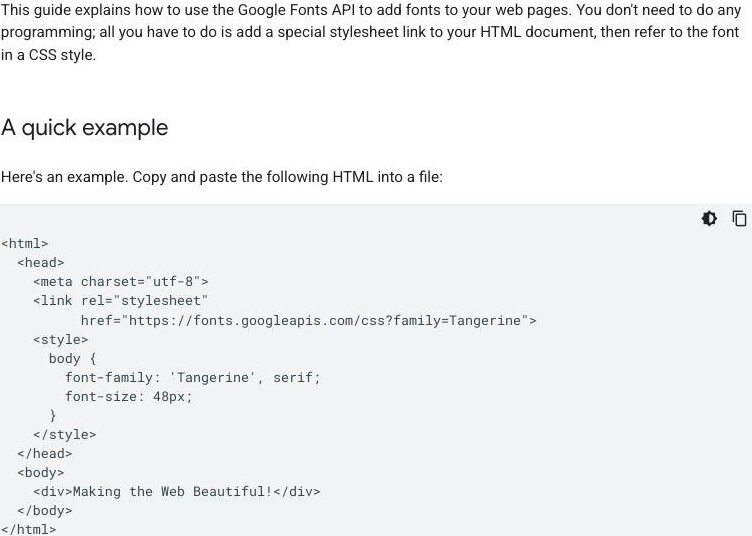
Google's own Get-started guide shows the fonts are added "by adding a stylesheet link in your HTML and referencing the font in your CSS," pointed at the API base URL https://fonts.googleapis.com/css — so each visitor's browser has to reach Google to render the page. In the mainland those Google endpoints commonly fail or load slowly, and the request that does go out carries the visitor's IP to Google. A German court (Landgericht München I, 20 January 2022) ruled that dynamically embedding Google Fonts unlawfully passes a visitor's IP to Google; for your mainland users that same hand-off is a cross-border transfer of personal information under PIPL (Articles 38–43). Google Fonts stores none of your app's own user data, so the ICP filing stays on your website, not on the font service. The table below is Google's own wording and the rule each point triggers.
This is a risk map, not a verdict — what applies turns on your users, your data and how your pages embed the fonts. Our China team can map your exposure with you →
What Google Fonts API's own documentation says about China
| Fact | Primary source |
|---|---|
Google Fonts serves font files from Google's own servers to each visitor's browser. Google's developer guide "explains how to use the Google Fonts API to add fonts to your web pages," done "by adding a stylesheet link in your HTML and referencing the font in your CSS" pointed at the API base URL https://fonts.googleapis.com/css (with the font binaries returned from Google's font host, fonts.gstatic.com). So to render your type, every mainland visitor's browser has to reach Google first. | Google Fonts Developer documentation — Get started (developers.google.com/fonts/docs/getting_started), retrieved 2026-10-07 |
Those Google endpoints are widely blocked or unreliable in mainland China. Like most of Google's consumer services, the Google Fonts hosts (fonts.googleapis.com and fonts.gstatic.com) commonly fail or load slowly for mainland visitors — a well-documented reachability fact, stated here without a number. When the stylesheet or font file does not arrive, the browser stalls the paint or drops to a system fallback, so the dependency on Google shows up directly on the page. | Well-documented qualitative reachability fact (no number); corroborated by Google's own Transparency Report traffic data for China, retrieved 2026-10-07 |
| Embedding Google Fonts sends each visitor's IP address to Google — for mainland users, a cross-border transfer of personal information. Because the font is fetched from Google rather than your own servers, the visitor's browser opens a request to Google that necessarily carries their IP offshore. A German court (Landgericht München I, 20 January 2022, Az. 3 O 17493/20) ruled that dynamically embedding Google Fonts unlawfully passes a site visitor's IP address to Google. Under China's Personal Information Protection Law an IP address is personal information, and sending it to Google offshore is a cross-border transfer the handler must justify — notice, separate consent and a transfer mechanism (PIPL Articles 38–43). | Load mechanism per Google Fonts Developer documentation, retrieved 2026-10-07; Landgericht München I, 20 Jan 2022 (Az. 3 O 17493/20); PIPL Articles 38–43 |
| The ICP filing sits on the website that embeds the fonts, not on Google Fonts. Google Fonts stores none of your application's own user data — it only serves type — so it is not itself the data-residency subject. But the public site that loads those fonts, if it serves mainland visitors from inside China, still needs its own ICP filing bound to a mainland hosting resource (State Council Order No. 292; MIIT Order No. 33). Swapping a font CDN changes nothing about that duty, and a site served only from offshore has no mainland footing to file against. | ICP regime — State Council Order No. 292; MIIT Order No. 33; "serves type only" per Google Fonts Developer documentation, retrieved 2026-10-07 |
Sources verified by the 21YunBox compliance team on 2026-10-07.
For a mainland-China audience, the deciding question about Google Fonts is not how refined the type looks — it is that rendering the page quietly depends on reaching Google, and what that dependency means under Chinese law. Google serves its fonts from its own endpoints, and documents the mechanics itself: a stylesheet link points the browser at the Google Fonts API, which returns the font. Two China-specific facts follow. First, those Google endpoints are widely blocked or unreliable in the mainland, so the fonts frequently do not arrive. Second, every request that does go out carries the visitor’s IP address to Google offshore — for your Chinese users, a cross-border transfer of personal information. The typography is cosmetic; the reachability and the data hand-off are the exposure.
Google Fonts in China at a glance
| What decides it | In Google's own terms |
|---|---|
| Where it runs | A Google-hosted web service. Google's guide points the browser at the API base URL https://fonts.googleapis.com/css, and the font files come back from Google's font host (fonts.gstatic.com). It has no mainland-China endpoint of its own. |
| Reachable in China? | Not dependably. The Google endpoints are widely blocked or unreliable in the mainland; when the stylesheet or font file does not arrive, the browser stalls the paint or drops to a system fallback. |
| What crosses the border | Loading the font makes the visitor's browser call Google, carrying the visitor's IP address offshore — personal information under PIPL. A German court (LG München I, 20 Jan 2022, Az. 3 O 17493/20) held that dynamic embedding unlawfully passes that IP to Google. |
| Whose data it holds | Google Fonts stores none of your application's own user data — it only serves type — so the font service itself is not the data-residency subject. |
| Where the ICP sits | On the public website that embeds the fonts, not on Google Fonts. A site served to mainland visitors from inside China needs its own ICP filing on a mainland hosting resource. |
Blocked at the source, so the fonts often never arrive
Google Fonts lives entirely on Google’s own infrastructure: the browser requests a stylesheet from the Google Fonts API base URL https://fonts.googleapis.com/css, and the font binaries come back from Google’s font-file host, fonts.gstatic.com. There is no mainland-China endpoint of its own to fall back to. Like most of Google’s consumer services, those hosts are widely blocked or unreliable inside the mainland — a well-documented reachability fact. When the stylesheet or the font file does not arrive, the visitor’s browser either waits on it or drops to a system fallback, so the missing dependency shows up directly on the page. Reaching Google, in other words, is the first thing a mainland visit cannot count on — and no amount of styling changes where the font has to come from.
Every embed sends your visitor’s IP to Google
Because the font is fetched from Google rather than from your own servers, the visitor’s browser has to open a connection to Google — and any such request necessarily carries the visitor’s IP address. A German court made the consequence explicit: the Landgericht München I, in a judgment dated 20 January 2022 (Az. 3 O 17493/20), held that dynamically embedding Google Fonts unlawfully passes a site visitor’s IP address to Google without consent. Under China’s Personal Information Protection Law an IP address is personal information, and sending it to Google offshore is a cross-border transfer the handler — you, not Google — has to justify: notice, separate consent, and one transfer mechanism such as a CAC security assessment, the CAC standard contract, or certification (PIPL Articles 38–43). For a critical information infrastructure operator or a large-volume handler, personal information collected in China must also be stored in the mainland (PIPL Article 40; Cybersecurity Law Article 39 (formerly Article 37)). None of that is a setting you can toggle on Google’s side.
The ICP filing is on your site, not on Google Fonts
It is worth being precise about where the licensing duty actually lands. Google Fonts holds none of your application’s own user data — it serves type and nothing else — so the font service is not itself the data-residency subject, and there is no ICP filing to make on Google Fonts. The filing belongs to your public website: a site served to mainland visitors from inside China turns on an ICP filing (ICP 备案) under State Council Order No. 292 and MIIT Order No. 33, bound to a hosting resource physically located in the mainland. Swapping one font CDN for another changes nothing about that obligation, and a site delivered only from offshore has no mainland footing to file against. The honest reading, then, is that Google Fonts is not a data-residency problem of the font service — it is a reachability failure and a visitor-IP transfer, sitting on top of a site that still has its own ICP question to answer.
This is a risk map, not a verdict — whether PIPL’s cross-border rules bite, and how your own site’s ICP position stands, depends on your users, your data and how your pages embed the fonts — worth settling with counsel before you ship.
Where 21YunBox fits — a compliant overlay, not a migration
You keep your design and your stack exactly as they are. We remove the dependency that creates the exposure: instead of each visitor’s browser calling Google, we self-host the font files inside ICP-filed delivery from within the mainland, set in front of your existing origin — no rebuild, no second codebase, and no redesign. Mainland visitors then receive your type from inside China, with no request to Google and no visitor IP leaving for Google’s servers, while our China team maps your PIPL cross-border and ICP position against your entity, your data and who your users are. The fonts render, the transfer disappears, and the filing question is settled in one place.
Related reading:


