Does Elasticsearch Work in China? PIPL Cross-Border, Data Residency & Self-Hosting
Elasticsearch is both a full-text search engine and a vector database: the documents you index and the dense-vector embeddings derived from them are personal information held at rest, and Elastic Cloud has no mainland-China region — so indexing your China users' data there is a PIPL cross-border transfer. A compliance-first look at the residency exposure and the in-country self-host lever.
Does Elasticsearch work in China?
Elasticsearch is a data-at-rest store of your users' content — the documents you index and the dense-vector embeddings derived from them — and Elastic Cloud has no mainland-China region, so a China-facing index sits offshore: a residency and cross-border-transfer problem, not a speed one.
You load Elasticsearch with documents, records, logs and the embeddings it computes from them for kNN search and RAG — all built from your users' messages, profiles and files, so all personal information when those users are in China. Indexing that in an offshore Elastic Cloud region (AWS, GCP or Azure — the nearest is Hong Kong, not the mainland) is a PIPL cross-border transfer (notice, a separate consent and a transfer mechanism, Articles 38–40), with an in-mainland storage duty for CIIOs and large-volume handlers (Article 40; Cybersecurity Law Article 39 (formerly Article 37)). Embeddings do not anonymize this away — they support inversion and membership inference, so a vector store is still a personal-information store. Because Elasticsearch is open source (AGPL since 2024) and fully self-hostable, the lawful lever is to keep the index and embeddings in-country — self-host the open engine on mainland infrastructure, or use a licensed in-country managed deployment — not to make an offshore endpoint reachable.
This is a risk map, not a verdict — which transfer mechanism fits and whether a localization duty binds you turn on your entity, your data volumes and whose data it is. Our China team can map your exposure →
What Elasticsearch's own documentation says about China
| Fact | Primary source |
|---|---|
| Elasticsearch is open source again and fully self-hostable — the lever for keeping data in-country. In August 2024 Elastic added the OSI-approved AGPL (AGPLv3) license option alongside the Elastic License v2 and SSPL, writing that "Elasticsearch and Kibana can be called Open Source again." Because you can run the same engine on your own hardware, you can host the cluster — index and dense-vector embeddings — on mainland infrastructure rather than on an offshore managed region. | Elastic blog — "Elasticsearch Is Open Source. Again!" (Shay Banon, Aug 29 2024), retrieved 2026-10-10 |
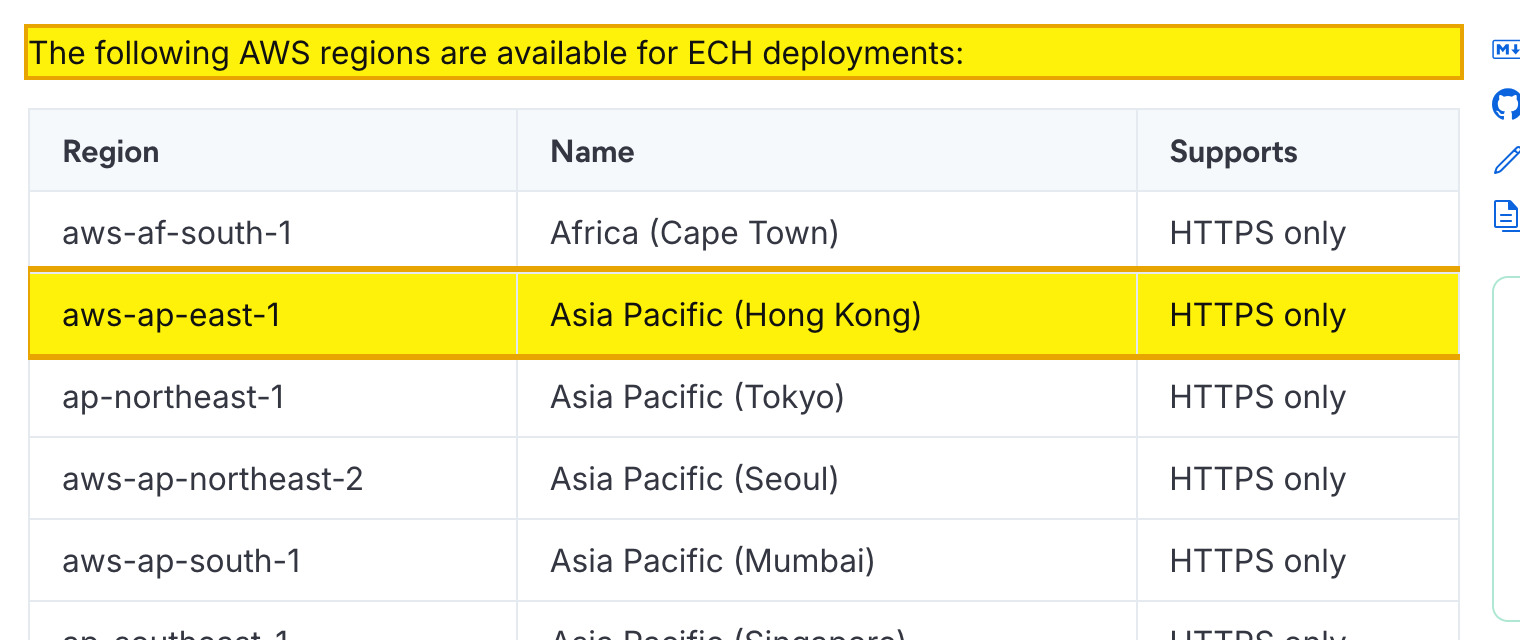
| Elastic Cloud has no mainland-China region — and it stores dense-vector embeddings, not just text. Elastic's own Elastic Cloud Hosted regions page lists AWS, GCP and Azure locations; its nearest Asia-Pacific region is Hong Kong (aws-ap-east-1), and none is inside mainland China. Elasticsearch indexes both documents (in an inverted index) and embeddings via its dense_vector field type for kNN search — so a China-facing deployment on Elastic Cloud keeps that content offshore. | Elastic Docs — Elastic Cloud Hosted regions; Elastic Docs — kNN / dense_vector, retrieved 2026-10-10 |
| Indexing China users' data in an offshore cluster is a PIPL cross-border transfer, with an in-country storage duty for some handlers. Holding personal information in an offshore region triggers PIPL's cross-border rules — notice, a separate consent, and one transfer mechanism (a CAC security assessment, the CAC standard contract, or certification), Articles 38–40. A critical information infrastructure operator or large-volume handler must store China-collected personal information in the mainland (PIPL Article 40; Cybersecurity Law Article 39 (formerly Article 37) — the 2025 Cybersecurity Law amendment, in force January 1, 2026, renumbered the data-localization article from 37 to 39, its substance unchanged). | PIPL Articles 38–40 (DigiChina/Stanford translation); Cybersecurity Law Article 39 (formerly Article 37), retrieved 2026-10-10 |
| Embeddings are derived from personal data and are not anonymization. PIPL defines personal information as information relating to identified or identifiable natural persons and treats only truly anonymized data as out of scope (Article 4). A vector embedding is computed from a person's text or image and supports inversion (approximate reconstruction of the source) and membership inference, so a store of embeddings of your users' data is still a store of personal information — "we only send vectors" does not take it outside PIPL's residency and cross-border transfer duties. | PIPL Article 4 (DigiChina/Stanford translation), retrieved 2026-10-10 |
Sources verified by the 21YunBox compliance team on 2026-10-10.
For a China-facing application, the question about Elasticsearch is not whether a cluster will answer a query — it will — but where the content you feed it is allowed to live. Elasticsearch is a data-at-rest store in two senses at once: a full-text search engine that holds the documents, records and logs you index in an inverted index, and a vector database that holds dense-vector embeddings in its dense_vector field type, powering k-nearest-neighbor (kNN) search for semantic lookup and RAG. Both are built from your users’ messages, profiles and files — personal information in transformed form. The engine is open source again and fully self-hostable, but Elastic Cloud, the managed offering, runs on AWS, GCP and Azure with no mainland-China region. So the deciding questions are residency and cross-border transfer, that embeddings do not anonymize the people behind them, and the lever of self-hosting the open engine in-country.
Elasticsearch in China at a glance
| What decides it | In Elasticsearch's own terms — and China's law |
|---|---|
| What you load into it | Documents, records, logs and chat you index into an inverted index, plus the dense-vector embeddings Elasticsearch computes from them for kNN search and RAG. When your users are in China, that is their personal information held at rest. |
| Where the engine runs | Elastic Cloud (managed) runs on AWS, GCP and Azure — its nearest Asia-Pacific region is Hong Kong (aws-ap-east-1), which is not mainland China. Indexing China-user data there is a cross-border transfer (数据出境) under PIPL Articles 38–40; self-hosting the open engine keeps it in-country. |
| Embeddings are personal information | A vector is computed from a person's text or image; it supports inversion (approximate reconstruction) and membership inference, so it is not anonymized. A store of embeddings of your users' data is itself a store of personal information — "only vectors, not raw data" is false comfort. |
| Data localization and query logs | A critical information infrastructure operator or large-volume handler must keep China-collected personal data in the mainland (PIPL Article 40; Cybersecurity Law Article 39, formerly Article 37). Query logs can carry personal information too. An offshore Elastic Cloud region meets none of this. |
| Reachability is not the axis | Whether a cluster answers a query was never the question. The lever is to keep the index and embeddings in-country — self-host the open-source (AGPL) engine, or a licensed in-country managed deployment — minimize and pseudonymize what you index, and carry the ICP filing on the app in front. |
What you actually store — indexed content and its embeddings
Elasticsearch earns its place by holding your data, not by passing it along. As a search engine it keeps every document you index — support tickets, product records, user profiles, logs, chat transcripts — in an inverted index built for fast full-text retrieval. As a vector database it keeps dense-vector embeddings in its dense_vector field type, which power k-nearest-neighbor (kNN) search for semantic lookup and retrieval-augmented generation; most designs also store the original text or payload alongside each vector so a match can be shown and traced. Every one of those structures is derived from your users’ own content. When those users are in China, the index is not incidental exhaust — it is a store of their personal information at rest, and it lives wherever the cluster runs. That is why the deciding question is a location question, not a latency one: where is Elasticsearch allowed to keep all of this?
It’s a residency and cross-border-transfer problem — and embeddings don’t anonymize it — under PIPL
Run that cluster on Elastic Cloud and the geography answers the question for you. Elastic’s managed service runs on AWS, GCP and Azure, and its own Elastic Cloud Hosted regions page lists no location inside mainland China — the nearest is Hong Kong (aws-ap-east-1), which is not the mainland for data-localization purposes. Indexing your Chinese users’ documents and embeddings into an offshore region is therefore a cross-border transfer of personal information (数据出境) under China’s Personal Information Protection Law: you — the handler, not Elastic — must give notice, obtain a separate consent, and clear one transfer mechanism (a CAC security assessment, the CAC standard contract, or certification) under Articles 38–40. If you are a critical information infrastructure operator or a large-volume handler, China-collected personal information must be stored in the mainland (PIPL Article 40; Cybersecurity Law Article 39 (formerly Article 37) — the 2025 Cybersecurity Law amendment, in force January 1, 2026, renumbered the data-localization article from 37 to 39, its substance unchanged) — a duty no offshore region can meet.
And the embeddings do not get you out of this. It is tempting to think a vector index is exempt because it stores arrays of floating-point numbers rather than names and emails — “we only send vectors, not raw data.” That comfort is false. An embedding is computed directly from a person’s text, document or image, and it preserves enough of the original to support inversion — approximate reconstruction of the source text — and membership inference, which reveals whether a given person’s record is in the store. PIPL defines personal information as information relating to identified or identifiable natural persons and places only truly anonymized data outside its scope (Article 4); an embedding of your users’ data is neither anonymized nor out of scope. A store of embeddings of Chinese users’ personal data carries the same residency and cross-border duties as the raw text it came from.
Reaching the endpoint isn’t the question — keeping the index in-country is
None of this is about whether a cluster in Oregon or Singapore will answer a query from Shanghai. It will. The exposure is that the index and its embeddings — personal information — are sitting at rest outside the mainland. The clean lever follows directly from what Elasticsearch is: open source. Since Elastic added the AGPL option in 2024, you can run the same engine on your own infrastructure inside China, keeping the index and the embeddings in-country, and minimize and pseudonymize what you index so that less personal information is held in the first place. Where a fully managed service is required, a licensed in-country managed Elasticsearch — for example, Alibaba Cloud Elasticsearch offered through Alibaba Cloud’s mainland regions — is a warn-positive: it keeps the data in-country, but it is a distinct operator and contract, and your consent basis, transfer position and query-log handling still have to be settled. What the lever is not is a way to keep the data offshore and make a far-away endpoint feel local; localization means keeping the data-at-rest store on an in-country path, not routing it out of the mainland and back.
This is a risk map, not a verdict: whether a localization duty binds you, which cross-border mechanism fits, and how much of your index counts as personal information turn on your entity, your data volumes and whose data it is — settle the specifics with counsel before you build.
The lawful path — map, localize, deliver
21YunBox is a compliant overlay around the stack you already run, not a replacement for Elasticsearch and not a competitor to Elastic. The work has three parts. Map: inventory what you index and vectorize, what personal information those documents and embeddings carry, where the cluster runs today, what your query logs capture, and the consent basis you rely on. Localize: keep your China-user index and embeddings in-country — self-host the open-source (AGPL) engine on mainland infrastructure, or use a licensed in-country managed deployment — minimize and pseudonymize what is indexed, and govern any residual cross-border transfer; the point is to keep the data-at-rest store on an in-country path. Deliver: the application that queries the index carries an ICP filing duty and needs compliant, in-country delivery — the 21YunBox Optimizer, set in front of the stack you already run, with no rebuild and no second codebase. 21YunBox never uses or suggests circumvention of any kind. The result is an Elasticsearch deployment that runs legally and compliantly for your users in China.
Related reading:
- Cross-border data transfers under PIPL
- China’s Cybersecurity Law explained
- China’s data export security assessment measures
- How to get an ICP filing for China