How do you run an e-commerce business in mainland China?
Running an online store for mainland China is a compliance decision before it is a platform or speed one: a selling site needs a commercial ICP license on a mainland host, a licensed way to take payment, and PIPL-compliant handling of customer data — and selling only through a third-party super-app hands that platform the power to switch your store off overnight.
That is the real lesson behind the H&M blackout in this article: a brand that reaches shoppers only through marketplaces it doesn't control can be de-listed in an afternoon. Owning your storefront takes that control back — but it moves the compliance stack onto you. Because a paid store is a commercial internet information service, it needs the value-added telecom operating license (a commercial ICP), not just a recordal filing; the operator generally has to be a registered mainland market entity; payment has to run through a licensed domestic path; and every customer record is personal information whose cross-border handling PIPL governs. The sections below walk through the blackout and why controlling your own storefront matters.
None of this is legal advice — the exact filings, the selling entity and the payment path turn on your goods, your structure and where your buyers are. Our China team can map your path with you →
What running a China storefront actually requires
| Fact | Primary source |
|---|---|
| A store that sells is a "commercial" internet service — it needs a commercial ICP license, not just a filing. State Council Order No. 292 divides internet information services into commercial and non-commercial and runs "a licensing system for commercial Internet information services; and a filing system for non-commercial" ones, while barring non-commercial providers from "paid services." A paid storefront therefore needs the value-added telecom "operating license" (a commercial ICP), and the site must sit on a mainland resource to be filed at all. How ICP filing and licensing work → | Measures for the Administration of Internet Information Services (State Council Order No. 292), Articles 3, 4, 7 & 11 — 21YunBox full English translation of the gov.cn text, retrieved 2026-10-07 |
| Most e-commerce operators must register as a market entity before they trade. China's E-Commerce Law (2019) makes business registration the default for e-commerce operators — with narrow carve-outs for individuals selling self-made farm or handcraft goods, minor convenience services and small occasional sales — and requires operators to display their license or filing information on the storefront. In practice a registered mainland selling entity is a precondition, not an afterthought. | E-Commerce Law of the People's Republic of China (2019), Articles 10 & 15 (China Law Translate English edition), retrieved 2026-10-07 |
| Taking payment from mainland buyers is its own licensed gate. Under the Regulations on the Supervision and Administration of Non-Bank Payment Institutions (State Council Order No. 768, in force May 1, 2024), "a non-bank institution outside … China that intends to provide cross-border payment services to users within China shall … establish a non-bank payment institution within China," and for domestic transactions must "complete transaction processing, fund settlement, and data storage within China." Checkout generally runs through a licensed domestic payment path rather than straight to an offshore account. The payment-licensing rule → | Regulations on the Supervision and Administration of Non-Bank Payment Institutions (State Council Order No. 768), Articles 2 & 19 — 21YunBox full English translation of the gov.cn text, retrieved 2026-10-07 |
| Every customer record is personal information PIPL governs. A storefront collects names, shipping addresses, phone numbers, payment details and order history. Serve mainland buyers from infrastructure outside China and that becomes a cross-border transfer of personal information — PIPL requires notice, separate consent and a lawful transfer mechanism (Articles 38–43) — while a critical-information-infrastructure operator or high-volume handler must keep the data in China (PIPL Article 40; Cybersecurity Law Article 39 (formerly Article 37)). How the cross-border rules apply → | Personal Information Protection Law, Articles 38–43 & 40; Cybersecurity Law Article 39 (formerly Article 37) — gov.cn primary text via 21YunBox compliance pages, retrieved 2026-10-07 |
Sources verified by the 21YunBox compliance team on 2026-10-07.
Why E-Commerce in China
The China ecommerce market is the largest in the world with a volume of 1.94 trillion USD in 2019. China’s ecommerce market is more than three times the size of the US market.
As businesses are racing in to join on this opportunity, they are finding that there are some key fundamental differences when operating a storefront in China. These differences may be technological, political, social, and cultural in nature.
In this article, we look at whether to host your ecommerce storefront on popular 3rd party ecommerce platforms or keep control by hosting it independently.
H&M’s Online Blackout in China
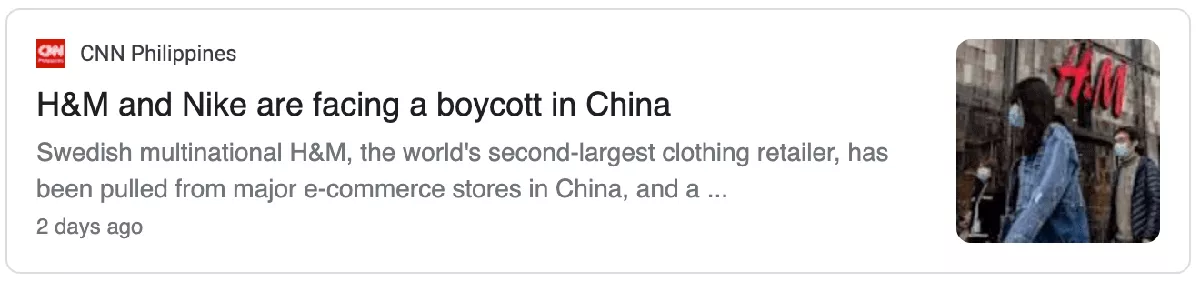
H&M is a Swedish multinational clothing-retail company known for its fast-fashion clothing. In China, H&M relies on a network of third-party e-commerce platforms for distribution, where a few “super apps” have largely replaced individual apps and websites.
In 2020, the Swedish clothing brand decided to stop sourcing from China’s Xinjiang region which caused a stir among Chinese officials.
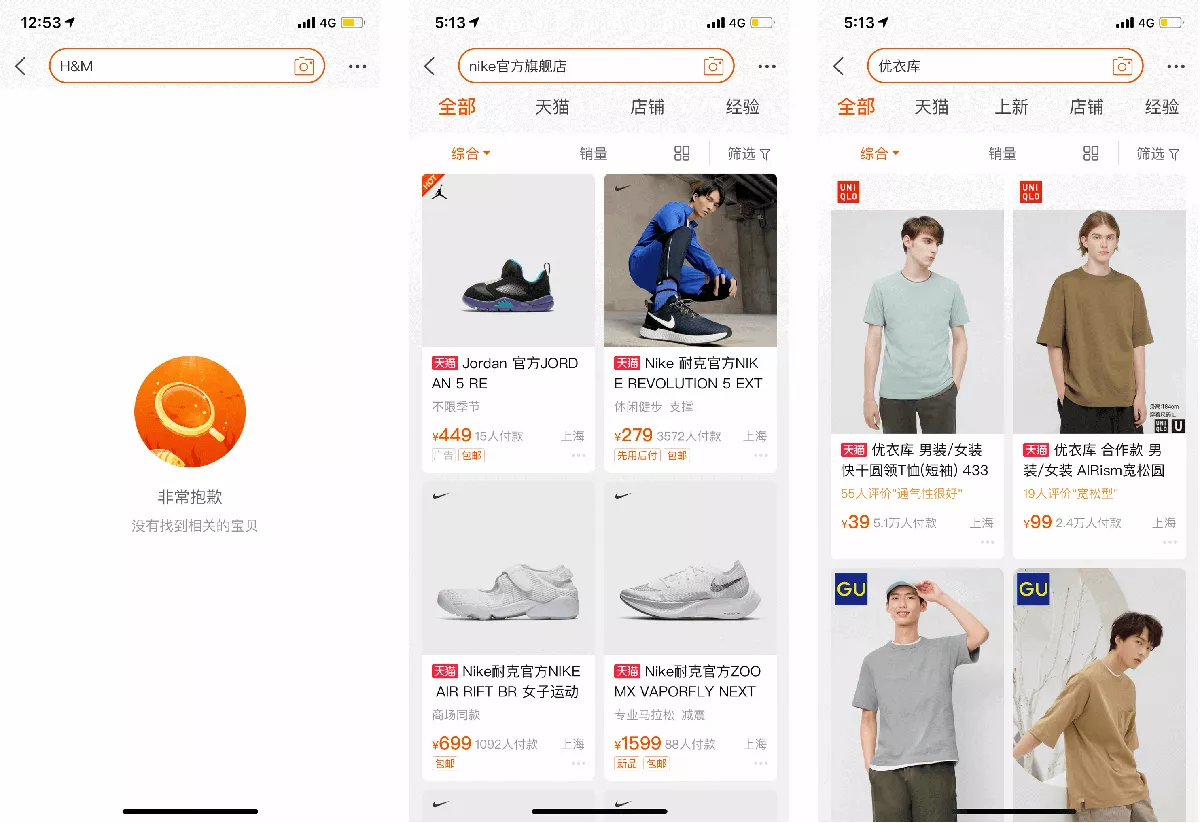
On the afternoon of March 24, 2021, H&M flagship stores “disappeared” off leading e-commerce platforms, including Alibaba’s TMall, JD.com and Pinduoduo, Meituan’s shop-listing app Dianping, map apps from Tencent and Baidu, among other major online platforms in China.
Key Take Aways From H&M’s Online Blackout
Ecommerce stores that rely on 3rd party platforms such as Alibaba’s TMall, JD.com, and the “super apps” lack control over their storefront.
Mainland China was one of the four largest markets by sales for H&M in 2020. In a country where consumers are increasingly accustomed to shopping online, the blackout could have a drastic impact on H&M’s bottom lines.
It is common for international brands to operate their own official storefronts via 3rd party platforms such as TMall, that have lite apps that run within WeChat.
These ecommerce businesses that rely on 3rd party platforms put themselves at risk as H&M learned due to lack control over their storefront. Owners hosting their storefront on their own company controled website provides reduces risk and provides a more stability.
Take Control of Your Storefront’s Visibility in China
21YunBox empowers ecommerce store owners to host and control your own website and storefront on compliant, ICP-filed delivery from inside the mainland, set in front of the origin you already run — so your storefront reaches China on a lawful in-country footing, with no rebuild and no second codebase.
Learn more about how to take full control of your store’s online presence in China and schedule a call with an expert today.
