What content restrictions apply to publishing games in China?
Before it is a content problem, it is a licensing problem. To publish a game in mainland China you need a Game Publishing ISBN (版号) from the NPPA, filed through a licensed Chinese publisher, and the game must clear content review to get there. The political, territorial and historical rules below are what that review enforces.
No foreign studio can apply for the 版号 itself; a Chinese publisher and operator file it, host the game in-country and carry legal responsibility for its content. On top of the license the game needs an ICP filing, real-name registration and the minors’ play-time controls, and it must show the health-gaming advisory and the NPPA license number at startup. The sections below walk through that startup screen, the banned-content categories and the moderation duties the review checks for.
Which pieces you need — and who files them — turns on your title, your entity and your players, so treat this as a risk map to confirm with counsel. Our China team can map your publishing and compliance path with you →
What actually gates a game launch in mainland China
| Fact | Primary source |
|---|---|
| A game needs a Game Publishing ISBN (版号) before it can launch or earn a cent in mainland China. New Zealand’s government market report states China “requires any game intended for official release or monetisation in mainland China” “to obtain a Game Publishing ISBN approval (ISBN), commonly known as a ‘game license’,” and that this NPPA-issued number is “the official approval number required to legally publish and monetise a game.” Content review is a stage inside that approval, not an optional extra. | New Zealand MFAT — “Entering China’s Mobile Gaming Market: A Guide to Licensing and Regulatory Approval” (government market report), retrieved 2026-10-07 |
| No foreign developer can file for the license itself — a Chinese publisher does, and carries the content liability. Per the same government report, “a foreign gaming company cannot apply for an ISBN and therefore must partner with a Chinese operator,” “a Chinese publisher is also required,” and that publisher “must hold a Web Publishing Service License.” Even “foreign companies running an office or subsidiary in China… cannot apply for an ISBN,” and a Hong Kong or Macao partner cannot either. That is why the essay’s answer begins with a Chinese partner rather than a checklist. | New Zealand MFAT — “Entering China’s Mobile Gaming Market” market report, retrieved 2026-10-07 |
| Content is reviewed against a published standard that reaches far past story and dialogue. The 2016 notice 《关于移动游戏出版服务管理的通知》 (Xin Guang Chu Ban Fa [2016] No. 44, effective 1 July 2016) made regulator sign-off a precondition for publishing any mobile game in China regardless of origin or platform, and directs publishers to review content against the industry “Standards for Mobile Game Content (Edition 2016)” — which covers text, story background, maps, characters, in-game items, audio, quests, instructions and ads. The political, territorial and historical prohibitions in the sections below are what that review tests, item by item. Our translation of the 2016 standards → | SAPPRFT Notice Xin Guang Chu Ban Fa [2016] No. 44 《关于移动游戏出版服务管理的通知》 (effective 2016-07-01) and CADPA “Standards for Mobile Game Content (Edition 2016)”; 21YunBox translation, retrieved 2026-10-07 |
| Every player must pass real-name registration, and minors’ play time is capped by regulation. The 2019 notice 《关于防止未成年人沉迷网络游戏的通知》 requires operators to “require all the users to complete real-name registration” and to “strictly control the time and duration of online games used by minors”; the NPPA’s 30 August 2021 tightening limits under-18s to one hour — 8 to 9 p.m. — on Fridays, Saturdays, Sundays and public holidays. Those identity checks pull personal data of Chinese players into scope, so keep its handling inside China’s cross-border personal-data rules under PIPL. | GAPP Notice 《关于防止未成年人沉迷网络游戏的通知》 (effective 2019-11-01) via China Justice Observer; NPPA Notice of 2021-08-30 (Xinhua / state media reporting), retrieved 2026-10-07; PIPL |
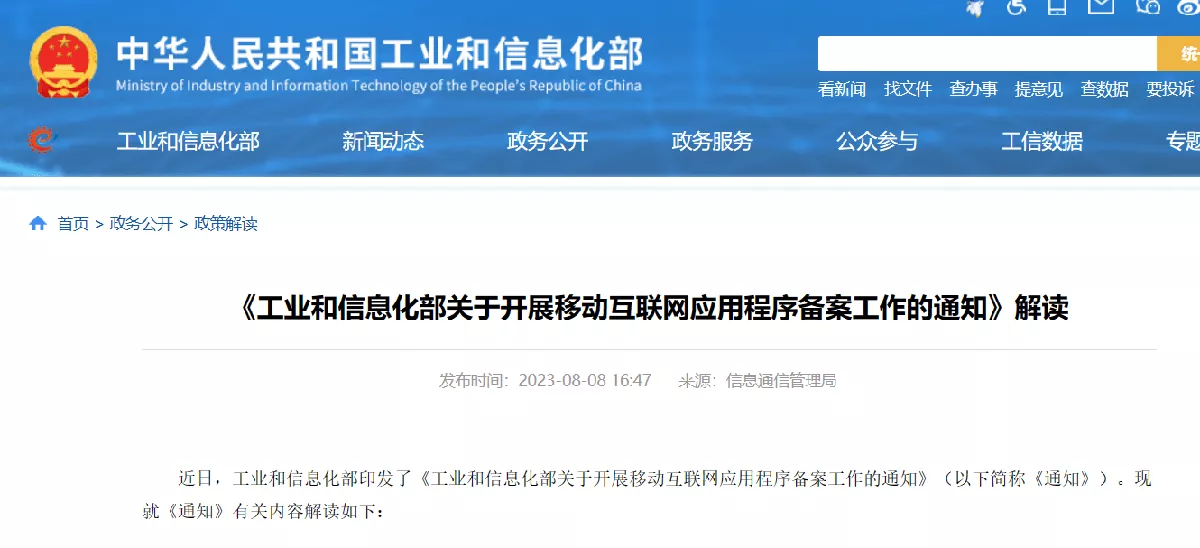
| Even with a license, the app itself must be ICP-filed and show its credentials at startup. New Zealand’s government report lists the Chinese operator’s duties as holding “an ICP Filing (mandatory registration with the Ministry of Industry and Information Technology)” and a commercial ICP License, plus “Display of NPPA license number at startup” — alongside the health-gaming advisory the essay reproduces. ICP filing is the same registration every commercial site in China needs, under State Council Order No. 292 and MIIT Order No. 33. How ICP filing works → | New Zealand MFAT — “Entering China’s Mobile Gaming Market” market report, retrieved 2026-10-07; State Council Order No. 292; MIIT Order No. 33 |
Sources verified by the 21YunBox compliance team on 2026-10-07.
To successfully publish your game in China and comply with the laws and regulations, we’ve outlined the essential requirements and provided specific guidance to help you navigate the process.
1. Game Startup Procedure
Before the game begins, ensure that a screen displaying the required “Healthy Gaming Advice” is shown:
健康游戏忠告
抵制不良游戏,拒绝盗版游戏。
注意自我保护,谨防受骗上当。
适度游戏益脑,沉迷游戏伤身。
合理安排时间,享受健康生活。
To clarify, here is the translated version. Display the Chinese version on your app:
Health Game Advisory
Resist unhealthy games and refuse pirated games.
Pay attention to self-protection and be wary of scams.
Moderate gaming is good for the mind, while excessive gaming is harmful to the body.
Arrange your time wisely and enjoy a healthy life.
After this, a special page must display the game copyright owner, publisher, NPPA game license number (ISBN / GRN), and other approval document numbers as appropriate.
Like all mobile apps, your game must include a privacy policy and terms of service that users must agree to. China’s Ministry of Industry and Information Technology (MIIT) is very stringent regarding the content and scope of these policies and how they are displayed to the user.
For further information, refer to Method for Determining Illegal and Improper Collection and Use of Personal Information by Apps.
2. Game Content Restrictions
In addition to the types of games that are not allowed, here is a comprehensive overview of in-game content that could lead to rejection of your mobile game license application in China. These restrictions encompass language, script, story, maps and scenes, character designs and models, in-game items, music and sound effects, missions and quests, instructions, and advertisements in your mobile game.
Your mobile game cannot include any content that:
-
“Opposes the basic principles established by the Constitution” and is interpreted as slandering or demeaning the military, government, socialist principles, Mao Zedong Thought, or the leadership.
-
“Endangers national unity, sovereignty, and territorial integrity” by misrepresenting Taiwan, Hong Kong, the South China Sea, and China’s established borders and political entities in real or even fictitious maps.
-
Distorts historical facts about modern, historical, or Imperial China, or portrays its various ethnic groups in a negative light.
-
Depicts real or fictitious foreign entities invading Chinese territory, embassies, waters, etc.
…
For a detailed explanation and a thorough list of the 2016 guidelines, refer to our translation of the official 2016 Mobile Game Content Standards.
Link: Detailed List Of Restrictions
3. Social and Communication Elements
If your game allows players to communicate within the game or post messages, you need an established method to control, monitor, and moderate this content. Submit your plan for dealing with reported issues and content takedowns here, and ensure you have filtering software to automatically block harmful and illegal content.
The 21YunBox Advantage
Publishing your mobile game in China requires a Chinese partner, and 21YunBox is the most trusted app and game publisher in the Chinese app market today. We offer generous revenue-sharing models, providing more money and flexibility, even for small and mid-tier mobile games. If your game gains a strong following in your home country, it is likely to reap even greater rewards in the Chinese market.
Contact our English-speaking team today, and let us simplify this intricate process for you.
Frequently Asked Questions
Can we just release on the App Store ourselves, or do we really need a Chinese publisher?
You cannot self-release a monetized game. New Zealand’s government market report is explicit that a foreign company cannot apply for the Game Publishing ISBN (版号) at all — and neither can its China-registered subsidiary — so a licensed Chinese publisher and operator must file it, host the game in-country and take on legal responsibility for its content. Apple and the Chinese Android stores check for that approval number before they will list a revenue-generating game. The partner is not a convenience; it is the only legal route to the license.
What kinds of content get a game rejected?
Review runs against a published standard that covers far more than storyline — text, maps, character models, in-game items, audio, quests and ads are all in scope. The recurring hard lines are political (anything read as opposing the basic principles of the Constitution), territorial (misrepresenting Taiwan, Hong Kong, the South China Sea or China’s borders, even on fictional maps) and historical (distorting Chinese history or portraying ethnic groups negatively). See our translation of the 2016 Mobile Game Content Standards for the full catalogue. Borderline cases still turn on regulator discretion, so build content review in early rather than after the art is final.
Can 21YunBox help us publish a game in China compliantly?
Yes. Our China team can map the whole path with you — the 版号 and licensed-publisher route, the ICP filing your app needs, the real-name and minors’ controls, and your PIPL cross-border exposure from player data — then stand up the ICP-filed, in-country delivery a compliant China launch depends on, on top of the stack you already run. Get in touch to work through your title’s specifics.