Does Nutanix Work in China? Data Residency, ICP & Cross-Border Rules
Nutanix is hyperconverged infrastructure you deploy on your own hardware — the lawful lever. The question isn't whether the console loads but where the VMs, virtual desktops and their data rest: on a cloud-hosted footing (NC2 on AWS/Azure) or under offshore management, workload data and metadata sit abroad — a PIPL cross-border transfer.
Does Nutanix work in China?
Yes — Nutanix runs in China; the compliance question is where the VMs, virtual desktops and their data are allowed to rest, not whether the console loads.
Nutanix is hyperconverged infrastructure software you deploy on hardware you control, so it is deployment-neutral: run the cluster on-premises in a mainland data centre and the workloads and their data stay resident — the lawful lever. Stand it up as a cloud-hosted footing instead (Nutanix Cloud Clusters on AWS or Azure), or leave its cloud management and telemetry pointed offshore, and workload data, directory and user records and operational metadata rest abroad — a PIPL cross-border transfer (Articles 38–40), and for a critical information infrastructure operator or high-volume handler an in-country storage duty an offshore footing cannot meet (Cybersecurity Law Article 39 (formerly Article 37)). Operating the in-country system also carries MLPS duties, and any China-facing access portal in front of it needs an ICP filing.
What Nutanix's own documentation says about China
| Fact | Primary source |
|---|---|
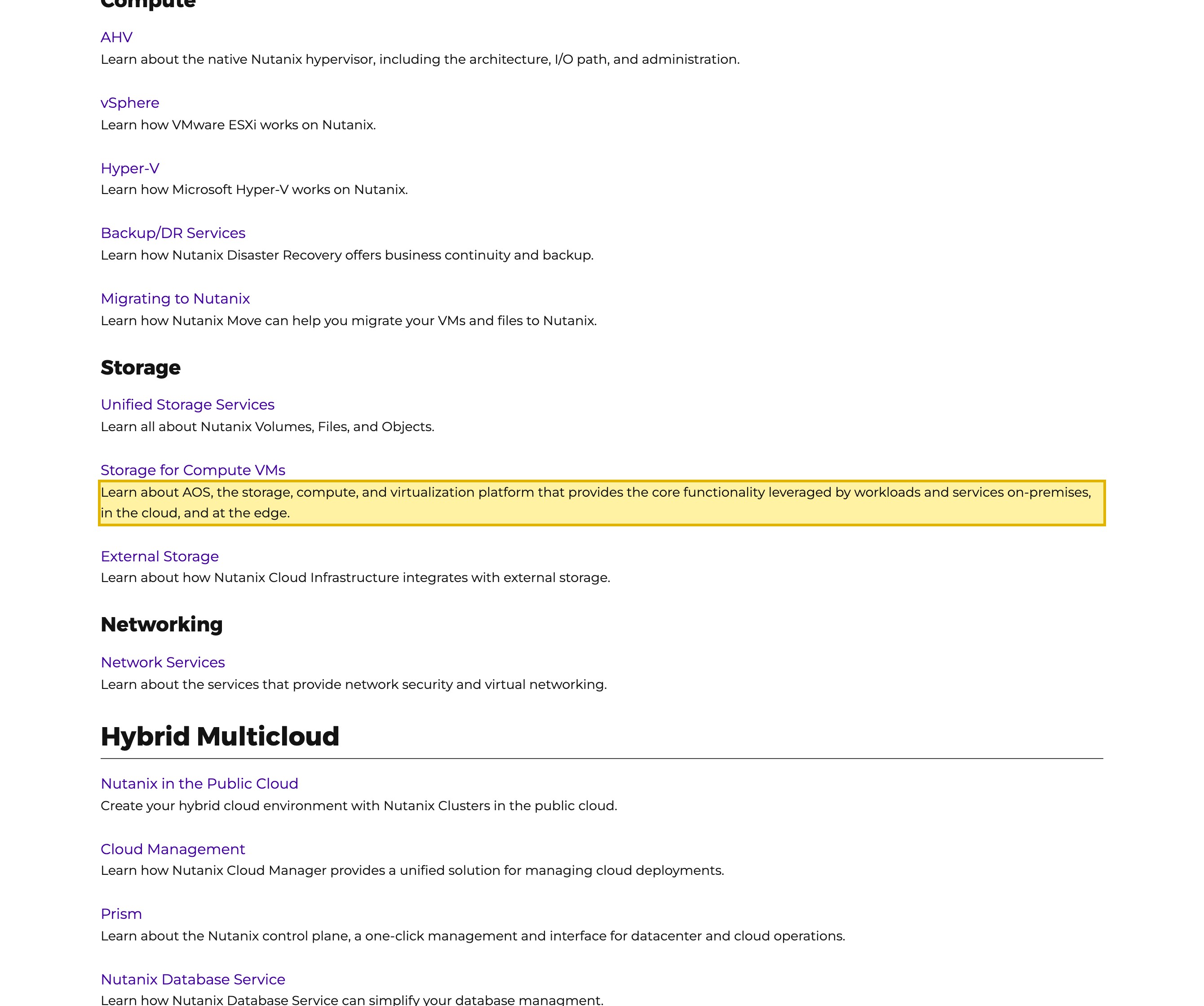
| The Nutanix Cloud Bible describes AOS as "the storage, compute, and virtualization platform that provides the core functionality leveraged by workloads and services on-premises, in the cloud, and at the edge" — so where the VMs and their data live is set by where you deploy the platform, and on-premises is a first-class target. | The Nutanix Cloud Bible, nutanixbible.com (retrieved 2026-10-14) |
| Nutanix states "the same Nutanix Cloud Platform software layer is used on-premises and in the cloud," and that Nutanix Cloud Clusters (NC2) runs on "AWS, Azure, Google Cloud, and OVHcloud" — so a cloud-hosted cluster rests in the region you pick, offshore when that region is outside the mainland. | Nutanix, "Nutanix Cloud Clusters (NC2)" product page (retrieved 2026-10-14) |
| Workload data, virtual-desktop files and management/telemetry metadata collected in the mainland and held on an offshore Nutanix footing are a cross-border transfer — requiring notice, separate consent and one transfer mechanism (Articles 38–40). | Personal Information Protection Law of the PRC, Articles 38–40 (retrieved 2026-10-14) |
| Operating an in-country system that serves mainland users carries MLPS (网络安全等级保护) duties on the operator under Cybersecurity Law Article 23 — graded, filed, and above the baseline independently assessed. | MLPS in China (网络安全等级保护), Cybersecurity Law Article 23 (retrieved 2026-10-14) |
Sources verified by the 21YunBox compliance team on 2026-10-14.
For a team serving mainland China, the useful question about Nutanix was never whether the cluster powers on or the management console reaches the network. It does: Nutanix is infrastructure software you deploy on hardware you control, and by its own Cloud Bible the Acropolis operating system (AOS) is “the storage, compute, and virtualization platform that provides the core functionality leveraged by workloads and services on-premises, in the cloud, and at the edge” — it runs as readily in a Shanghai data centre as in Frankfurt. What turns Nutanix into a compliance question is not reachability but what the platform concentrates and where that comes to rest: the virtual machines it runs and their virtual disks, the application data those VMs hold, and — wherever you place end-user-computing or virtual-desktop (VDI) workloads on the cluster — your employees’ virtual desktops, which carry their personal information and whatever files each user opens inside the session. A Nutanix cluster is, physically, where your workloads and their data live. The software itself is residency-neutral; where all of that rests is decided entirely by where you deploy the cluster — on-premises in-country, it stays on mainland soil; on a cloud-hosted footing, or under cloud management and telemetry pointed abroad, it sits offshore.
Nutanix in China at a glance
| What decides it | In Nutanix's own terms — and China's law |
|---|---|
| Where the VMs, desktops and their data physically rest | Nutanix is deployment-neutral: its own Cloud Bible calls AOS "the storage, compute, and virtualization platform that provides the core functionality leveraged by workloads and services on-premises, in the cloud, and at the edge." The platform has no region of its own — where your VMs, virtual desktops and their data rest is set by where you stand up the cluster. Nutanix Cloud Clusters (NC2) is the cloud-hosted variant of the same product; Nutanix states "the same Nutanix Cloud Platform software layer is used on-premises and in the cloud," running NC2 on public-cloud infrastructure "on AWS, Azure, Google Cloud, and OVHcloud." There your workloads rest in whichever cloud region you pick — offshore when that region sits outside the mainland. |
| What it holds, and why it's personal information | A hyperconverged cluster concentrates your running estate in one place: the VMs and their virtual disks, the application data they hold, and — where you run EUC/VDI workloads on it — the virtual desktops themselves, which carry employee personal information and whatever files a user opens inside the session. Where VM data, directory or user records, or desktop files carry names, contact details or customer data, that is personal information under PIPL — and a single desktop or database VM can hold Article 28 sensitive personal information (financial, government-ID, precise-location, biometric or health fields). |
| The cloud management plane and telemetry | Many Nutanix deployments lean on cloud-based management and operational telemetry (cloud-hosted management services, the Pulse and Insights telemetry channels). Left pointed offshore, these can carry cluster configuration, directory and user metadata and operational data out of the mainland — a PIPL cross-border transfer (Articles 38–40) that stands apart from where the VMs themselves live, and one a reachability check never sees. |
| In-country storage duty | A critical information infrastructure operator or high-volume handler owes an in-country storage duty an offshore footing cannot meet — mainland personal information and important data must stay in the mainland (PIPL Article 40; Cybersecurity Law Article 39 (formerly Article 37)) — the 2025 Cybersecurity Law amendment, in force January 1, 2026, renumbered the data-localization article from 37 to 39, substance unchanged. |
| Operator duties and the China-facing surface | Operating infrastructure that serves mainland users and systems brings MLPS (网络安全等级保护) obligations on the operator of that in-country system (Cybersecurity Law Article 23): graded, filed, and above the baseline independently assessed. And any China-facing surface in front of the cluster — a VDI access portal your mainland staff sign in to, or an application the VMs serve to mainland users — needs an ICP filing tied to a mainland hosting resource (State Council Order No. 292; MIIT Order No. 33). |
Where the VMs, desktops and data actually rest
Nutanix does not have a region; your cluster does. The software is the same bits whether the nodes sit in Frankfurt, Singapore or Shanghai, so the residency question is entirely about the infrastructure you deploy it on.
On a cloud-hosted footing — Nutanix Cloud Clusters (NC2), which runs the identical Nutanix software on public-cloud bare-metal infrastructure — the cluster rests in whatever cloud region you select. Nutanix is explicit that “the same Nutanix Cloud Platform software layer is used on-premises and in the cloud,” which is exactly why the deployment target, not the product, decides residency: point an NC2 cluster at a region outside the mainland and your VMs, their virtual disks and the data they hold come to rest offshore. Wherever any of that is China personal information, the Personal Information Protection Law treats it as a cross-border transfer, and the handler responsible is you, the operator — not Nutanix. The cloud management and telemetry channels raise a second, separate exposure: even a cluster that lives in-country can leak configuration, directory and user metadata and operational data offshore if its management plane and telemetry are left pointed abroad.
In-country options genuinely exist, and they are the lawful lever. Because Nutanix is software you deploy on hardware you control, you can run the identical cluster on-premises in a mainland data centre, where it behaves exactly as it does abroad and the VMs, virtual desktops and their data stay resident. The large foreign clouds, meanwhile, reach China only through separate sovereign partitions — AWS China (the Beijing region operated by Sinnet and the Ningxia region operated by NWCD) and Azure China (operated by 21Vianet) are distinct clouds with their own accounts, their own ICP, and their own feature and availability gaps. An in-country cluster is not automatic compliance; it is the starting point for it — the management plane, the telemetry back-haul and the access surface still have to be governed.
What it holds is personal information — and your running estate
A hyperconverged platform earns this scrutiny because of what it concentrates. Unlike a tool that touches one slice of your data, a Nutanix cluster is where your running estate sits together: the virtual machines and their virtual disks, the databases and application data those VMs hold, and — the moment you place end-user-computing or VDI workloads on it — the virtual desktops themselves. A virtual desktop is a particularly dense store of personal information: it carries the employee’s own identity and session, plus whatever documents, mailboxes, exports and customer records that user opens inside it over the course of a day.
Much of that is personal information under PIPL the moment it identifies a person — the user and directory records, the contents of a desktop session, the customer rows inside a database VM — and some of it is Article 28 sensitive personal information (financial records, government-issued IDs, precise location, biometric or health data), which carries a higher bar of specific purpose, strict necessity, and separate consent.
That is why residency is not merely good hygiene here. For a critical information infrastructure operator, and for a handler whose volumes cross the regulators’ thresholds, personal information and important data collected in the mainland must be stored in the mainland (PIPL Article 40; Cybersecurity Law Article 39 (formerly Article 37)). A cluster that lives offshore structurally cannot satisfy that duty — the VMs, the desktops and their data are, by definition, in the wrong country. And where an export is permitted at all, crossing a volume or sensitivity threshold can trigger a CAC-led data-export security assessment before any of it lawfully leaves.
Why a reachability check misses this
A connectivity test answers a different question than the one that matters. Point a probe at your Prism console and it will tell you the page loads and the cluster is reachable — and it will tell you nothing about where your VMs, your virtual desktops and the data inside them are allowed to rest, which is the only question China’s data law asks here. A check that Nutanix is reachable cannot see that the cluster sits on an offshore cloud region, that a desktop session carries China personal information, that the management plane is quietly shipping directory metadata abroad, or that a critical information infrastructure operator owes an in-country storage duty. Reachability is the delivery half; residency is the legal one. That gap — between “the console loads” and “the data is lawfully allowed to live here” — is exactly what a speed-or-uptime framing misses, and exactly where the exposure sits.
The lawful path — map, localize, deliver
You do not have to drop Nutanix to run it lawfully for mainland China. 21YunBox is a compliant overlay, not a migration — and, for an infrastructure platform you already operate, a partner that sits alongside your stack, not a competitor to it. There are three moves, and they fit together.
Map. Our China compliance team reads your PIPL cross-border, data-residency, data-localization (CII) and MLPS obligations against your actual entity, your data volumes, and whose personal information sits in your VMs, virtual desktops and management plane — so the exposure is written down before anything moves.
Localize. Because the risk is where the VMs, desktops and their data rest, we stand up the cluster in-country — on-premises in a mainland data centre, or on a licensed domestic or sovereign-cloud footing — so the workloads, virtual desktops and their data China requires to stay on mainland soil do, and we govern the management plane and telemetry so cluster and user metadata are not quietly back-hauled offshore. Localize means a lawful in-country deployment of the same Nutanix configuration, never a reach back to an offshore cluster; only the minimized, lawfully transferable subset ever crosses.
Deliver. For any China-facing surface in front of the system — the VDI access portal your mainland staff sign in to, the application your VMs serve to mainland users — the 21YunBox Optimizer provides ICP-filed, in-country delivery, in front of the stack you already run. No rebuild, no second platform. 21YunBox never uses or suggests circumvention of any kind; the entire point is a lawful, filed, in-country path.
The goal is plain: your Nutanix clusters and the virtual desktops they run operate legally and compliantly for your users in China.
Related reading:
- How to get an ICP filing for China
- Cross-border data transfers under PIPL
- China’s Cybersecurity Law and data localization
- MLPS (网络安全等级保护): do you need it, and at which level?
- China’s data-export security assessment measures


