Does WordPress work in China?
Whether WordPress works for a mainland-China audience depends first on where you host it — a licensing and data-residency question, not a speed one. WordPress itself is not blocked in China; what carries the legal exposure is the hosting location and what your site collects.
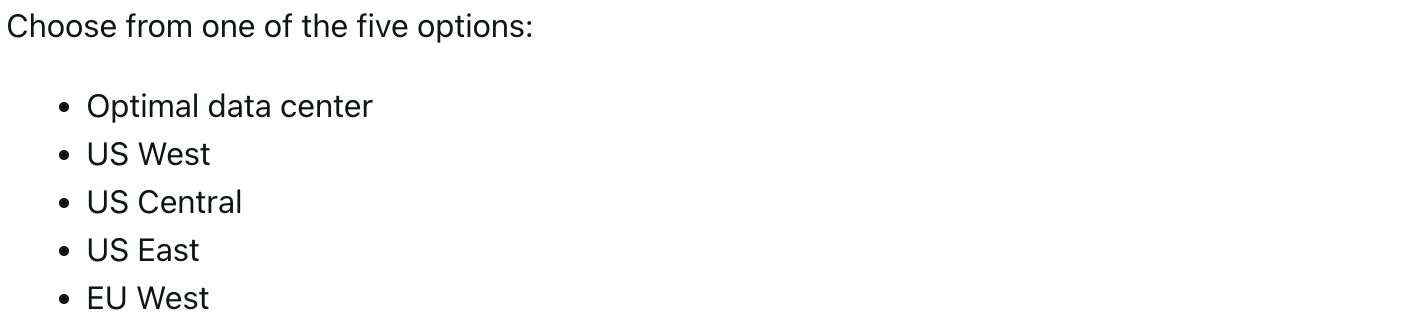
WordPress comes in two forms, and both lead to the same two doors. The self-hosted software from WordPress.org is yours to "Download and install it yourself" on hosting and a domain you provide, so its China standing is whatever host you point it at — offshore by default. WordPress.com is Automattic's managed service, and its own hosting options place sites in "US West, US Central, US East, EU West" data centers — none inside mainland China. Either way, a public site served to mainland visitors from offshore has no ICP-filing path, and the personal data your forms, comments and sign-ups collect becomes a cross-border transfer PIPL governs. The table below maps each decision to the rule it triggers — and to the compliant, ICP-filed in-country path.
This is a risk map, not a legal verdict — what you must file, and where your data may live, turn on what you serve and how much personal data you hold. Our China team can map the ICP and data-residency path with you →
What actually decides whether a WordPress site can serve mainland China
| Fact | Primary source |
|---|---|
| WordPress.org is free, GPLv2 software you host yourself. Its own download page frames the self-hosted route as "Download and install it yourself. For anyone comfortable getting their own hosting and domain." Because you choose the host, WordPress-the-software gives you neither a mainland-China server nor an ICP filing — the China standing of a self-hosted site is simply whatever hosting you point it at, which is offshore unless you deliberately place it in-country. | WordPress.org — Download, retrieved 2026-10-07 |
| WordPress.com is Automattic's managed hosting, and its servers are offshore. WordPress.com's own documentation offers four primary data-center regions — "US West, US Central, US East, EU West" — and says a site is "automatically added to the optimal data center"; not one is in mainland China. So the managed service provides no mainland region, and with it no ICP-filing path of its own. | WordPress.com — Choose Your Site's Primary Data Center, retrieved 2026-10-07 |
| Serving a public website to mainland-China visitors from inside the mainland requires an ICP filing (ICP 备案) under the State Council's Order No. 292 and MIIT's Order No. 33, and the filing is tied to a hosting resource physically located in the mainland. Because neither the self-hosted software nor WordPress.com puts a mainland host under your site, an offshore WordPress site has no ICP-filing path — it is reaching China from outside it. | PRC Regulations on Telecommunications (State Council Order No. 292); Administrative Measures for the Filing of Non-operational Internet Information Services (MIIT Order No. 33) |
| Personal data your WordPress site collects from Chinese users — contact forms, comments, account sign-ups — and stores offshore is a cross-border transfer PIPL governs: the handler (you, the site operator) must give notice, obtain separate consent, and meet a transfer mechanism (a CAC security assessment, the CAC standard contract, or certification). Automattic's own privacy notice confirms the destination, stating that data "may be used, stored, and/or accessed by individuals operating outside the European Economic Area (EEA) or the UK." For a CIIO or large-volume handler, personal information collected in China must be stored in the mainland (PIPL Article 40; Cybersecurity Law Article 39 (formerly Article 37)) — which offshore WordPress hosting cannot satisfy. | PIPL Chapter III, Articles 38–43 and Article 40; CSL Article 37; Automattic Privacy Notice |
Sources verified by the 21YunBox compliance team on 2026-10-07.
If a colleague asks whether WordPress “works” in China, the honest first answer is another question: where is it hosted? WordPress is not one thing. It is open-source software you can run on any host you like, and it is also a managed service someone else runs for you — and those two answers diverge the moment a mainland audience and China’s licensing rules enter the picture. What does not diverge is the destination: hosted offshore, a WordPress site reaches China without the filing a public mainland site needs, and carries your visitors’ data out of the country every time a form is submitted. Reachability was never the hard part; the license and the data residency are.
WordPress in China at a glance
| What decides it | What it means for a mainland-China audience |
|---|---|
| Which WordPress | Self-hosted software from WordPress.org, or Automattic's managed WordPress.com service. The two differ in who runs the server — but both arrive at the same ICP and PIPL doors. |
| Where it runs | Self-hosted: wherever you point it — offshore by default. WordPress.com: its own “US West, US Central, US East, EU West” data centers. Neither is mainland China unless you deliberately host in-country. |
| Serving the public (ICP) | A public site served to mainland visitors from inside China needs an ICP filing tied to a mainland host. Offshore hosting — WordPress.com included — offers no ICP-filing path. |
| Your users' data (PIPL) | Form, comment and sign-up data collected from Chinese users and stored offshore is a cross-border transfer of personal information that PIPL governs. |
| Themes & plugins | Many pull third-party assets — Google Fonts, Gravatar avatars, map and embed scripts — that are unreachable from inside China, so pages render broken even when the HTML arrives. |
| Is it reachable? | Yes — WordPress is not blocked; an offshore site loads, just slowly and variably. Reachable is not the same as cleared to operate. |
Self-hosted or WordPress.com — where your WordPress actually runs
WordPress ships in two shapes, and the China answer begins with which one you have. The self-hosted software from WordPress.org is free and GPLv2-licensed; its own download page frames the route as “Download and install it yourself. For anyone comfortable getting their own hosting and domain.” That freedom is exactly why the software can give you no China answer by itself — it runs wherever you put it. Point it at a host in Frankfurt or Virginia and your mainland standing is an offshore one; the software never supplies a mainland server or a filing.
WordPress.com is the other shape: Automattic runs the servers for you. Its own documentation lets a site sit in one of four regions — “US West, US Central, US East, EU West” — and otherwise a site is “automatically added to the optimal data center.” All of those are outside mainland China, and Automattic is a US company whose privacy notice says your data may be “used, stored, and/or accessed by individuals operating outside the European Economic Area (EEA) or the UK.” So the managed route removes the hosting decision from your hands — and in doing so removes any mainland footing with it.
Both shapes converge: self-hosted puts the hosting choice in your hands, WordPress.com keeps it in Automattic’s — but unless the site is deliberately delivered from inside the mainland, it is offshore, and offshore is where the two China doors stand.
The ICP door a public mainland site has to pass
Where your WordPress runs settles the licensing question before performance is even on the table. A public-facing website delivered to mainland visitors from inside China turns on an ICP filing (ICP 备案) under State Council Order No. 292 and MIIT Order No. 33, and that filing must attach to a hosting resource physically located in the mainland. Self-hosted WordPress on an offshore host has nothing in the mainland to file against; WordPress.com, running in US and EU data centers, has none either. That is where “we already run on WordPress” stops short: reaching China is not the same as being cleared to operate there, and no amount of tuning conjures the mainland host a filing needs.
Your forms and comments cross the border — and your theme may break
The second door is data. Serve China from an offshore WordPress site and every contact form, comment, and account sign-up moves your visitors’ personal information out of the country. Under China’s Personal Information Protection Law that is a cross-border transfer, and the handler — you, the site operator, not your host — has to give notice, obtain separate consent, and clear one transfer mechanism: a CAC security assessment, the CAC standard contract, or certification. If you are a critical information infrastructure operator or a large-volume handler, personal information collected in China must be stored in the mainland (PIPL Article 40; Cybersecurity Law Article 39 (formerly Article 37)) — a residency duty no offshore WordPress host can meet.
There is a quieter failure on top of the legal one. A typical WordPress theme or plugin reaches out to third-party services on load — Google Fonts for typography, Gravatar for comment avatars, map widgets, embedded video, and script libraries served from global CDNs. Several of those endpoints are unreachable from inside China, and each one fails on its own, so a page can arrive and still render with missing fonts, blank avatars, and dead embeds. We are not putting a number on that here — it varies by theme and plugin set — but it is a predictable consequence of the same offshore posture, not a tuning problem.
Treat all of this as a risk map, not a verdict: whether you need an ICP filing, in-country storage, or both depends on what you serve, how much personal data you hold, and who your users are — worth settling with counsel before you build.
Where 21YunBox fits — a compliant overlay, not a migration
You keep building on WordPress — self-hosted or WordPress.com, same editorial workflow, same plugins. We add the one piece an offshore setup cannot: compliant, ICP-filed, in-country delivery set in front of your existing WordPress origin — no rebuild, no second content workflow, and no move off the platform you already run. Our China team maps your ICP and data-residency obligations against your entity and your data volumes, then stands up the in-country delivery and storage a lawful China presence needs, while your WordPress stays exactly where it is.
Related reading:
