
Does Vercel work in China?
Yes — and the durable way to do it is Vercel + an in-country compliance layer, not leaving Vercel. Vercel stays your origin, build pipeline and global platform; what a public mainland-China audience additionally needs is an ICP-filed presence inside China — a licensing question Vercel's global edge was never meant to answer.
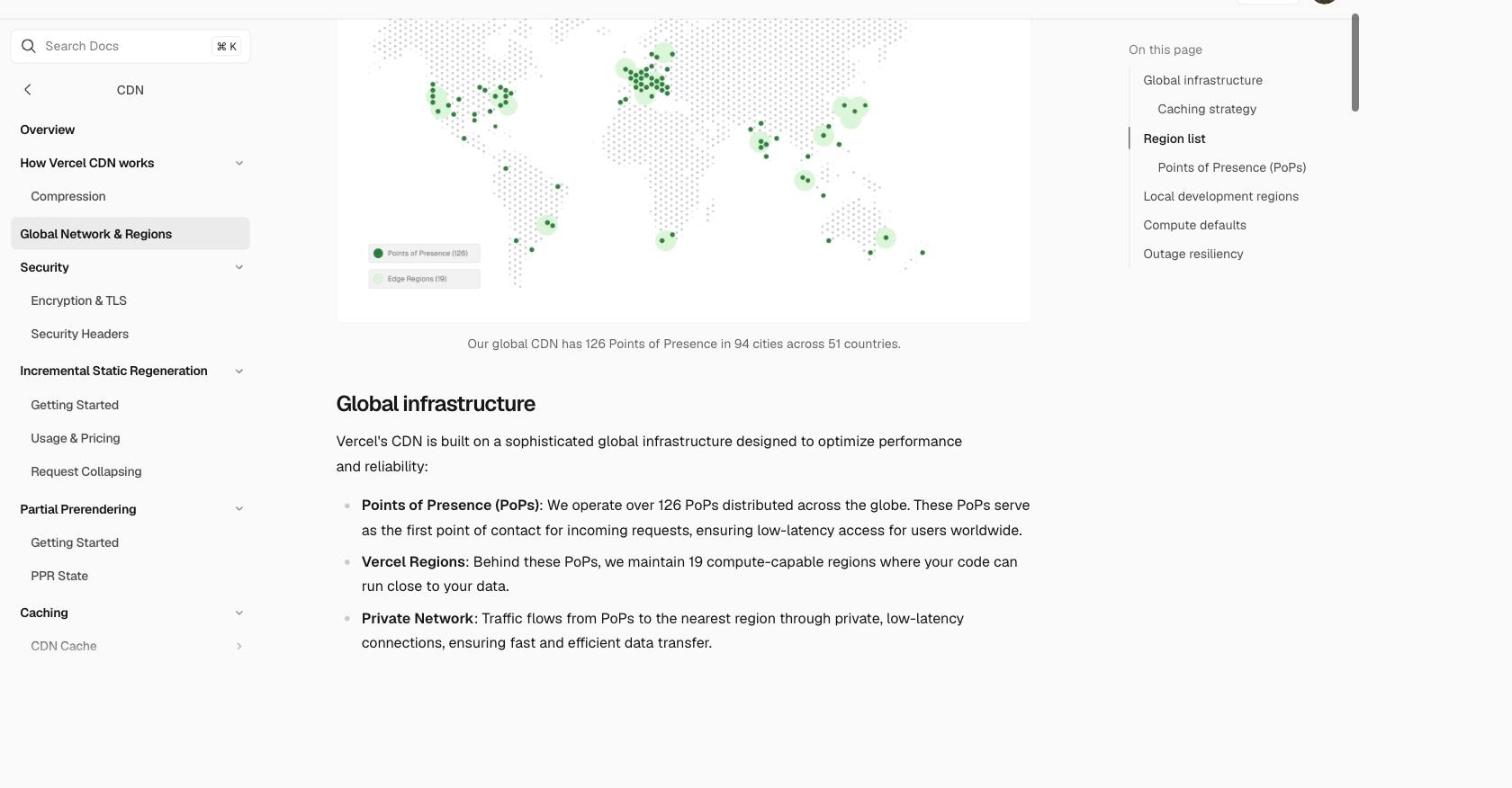
In Vercel's own words its CDN "stores content and runs compute close to your users and data," across "126 Points of Presence in 94 cities across 51 countries" and 19 compute-capable regions — none inside mainland China, the nearest being Hong Kong, Tokyo, Seoul and Singapore. Vercel states plainly that it "has no servers or CDN nodes in mainland China." Two things follow for a public China site: it needs an ICP filing tied to a licensed mainland host, which a global edge cannot hold; and because a Chinese visitor's real IP is personal information, the lawful design serves China from an in-country, ICP-filed entry and sends a fixed in-country IP to your Vercel origin rather than carrying each visitor's real IP across the border. 21YunBox adds exactly that layer in front of your Vercel origin — no rebuild, no migration.
This is a risk picture to settle with counsel, not a verdict — what applies turns on whether you serve the public in China, your entity, and the personal data your app handles. Our China team can map the Vercel + 21YunBox path with you →
What actually decides whether your Vercel site can serve mainland China
| Fact | Primary source |
|---|---|
In Vercel's own words, its network is global by design — with no mainland-China region. Vercel's CDN "stores content and runs compute close to your users and data," across "126 Points of Presence in 94 cities across 51 countries" and "19 compute-capable regions." None of those regions is inside mainland China; the nearest — Hong Kong (hkg1), Tokyo (hnd1), Seoul (icn1) and Singapore (sin1) — all sit offshore from the mainland. It is an excellent global origin; it is simply not an in-country China presence. | Vercel — Global network and regions, retrieved 2026-10-07 |
Vercel states the mainland gap plainly. In its own guidance, "Vercel has no servers or CDN nodes in mainland China," and "China's network controls can block or throttle traffic to foreign domains, including Vercel's .vercel.app subdomains." Vercel's free first steps — "Replace the .vercel.app domain with your own custom domain" and "Reduce reliance on third-party scripts and services that may be blocked in China" — are worth doing on any stack, but neither creates an in-country presence. | Vercel — Accessing Vercel-hosted sites from mainland China, retrieved 2026-10-07 |
| A public mainland site needs an ICP filing — and Vercel says so too. "Hosting within China requires an ICP license and compliance with local requirements," in Vercel's own words. Under Chinese law an ICP filing (备案) attaches to a licensed mainland host and a mainland legal entity (State Council Order 292, Article 4; MIIT Order 33). Vercel even names the in-country routes others take — "deploying a static mirror on infrastructure with more reliable routing into China," or "a separate version of their site on local infrastructure within mainland China, which requires an ICP license and compliance with local regulations." Each needs an ICP-filed presence Vercel's global edge does not include. | Vercel — Accessing Vercel-hosted sites from mainland China; State Council Order 292, Article 4; MIIT Order 33 — retrieved 2026-10-07 |
| A mainland visitor's real IP address is personal information, so how it crosses the border is a PIPL question. Serving China from offshore edges and sending visitors' real IPs and request logs out of the mainland is a cross-border transfer under PIPL (Chapter III, Articles 38–43: notice, separate consent, and one permitted transfer mechanism; Article 40 and Cybersecurity Law Article 39 (formerly Article 37) add in-country storage for a CIIO or large-volume handler). The compliant design answers this by keeping an in-country, ICP-filed entry and sending a fixed in-country IP to your Vercel origin — so the origin not seeing each visitor's real IP is the lawful design, not a defect. | PIPL Chapter III, Articles 38–43 and Article 40; Cybersecurity Law Article 39 (formerly Article 37) |
Sources verified by the 21YunBox compliance team on 2026-10-07.
Vercel is one of the best platforms in the world to build and ship a web application, and nothing here asks you to leave it. Your app stays on Vercel — the same Git-driven deploys, the same framework support, the same global edge. This article is about the one thing a public, mainland-China audience adds on top of that: a presence that is licensed to operate inside China. That is a compliance question, and it is the half of “does Vercel work in China” that no amount of platform tuning answers — because it was never Vercel’s job to answer it.
The short version is a partnership, not a replacement. Vercel remains your origin and source of truth; 21YunBox sits in front of it as an ICP-filed, in-country entry for mainland visitors. Below is what Vercel itself documents about its network, the ICP door that a global edge structurally cannot hold, and the lawful way visitor data is handled at the border — in Vercel’s own words and China’s own law, so you can take it to counsel.
Vercel in China at a glance
| What decides it | In Vercel's own words — and China's own law |
|---|---|
| What Vercel is | A global platform. Vercel's CDN “stores content and runs compute close to your users and data,” across “126 Points of Presence in 94 cities across 51 countries” and “19 compute-capable regions.” It is an excellent global origin and build pipeline — global by design. |
| A mainland-China PoP? | No. Vercel states it “has no servers or CDN nodes in mainland China,” and its published region list has no mainland entry — the nearest are Hong Kong, Tokyo, Seoul and Singapore, all offshore. |
| Serving the public in China | A public site shown to mainland visitors needs an ICP filing tied to a licensed mainland host (State Council Order 292, Article 4; MIIT Order 33). Vercel agrees: “Hosting within China requires an ICP license and compliance with local requirements.” |
| Visitor data at the border | A mainland visitor's real IP is personal information. Serving from offshore edges and sending it across the border is a cross-border transfer PIPL governs — so the compliant design keeps an in-country entry and sends a fixed in-country IP to your origin. |
| The working design | Keep Vercel as your origin; add an ICP-filed, in-country entry in front of it for mainland visitors. An overlay, not a migration — no rebuild, no second codebase. |
What Vercel gives you globally
Vercel’s description of its own network is worth reading before anything else. Its CDN, in its words, “stores content and runs compute close to your users and data, reducing latency and improving performance,” and it does so from “126 Points of Presence in 94 cities across 51 countries,” backed by “19 compute-capable regions.” For a global audience this is close to ideal, and it is exactly why your application belongs on Vercel.
What that same list shows — plainly, on Vercel’s own page — is that the network is built to serve users from the outside in. The regions nearest the mainland are Hong Kong (hkg1), Tokyo (hnd1), Seoul (icn1) and Singapore (sin1); every one of them sits offshore from mainland China. Vercel is equally direct in its own China guidance: it “has no servers or CDN nodes in mainland China,” and “China’s network controls can block or throttle traffic to foreign domains, including Vercel’s .vercel.app subdomains.” Two of Vercel’s free first steps — “Replace the .vercel.app domain with your own custom domain” and “Reduce reliance on third-party scripts and services that may be blocked in China” — are worth doing on any stack. None of that, though, places your site inside China, which is where the next section begins.
The ICP door Vercel’s edge can’t hold
Serving a public website to people in mainland China turns on a permission that has nothing to do with performance: an ICP filing (备案). Under State Council Order No. 292 (Article 4) and MIIT Order No. 33, that filing attaches to a hosting resource physically inside the mainland and to a mainland legal entity — a foreign company with neither cannot file directly. Vercel reaches the same conclusion in its own words: “Hosting within China requires an ICP license and compliance with local requirements.”
This is where a global edge meets its natural boundary. Vercel even names the routes other teams take to get in-country: some improve access “by deploying a static mirror on infrastructure with more reliable routing into China,” and others “maintain a separate version of their site on local infrastructure within mainland China, which requires an ICP license and compliance with local regulations.” Both descriptions share one requirement — an ICP-filed presence inside the mainland — and that presence is not something Vercel’s own network includes, because it was never meant to. It is a licensing fact, not a shortcoming: the filing needs a licensed mainland host to attach to, and Vercel’s hosts are offshore.
The compliant in-country design
The lawful way to serve a public mainland audience is to put an ICP-filed, in-country entry in front of your Vercel origin — and to be deliberate about visitor data at that entry.
Here is the part teams most often have backwards. A mainland visitor’s real IP address is itself personal information under China’s Personal Information Protection Law. Carrying every visitor’s real client IP out of the mainland to an offshore origin is a cross-border transfer of personal information, which PIPL governs (Chapter III, Articles 38–43: notice, separate consent, and one permitted transfer mechanism — a CAC security assessment, the CAC standard contract, or certification; Article 40, with Cybersecurity Law Article 39 (formerly Article 37), adds an in-country storage duty for a critical information infrastructure operator or a large-volume handler).
So the compliant design does the opposite: it terminates mainland visitors at an in-country, ICP-filed entry and sends a single, fixed in-country IP to your Vercel origin, rather than forwarding each visitor’s real IP across the border. Your Vercel origin therefore sees one in-country address instead of every visitor’s own — and that is the lawful design working as intended, not a defect to engineer around. Whether a particular site must also store personal data inside the mainland depends on your role and data volumes, which is a question for counsel rather than a default.
Where 21YunBox fits — a compliant overlay that sits in front of Vercel
You keep building and shipping on Vercel exactly as you do today — same deploys, same origin, same global platform. 21YunBox adds the one piece a global edge structurally cannot: compliant, ICP-filed delivery from inside the mainland, placed in front of your existing Vercel origin — no rebuild, no second codebase, and no move off Vercel. Our China team maps which obligations apply to your entity and your data, handles the ICP filing, and stands up the in-country entry that serves your mainland audience while Vercel stays your source of truth.
Related reading:
